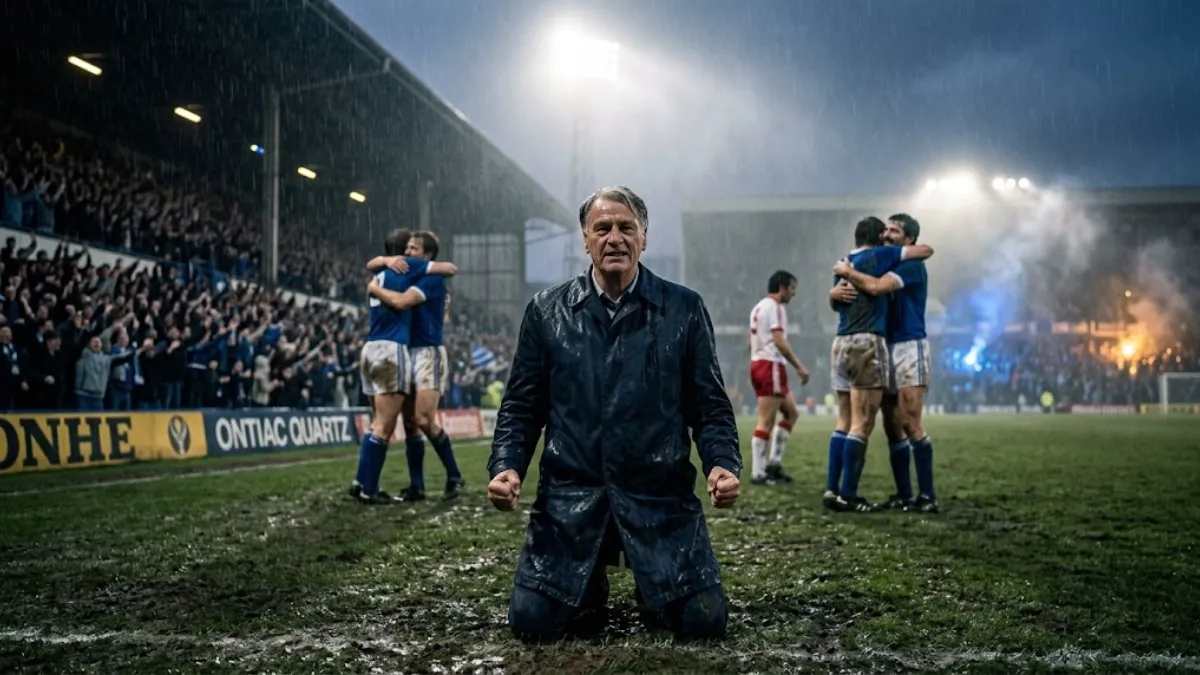
Winter sweeps across East Anglia with a biting wind that cuts to the bone. These flatlands offer no hills to shield against the icy gusts. In this harsh agricultural region, two clubs have historically dominated — Norwich City from Norfolk and Ipswich Town from Suffolk. Both sides have often seemed dwarfed by the giants from London, Manchester, or Liverpool, yet their modest provincial status has never hindered their potential for surprises.
The main fairy tale of Ipswich began in August 1955 when Alf Ramsey took charge. At the time, the team languished in the Third Division South. The 35-year-old Ramsey, having hung up his boots, turned his focus solely to tactics, abandoning the player-manager role. What happened next stunned the nation: in just his second season, Alf guided the club to the Second Division, smashing over a hundred goals, quickly claimed the title in the second tier, and in their debut season in the top flight, he led the "Tractor Boys" to the English championship. This unimaginable rise catapulted Ramsey straight into the England manager's position, where he led the squad to World Cup glory in 1966.
After Ramsey’s departure, Ipswich had a rollercoaster existence between divisions until January 1969 when another future England manager, Bobby Robson, took the reins. Over a decade of meticulous recruitment and tactical refinement, Robson forged a powerful side. The peak of this era came with their FA Cup triumph in 1978, where they defeated Arsenal 1-0 at Wembley. The club steadily established itself in the upper echelons of the First Division, regularly dishing out harsh lessons to the giants — one memorable result was a 6-0 thumping of Manchester United in the 1979/80 season, with the Manchester goalkeeper saving two penalties that day.
One lingering question remained: could Robson's provincial Ipswich dethrone the European colossus, Liverpool, managed by Bob Paisley?
Robson's revolution: Dutch elegance meets British steel
As 1980/81 began, Liverpool stood proud as the undisputed hegemon, having claimed four out of the last five league titles. The Merseysiders boasted stars such as Clemence, Neal, Hansen, Thompson, McDermott, Souness, and Dalglish.
However, Robson had a worthy response brewing in quiet Suffolk. The last line of defence was keeper Paul Cooper, renowned for his unparalleled penalty-saving abilities. The backline was fortified by iron warriors: George Burley, Mick Mills, Russell Osman, and Terry Butcher. The trio of Butcher, Mills, and Osman frequently formed the backbone of England’s defence at the time.
The real revolution, however, took place in midfield. By the late 1970s, English football remained a deeply conservative, insular domain. It was widely thought that technically gifted foreign players couldn't endure the brutal British style, especially on a chilly, rainy January evening. Robson dared to swim against the tide. In 1979, he brought in two midfielders from Dutch outfit Twente — Arnold Mühren and Frans Thijssen. Their elegant, visionary brand of football transformed the team into a cohesive unit.
To offset the academic flair of the foreigners, a tireless British enforcer with the character of a bulldog was required. Enter John Wark, who had joined the club back in 1975. Wark was a powerhouse, maintaining the energy of a Rolls-Royce engine. He possessed an uncanny knack for scoring: during his time at Ipswich, he netted 94 goals in 266 matches. Up front, the threat came from Eric Gates, Alan Brazil, and the record-signing forward Paul Mariner, who arrived for £220,000.
Autumn offensive on three fronts
The optimism of fans was justified from the very first round. Following an opening victory at Filbert Street against Leicester, Robson’s men won seven of their first eight league matches. In an era where victory earned only two points, the blues opened up a four-point lead over Liverpool, Everton, and the rising Aston Villa. Wark was unstoppable, scoring six goals in the initial matches.
Simultaneously, their UEFA Cup campaign commenced. In the opening match at Portman Road, they crushed Greek side Aris 5-1, with Wark netting four goals, including three from the penalty spot. A 1-3 defeat away was merely a formality, setting a precedent of domiciliary dominance tempered with resilience on the road.
In October at Anfield, Ipswich ground out a hard-fought draw against Liverpool thanks to a goal from Thijssen, followed by an engaging 1-1 draw with Manchester United, preserving their unbeaten record. In Europe, Robson’s charges bypassed Prague's Bohemians, winning 3-0 at home with a Wark brace, then triumphing 0-2 away. It wasn't until the 15th round of fixtures that the side stumbled, unexpectedly losing to bottom side Brighton, but they quickly redeemed themselves.
By late November, Polish side Widzew arrived at Portman Road, having notably eliminated Manchester United and Juventus, featuring the young Zbigniew Boniek. The Poles were swept aside like debris — 5-0, with Wark adding another hat-trick. A subsequent 0-1 loss in Łódź was a mere formality. The team went into winter as league leaders and quarter-finalists in the European competition.
Winter madness and a thrashing of star-studded Saint-Etienne
With winter came the FA Cup. In the third round, they drew their main title rival — Aston Villa. A Dutch combination of Mühren and Thijssen led to Mariner's winning goal (1-0). Next, they navigated a tough replay against modest Shrewsbury and then eliminated Charlton 2-0.
By February, the "Tractor Boys" won all four league matches, holding a clean first place. Talk of the treble — league title, FA Cup, and UEFA Cup — was tangible. However, March’s fixtures presented a true test of their mettle.
In the UEFA Cup quarter-finals, they faced formidable Saint-Etienne — three-time champions of France in the 1970s and finalists in the 1976 European Cup. Featuring stars like Battiston, Lopez, Larios, Johnny Rep, and the legendary Michel Platini, 42,000 spectators filled the Geoffroy-Guichard stadium, which had not witnessed a home defeat in European competitions for 26 years. When Rep opened the scoring with a header, it appeared the English nightmare would continue. However, Mariner equalised before the break, and after half-time, a spectacle erupted. Mühren struck a thunderous shot into the top corner, Mariner finished a cross, and Wark nodded in a fourth.
The humiliating 4-1 thrashing left a stunned Platini watching, leading Robson to proclaim, "We annihilated a great team, achieving one of the greatest victories in European competitions in the last decade." At home, Ipswich secured their triumph with a 3-1 victory.
Between these epic clashes, the team produced a thriller in the FA Cup against Brian Clough’s Nottingham Forest. After leading 2-0, they lost their grip due to goals from Francis, Walsh, and Robertson, but a lucky deflection from Thijssen’s shot salvaged a draw. In the replay, the blues squeezed out a 1-0 win.
The April meat grinder: eight matches in a month
For all these achievements, the team paid a colossal price. Robson had a fantastic but critically short squad without depth on the bench. March witnessed the first hiccups: away defeats to Manchester United and Leeds. Ahead loomed April, with eight matches taxing their physical limits.
The marathon began:
- 4 April: A third consecutive away league defeat — 1-3 to West Bromwich.
- 8 April: First leg of the UEFA Cup semi-final. At Portman Road, Ipswich bested West German side Köln 1-0 thanks to Wark's goal.
- 11 April: FA Cup semi-final against Manchester City at Villa Park. 46,000 spectators witnessed an exhausting 120 minutes with no goals, a goal-line clearance from the hosts, and a disputed foul by Butcher 30 yards from goal. Captain Paul Power curled the free kick into the top corner, and the first trophy slipped away.
There was no time for healing wounds: just 72 hours later, the team returned to Villa Park for the match of their lives against Aston Villa. A defeat would mean the early coronation of their Birmingham rivals.
On 14 April, in front of 47,000 spectators, Ipswich pulled off a miracle. Brazil and Gates seized on defensive lapses from the hosts to bag two goals, while Cooper made some unbelievable saves. The victory (2-1) sent the team back to the top of the table. The emotional rollercoaster reached its peak.
However, the players' bodies began to falter:
- 18 April: Home match against Arsenal. Kevin Beattie suffered a broken arm, Gates sustained an injury, and Robson rested Thijssen. The outcome — their first home defeat of the season, 0-2.
- 20 April: Two days later — an East Anglian derby away against struggling Norwich. 26,000 "Canaries" fans went wild as they witnessed their team win 1-0. The championship title slipped away to the Birmingham side.
- 22 April: Two days later — an away trip to Köln. At the absolute limits of their strength, the blues dug deep to secure a 1-0 victory thanks to a goal from Terry Butcher, earning their place in the UEFA Cup final.
- 25 April: A home revenge match against Manchester City in the league — 1-0 with another goal from Butcher.
At the beginning of May, the fairy tale in the First Division came to an end. On 2 May, Aston Villa lost 0-2 to Arsenal, but Birmingham fans celebrated the championship at Highbury, having heard that a depleted Ipswich capitulated against Middlesbrough at Ayrsom Park.
The Dutch final and the everlasting legacy
One final challenge awaited — a two-legged UEFA Cup final against Dutch side AZ from Alkmaar. On 6 May at a packed Portman Road, the blues dispatched their opponents 3-0, with goals from Wark, Thijssen, and Mariner.
On 20 May in Amsterdam, Ipswich played their 66th match of this insane marathon. An early goal from Thijssen seemed to settle the nerves, yet AZ pushed hard, leading to a wild exchange of blows. For every goal from the Dutch, Wark responded, but by the 73rd minute, the hosts led 4-2. The aggregate score narrowed to 5-4. The final 17 minutes turned into a sheer nightmare, but Robson’s men held firm, lifting the European trophy high.
By the end of the 1980/81 campaign, modest Ipswich Town had played 66 official matches: securing silver in the First Division, reaching the FA Cup semi-finals, and winning the UEFA Cup. John Wark posted an extraordinary statistics for a midfielder: 36 goals across all competitions, with a record 14 coming in European matches.
This triumph remains the club's last significant victory, paving the way for Bobby Robson's recognition, his tenure at Barcelona, PSV, Newcastle, and the England national team, leading to a knighthood. Many years later, the legendary Sir Bobby would say:
People genuinely loved us. We made the crowd sing. The squad of 1981 was the strongest team of my life. We played football like England hadn't seen for decades.
