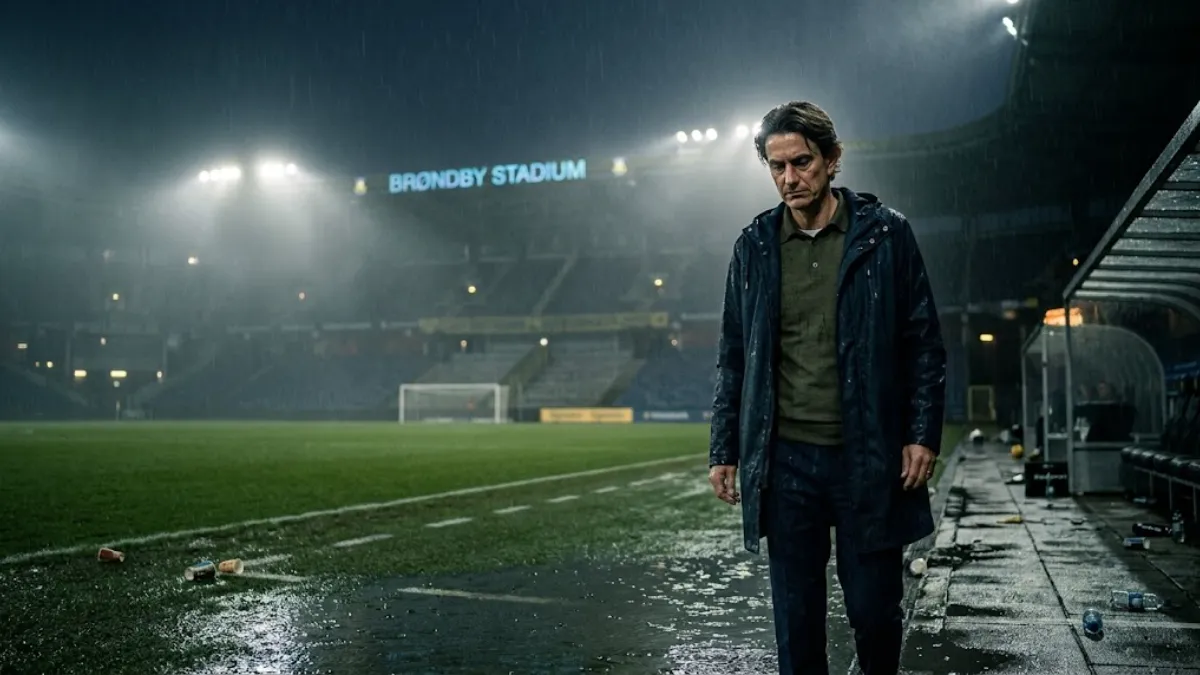
Today, Thomas Frank is among the most respected and popular managers in the Premier League. His story with Brentford is like a classic Cinderella tale, where a modest club under the charming Dane's guidance punches above their weight in the upper half of the table. Frank has been linked with top clubs like Arsenal, and fans worldwide admire his player-trust-based strategy and focus on youth development.
However, few remember that before moving to London in 2016, Frank's reputation in his native Denmark was in ruins. The term ‘failure’ was perhaps the mildest way to describe his time at Brondby. What began as an ambitious project to resurrect a giant ended in public humiliation, betrayal from the club's hierarchy, and a hasty exit through the back door.
But it was these three years of chaos and pain that shaped the Thomas Frank we know today.
Appointment amidst ruins
Thomas Frank took charge of Brondby in the summer of 2013. This was his first role with an adult team, having previously enjoyed success with Denmark's youth sides (U-16, U-17, U-19). He seemed the perfect candidate for a club that was deep in crisis, having narrowly avoided relegation in the 2012/13 season, saved at the last minute from bankruptcy by new owners.
The club needed to be rebuilt from the ground up. With no way to compete financially with Copenhagen, the focus shifted to nurturing homegrown talent. Known for his ability to develop youth and with established links to promising players, such as Riza Durmisi, Frank appeared to be the saviour.
During those years, Brondby lost top talents before they even debuted: Andreas Christensen went to Chelsea, Pierre-Emile Hojbjerg to Bayern Munich, and Patrick Olsen to Inter Milan. Frank and the board aimed to reverse this trend, launching the ambitious Brøndby Masterclass academy, investing millions, and bringing in foreign experts, including Albert Capellas from La Masia.
A trust loan and early cracks
Initially, the new hierarchy showed patience.
Development is our goal. We’re not sacking managers just because things aren't going perfectly, proclaimed chairman Aldo Petersen.
He even assured Frank his job was secure, even amid disappointing results, as long as he remained chairman.
This trust was crucial, as Frank failed to register a single victory in the opening seven Superliga matches and was eliminated from the Cup by a semi-professional side. However, results did improve, and the team qualified for Europe, finishing fourth.
The arrival of Jan Bech Andersen and the end of patience
The situation took a turn when Jan Bech Andersen acquired a controlling stake and became the new chairman. The rhetoric within the board abruptly shifted: discussions about patience and development turned into demands for titles and narrowing the gap with Copenhagen. Expectations soared.
During the transfer window, Andersen didn’t hold back. The club shattered its transfer record by bringing back Daniel Agger from Liverpool. Legendary Johan Elmander also joined. Officially, the goal was top-three, but everyone understood that with such high-profile names, a title challenge was the expectation.
Unfortunately, the big investments didn’t translate to on-pitch success. Brondby was embarrassingly knocked out of Europa League qualification by Brugge (0-5 on aggregate). The league form was erratic. Despite a derby win over Copenhagen, Frank could not secure a single victory in three matches against upstart, semi-professional Hobro. The 4-2-3-1 system he stubbornly implemented failed to create meaningful chances, despite dominant possession.
Daniel Agger vs. Frank's 'soft' style
Cracks in the foundation became apparent. In the stands, positive chants from the Sydsiden fans were replaced by pessimism, and questions about Frank's ability to motivate star players grew louder.
The climax came after a dismal 0-7 friendly defeat to Hoffenheim. The team's gameplay and player attitudes were horrendous. Captain Agger approached Frank and asked:
We talked about consequences and all that. What are you going to do now?
Frank hesitated, reluctant to punish his players or deny them their days off. Agger responded firmly:
Of course, you can. That’s the only way they'll understand. If I were the coach, I’d tell the players to show up in the morning. Just running shoes—and we’re off into the forests of Brondby.
Frank ultimately took Agger’s advice, but his authority was irreparably damaged. Agger later publicly critiqued Frank’s ‘soft’ approach.
I liked Thomas Frank as a person, but as a coach—not so much, Agger admitted in 2017.
Coming from a school of discipline and hierarchy, he found none of that at Brondby.
The season ended with the team in third place, ostensibly meeting expectations, but their play was disheartening: 16 points behind champions Midtjylland and only 43 goals in 33 matches.
'Oscar' and betrayal: how the chairman destroyed the coach
The next season began with yet another European humiliation—losing 1-6 to PAOK. Support for Frank plummeted to an all-time low. By Christmas, the team was in fifth place, with title hopes long extinguished. Questions about Frank’s competence became commonplace throughout Denmark.
It was during these dark winter days that a new user under the nickname ‘Oscar’ appeared on the Sydsiden Online fan forum. They began to viciously criticise Frank and sporting director Per Rud:
Per and Thomas made so many absurd decisions together due to ignorance and inexperience.
We can't point to a single transfer that’s been anywhere near respectable.
Thomas’s inability to integrate new signings, which he chose himself, is unacceptable and pathetic.
With an inexperienced head coach stubbornly adhering to a failing system, we have a recipe for disaster.
In March, shortly after the start of the spring season, Denmark was rocked when journalists revealed that behind the nickname ‘Oscar’ was none other than chairman Jan Bech Andersen himself.
Exiting through the back door and the birth of a new Frank
This was a betrayal of biblical proportions. Andersen publicly dismantling his own coach on a fan forum under a false name was shocking.
Frank immediately resigned, leaving the side fifth after a defeat to SoenderjyskE. Andersen was forced to step down as chairman but later reclaimed his position.
Frank spent nine months out of work before joining Brentford as an assistant coach. While his tenure at Brondby may not have reached expected heights—despite significant investment in talent—there's no doubt that the upheaval, betrayal, and public humiliation taught him valuable lessons about the ruthlessness of professional football at the highest level.
The hell he endured hardened him. Even Agger noted that Frank became tougher with his players during his time at Brondby. Tactically, he adapted, becoming more pragmatic and flexible, evident in his exceptional work with Brentford today.
