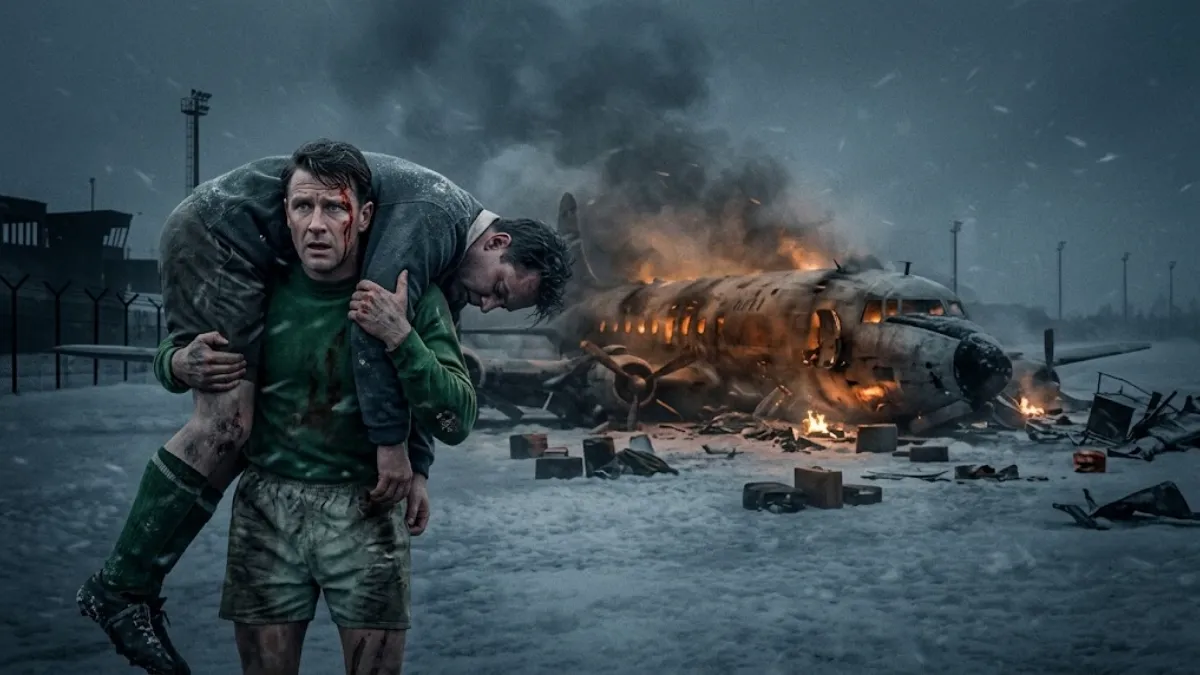
Thursday, February 6, 1958, will forever remain the darkest day in the history of Manchester United. A plane carrying players, coaching staff, journalists, and devoted fans crashed at Munich airport. After two aborted take-off attempts, the aircraft sped into a building filled to the brim with barrels of fuel, turning into a blazing inferno. In that fateful moment, it seemed as if the great club had been erased from existence, and the task of reviving it from the ashes appeared insurmountable.
Carefree in the Belgrade skies and a sense of foreboding
The team was returning home in high spirits. The night before, the Mancunians had played to a thrilling 3-3 draw with Red Star Belgrade, securing their place in the semi-finals of the European Cup after a home win. The cabin was filled with laughter as players played cards, read books, and shared stories. Defender Bill Foulkes recalled light-hearted conversations about the cold outside the window. Journalist Frank Taylor, one of eleven reporters on board, dreamed of returning home to his wife and children.
But in Munich, the carefree mood evaporated without a trace. A routine stop for refuelling turned into a nightmare. The weather had worsened significantly; wet snow was falling heavily, an icy gale swept across the runway, and the tarmac was covered in treacherous slush. The first take-off attempt failed, and the aircraft returned to the starting position. Passengers were merely concerned. When the second attempt ended abruptly due to the right engine’s unstable performance, a deathly silence fell in the waiting area.
As the signal for a third landing echoed, people climbed the steps with a sticky, chilling dread inside. Cards were tucked away, jokes ceased. Sensing the impending disaster, the footballers began nervously shifting to the rear of the plane.
I don't feel right here. It seems safer at the back, whispered David Pegg.
Just moments earlier, England's wonderkid Duncan Edwards had sent a telegram to his mother:
All flights cancelled. Will return tomorrow.
He never did.
'God, we won’t take off!' The final seconds of the flight
At 4:00 PM, the third attempt began on runway 25. Captain James Thain pushed the throttles forward. Journalist Frank Taylor later recounted those moments:
We froze in anticipation of the roar of the engines. Finally, there was a deafening noise. The plane began to accelerate: 130 km/h... 150... 200... And then — a sudden, monstrous jolt.
The speedometer hit the critical mark of 210 km/h when the aircraft suddenly hit a deep slush of wet snow at the end of the runway. Speed plummeted to 190 km/h.
What the hell is happening again?! Thain swore.
First Officer Ken Rayment shouted in panic:
God, we won’t take off!
There was no chance of stopping now. The aircraft ploughed through the airport’s perimeter fence, crossed a road, clipped a tree with its wing, and at full speed crashed into an abandoned wooden structure that served as a fuel store. The impact was catastrophic. The fuselage split in two. The cabin crumpled like cardboard, belongings flew around, darkness engulfed the interior, and then a great pillar of flame erupted. Of the 43 people on board, 23 perished — including eight first-team players, coaching staff, club officials, and journalists.
The heroism of Harry Gregg amidst the hell and blood
The team’s goalkeeper, Harry Gregg, awoke amidst twisted metal:
I heard a crash, then came absolute silence. The air was filled with clouds of soot, and pieces of mangled iron stuck out everywhere. Initially, everything was bathed in blinding light, then darkness descended. My mouth filled with warm salty blood. Time just stood still.
Somehow emerging from the wreckage without serious injury, the Northern Irish goalkeeper performed a true act of humanity. Instead of fleeing the potential inferno, Gregg headed back into the blazing debris. He heard a baby’s cry and rescued an infant, then returned for its gravely injured pregnant mother, Vera Lukic.
Pushing through the flames, Harry sought his teammates. In the snow, he found Bobby Charlton and Dennis Viollet — both were pulled to safety. He soon discovered manager Matt Busby, who was moaning in unbearable pain, clutching his broken legs. The injured were hastily loaded into the back of a local man’s truck — a German driver took the survivors to the hospital long before rescue services arrived.
The next morning, newspapers screamed with headlines:
Seven players dead. Matt Busby in critical condition.
Captain Roger Byrne, Mark Jones, and Tommy Taylor died on the spot. Duncan Edwards fought valiantly for his life in intensive care for another fifteen days, but his injuries were ultimately fatal. When a recovering Foulkes and Gregg visited their teammates in a Munich ward and asked a nurse where the others were, she replied with chilling calm:
That's it. No one else survived.
Ashes, rebirth, and the European crown
England plunged into mourning, but the club had to soldier on. The burden of rebuilding lay on assistant Jimmy Murphy’s shoulders. By a tragic twist of fate, he had avoided the fateful flight; on that day, Murphy managed the Welsh national team in a crucial World Cup qualifying match.
I had no players left, but I had a sacred duty, Murphy recalled.
Just thirteen days after the Munich horror, Manchester United took to the pitch against Sheffield Wednesday in the FA Cup. On the match programme, instead of names were blank spaces. The hastily assembled team comprised deep reserves and academy juniors, driven by a sense of duty to their fallen friends, and they thrashed their opponents 3-0.
Murphy and a revived Busby began the long journey of rebuilding. Four years later, the restructured United lifted the FA Cup. And exactly ten years after the tragedy, in the spring of 1968, the team hoisted the coveted European Cup at Wembley. The captain of that team was survivor Bobby Charlton, with rock-solid Bill Foulkes in defence.
It was our holy duty to those lads who died in Munich, Charlton tearfully spoke years later. They started this journey, and we had to finish it.
The Munich tragedy left an unhealable scar on the club, but it was there, on the runway soaked in burning aviation fuel, that the indomitable spirit of Manchester United was born.
