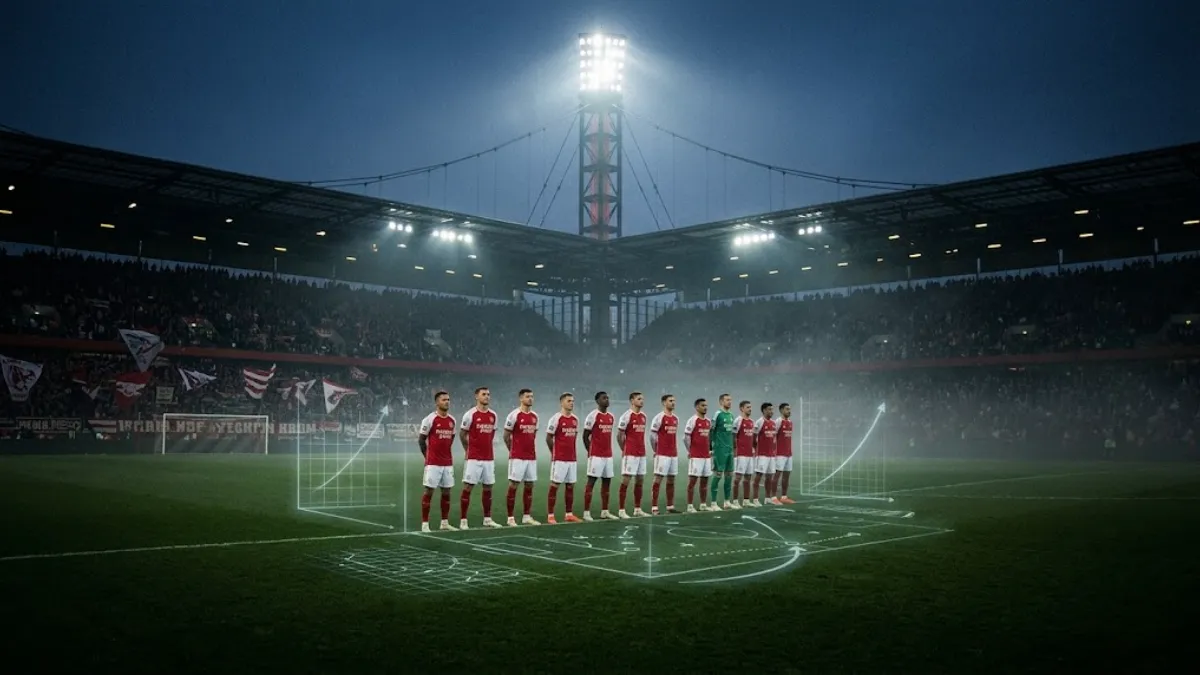
The 2025/26 season has brought Arsenal their coveted title, yet it's a triumph that feels strangely devoid of the emotional highs typically associated with such achievements. Arsenal's dominance is perceived more as a planned formality rooted in mathematical precision rather than the chaotic beauty of football that fans have come to love. This year's Arsenal stands at a crossroads where incredible success collides with an unsettling sense of aesthetic unease, allowing their victories to feel almost programmed, stripped of spontaneity.
In a league where emotion usually accompanies success, Arsenal's title run appears almost devoid of that passion. Traditionally, champions bask in the glow of mistakes, flair, and magnificence, yet Arsenal stubbornly refuses to indulge in sentimental narratives. Instead, the Gunners epitomise the pinnacle of modern elite sport, built on three foundational principles: absolute control, maximum productivity, and a meticulous approach to risk, rendered almost invisible.
The mechanics of sterility and oppressive standards
Arsenal's game is a testament to the era of systematic football; it is defined by relentless possession, unwavering tactical discipline, and a fixation on set-pieces as the main route to breaking down defences. Gone are the days where matches were decided by flashes of brilliance in open play—now set routines steal the show. Observing an Arsenal match feels akin to watching a well-oiled machine, as opposed to a group of creatives navigating the chaotic rhythm of the game.
In the context of elite sport, this pragmatic approach is remarkably efficient. Nevertheless, it brings with it an emotional void, as if the very essence of risk has been surgically extracted from the game. What remains is a flawless, monolithic system, devoid of the instinctual breath that once defined the sport.
Arsenal is not merely an anomaly; they serve as a reflection of the broader transformation within the football landscape. As the elite increasingly rewards order, structure, and algorithmic predictability, the once-celebrated chaos and improvisation that fuel the beautiful game seem to dwindle. The nature of greatness has shifted: now it suffices to impose meticulous discipline, reducing opponents' resolve to powder rather than to express aesthetic superiority.
It is foolish to downplay the monumental effort that goes into maintaining such structural integrity over the course of a grueling season. The tactical intelligence required is tremendous, as Arsenal players station themselves with such precision that rivals can muster only fleeting opportunities. This is football in its most calculated form—deconstructed, segmented, and optimized to levels that previous generations of tacticians would deem fantastical, but therein lies the paradox: optimisation and romance cannot co-exist on the same pitch.
Cruyff's forgotten tenets: when control becomes a cage
This is where a bittersweet aftertaste arises. While acknowledging the power of such a system, one cannot shake the feeling that something fundamentally important has been sacrificed in the pursuit of perfection. It speaks to the ideals of expressive football built upon creative risk—where, in Johan Cruyff's philosophy, total ball control was merely a catalyst for free thought, continuous motion, and instinctual expression.
Today, this total control has morphed into an end goal, rather than a stepping stone. Arsenal embodies the ultimate winning mechanism but stands emotionally detached from the very aspects that immortalized legendary teams. History remembers the bold and inspiring, those whose play was infused with courage and flair, rather than just those who amassed points coldly like a factory conveyor belt.
In the current climate, teams like Arsenal signify a deliberate eradication of spontaneity. In a landscape crowded with analytics, oppressive pressing systems, and probability calculations on set-piece scenarios, the margin between triumph and disaster has shrunk dramatically. Modern football punishes romantic obstinacy ruthlessly; regular victories now belong to those who mechanically replicate templates of efficiency with minimal variance, often leaving neutral spectators disenchanted.
The symphony of Guardiola, the heavy metal of Klopp, and Arteta's cold machine
In previous eras, champions displayed tangible charisma that transcended sterile protocols. Today’s elite run the risk of becoming factories of respect, while their emotional appeal fades. Arsenal toe this dangerous line. Their dominance is undeniable, yet poetic appreciation feels almost impossible.
Comparing Arsenal to recent titans highlights this disconnect. Manchester City under Pep Guardiola had a captivating cadence, each possession unfolding as if choreographed, seamlessly integrating controlled genius into their play. Liverpool, led by Jurgen Klopp, surged with raw, frenetic energy; their matches exploded with emotion, turning into visceral experiences that left opponents reeling. Arsenal, however, operates in a realm marked by pragmatic competence—where everything adheres meticulously to a script.
When faced with compact defensive structures, Arsenal’s reliance on set-pieces becomes a rational choice. Yet this logic sacrifices the emotional language of the game. Goals feel less like spontaneous bursts of creativity and more like steps in a systematic process. While the quality of football may not have diminished, the very definition of quality has transformed; what used to thrill through audacious dribbling or audacious passing now resides in carefully crafted algorithms for maximising probabilities through a thirty-eight-game marathon.
Reflecting on the glorious eras of the Premier League, the undeniable nerve of leading sides shone brightly: Wenger's late Arsenal artistry, Ferguson's unstoppable Manchester United, or even the early Chelsea dynamism. Today, individuality is squeezed into the narrow confines of statistical optimisation.
Rock 'n' roll against the sterile algorithm
The discomfort that many neutral viewers experience when watching Arsenal comes not from their flaws but from their chilling perfectionism. Tasks in their game seem preset by theorists, with their system adeptly absorbing immense pressure yet rarely straying into the extraordinary. Arsenal embodies twenty-first-century elite football—a sector that has learned to meticulously obliterate chance, at the expense of the emotional palette.
History will favour those who expanded the emotional range of the game. The teams that invoked shock, awe, euphoria, or even fury will be the ones remembered. In contrast, the current Arsenal offers a single, unwavering quality: absolute certainty. Yet this level of confidence, while a pragmatic ally, seldom births legends.
Ultimately, one's aesthetic preference reigns supreme. Football is universal in its rules but distinctly subjective in its enjoyment. Just as music fragments into opposing genres and subcultures, football audiences split between those who value order and those who yearn for chaos, risk, and rebellion.
For the rock 'n' roll soul, the choice is clear: it’s the teams with exposed nerves, those unafraid of imperfections, who breathe deeply and play fearlessly. The true magic of the game lies in where risk is embraced, not excised—where chaos is celebrated as a facet of our shared humanity. Both worlds possess a space for sterile efficiency and wild improvisation, but each individual inevitably chooses a camp.
Thus, the champion Arsenal, under Arteta, garners immense respect for their relentless work ethic, mental resilience, and tactical nuance. Constructing such an unassailable machine in the world’s most competitive league is a monumental coaching achievement. Yet respect for their results does not equate to an emotional connection with their style. There will always be those who crave unpredictability in football: moments where calculated precision yields to the pure instinct of artistry.
Understanding this rift helps frame the modern sport, accommodating contrasting philosophies—from robotic mechanisms to adrenaline-fuelled rebels. And until football becomes a battle of algorithms, my heart will remain with the romantics and seekers of chaos. Beside imperfect, bold, and imbalanced teams, capable of bringing either glory or despair, transcending the bounds of statistical probability. Because in its highest form, football must remain a touch dangerous, a smidge uncontrollable, and free from absolute regulation.
Arsenal's 2025/26 campaign crowned them as champions of their time—a champion of control, not chaos; of minimized risk, not expressive exuberance; of structure, not improvisation. Whether this triumph is a step towards a bright future or a troubling symptom of football's lost soul is a question each must answer for themselves. But despite their undeniable greatness, this perfect machine has yet to find a place in my heart.
