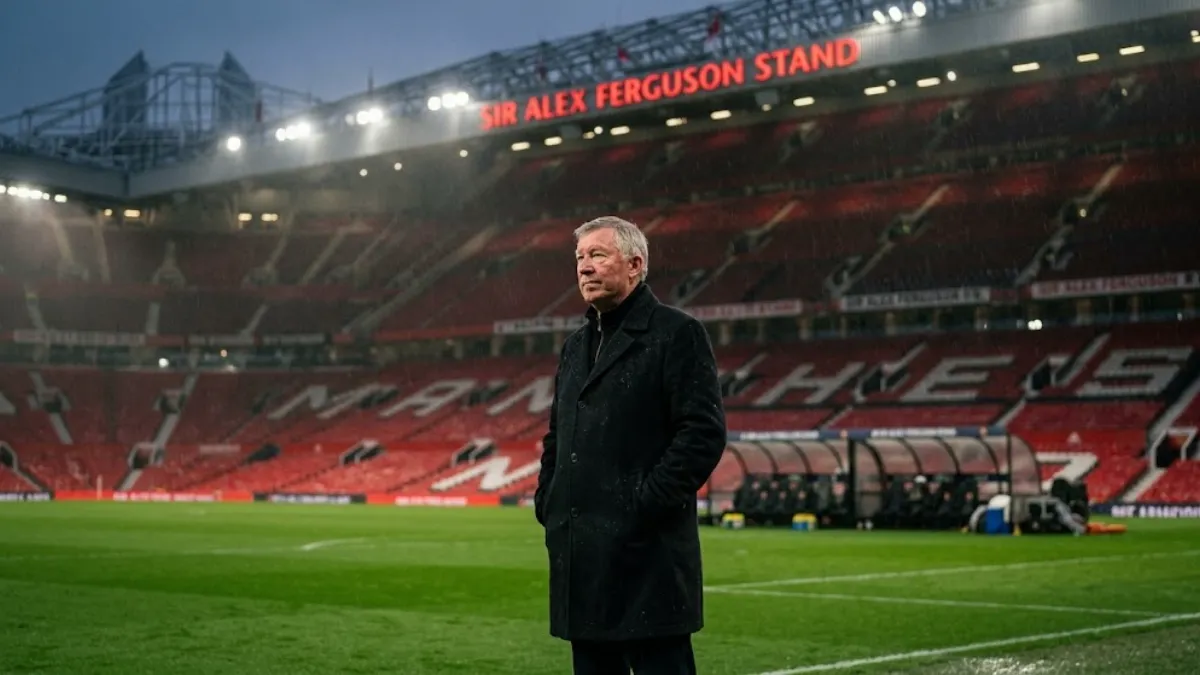
In the summer of 2013, Sir Alex Ferguson left Manchester United as Premier League champions. His final squad was strong enough to secure the title, yet it was glaringly evident that key components of the team had reached their limits. The midfield desperately needed fresh talent, and the ageing veterans were nearing the end of their careers, making it impossible to rely on consistent victories without a significant overhaul. A major reconstruction was required.
The following thirteen years would not suffer from a lack of financial backing. Manchester United invested massive amounts, signing a host of world-class players. However, the far more challenging task turned out to be integrating these signings into a cohesive, balanced structure. Each manager was allocated some of the desired new recruits, while vital areas were left neglected. Managers were dismissed, and their replacements arrived with entirely different visions and lists of transfer targets. The history of transfer windows starkly illustrates how the repetitive cycle of error left the rebuild incomplete time and again.
2013/14 Season – David Moyes
Taking on the championship squad, David Moyes quickly realised the vulnerability of the midfield. Throughout the summer, the club failed to secure deals for Thiago Alcantara and Cesc Fabregas, while also pursuing Ander Herrera. In the search for a left-back upgrade, they considered Leighton Baines and Fabio Coentrao.
None of the priority midfielders made it to Old Trafford. Alcantara chose Bayern Munich, Fabregas remained with Barcelona, and Herrera's transfer collapsed at the final hour. Ultimately, the club returned to Moyes’ former club, Everton, securing Marouane Fellaini on deadline day. The deal appeared absurd: the deadline for his release clause had passed, forcing United to pay £27.5 million instead of £23.5 million. January's acquisition of Juan Mata from Chelsea for £37 million added some creativity to the attack, yet failed to address the fundamental issues in midfield.
The season ended in disarray: a seventh-place finish – the club's worst result in over twenty years – led to Moyes being dismissed before the end of April. The first summer without Ferguson turned into a disastrous fiasco.
2014/15 Season – Louis van Gaal
The Dutchman was granted a far larger mandate to reshape the squad. His tenure brought significant transfers, including Luke Shaw, Ander Herrera, Marcos Rojo, Daley Blind, loan signing Radamel Falcao, and Angel Di Maria, whose transfer from Real Madrid for £59.7 million set a new British record.
While there was rationale behind several signings – Herrera addressed the previous year's gap, Shaw was seen as a long-term investment for the left flank, and versatile Blind could fill multiple roles – it turned into yet another reset. Little remained of Moyes’ short-lived project; the squad was hastily adapted to meet van Gaal's new requirements. Success was only partial: Di Maria flopped and left after just a year, and Falcao never returned to full fitness. A fourth-place finish returned the club to European competition, yet a cohesive unit remained elusive.
2015/16 Season – Louis van Gaal
Van Gaal's second summer was less glamorous but marked by yet another squad overhaul. Manchester welcomed Memphis Depay, Matteo Darmian, Morgan Schneiderlin, Bastian Schweinsteiger, goalkeeper Sergio Romero, and promising Anthony Martial from Monaco.
This time, the focus was on targeted signings rather than merely acquiring stars. Schneiderlin and Schweinsteiger were intended to bring order to midfield, Darmian added versatility in defence, while Martial was seen as a long-term investment up front.
Van Gaal concluded the season by lifting the FA Cup, but a fifth-place finish in the Premier League sealed his fate. Just two days after triumphing at Wembley, he was sacked. In three years since Ferguson's departure, the club had changed two managers and completely revamped the squad without establishing a clear succession plan.
2016/17 Season – Jose Mourinho
Jose Mourinho's arrival heralded yet another reset, yet his debut summer was a rare case of hitting all the right requests. Zlatan Ibrahimovic joined on a free, while Eric Bailly was brought in from Villarreal, Henrikh Mkhitaryan arrived from Borussia Dortmund, and a record £89 million was spent bringing Paul Pogba back from Juventus.
The rewards came quickly: Ibrahimovic netted 28 goals across all competitions, as the team clinched the EFL Cup and Europa League, earning a direct path back to the Champions League. Although Mourinho continued to push for a reliable central defender and a right-back, the club's direction finally aligned with the manager's demands.
2017/18 Season – Jose Mourinho
In the following year, the squad welcomed Romelu Lukaku, Nemanja Matic, and Victor Lindelof, while Alexis Sanchez made a controversial switch from Arsenal in January. Lukaku provided physicality up front, Matic added balance and strength in midfield, while Lindelof was seen as a long-term prospect in defence.
United finished second, amassing 81 points – their best tally since Ferguson. However, the reality was sobering: title winners Manchester City, led by Pep Guardiola, finished an astonishing 19 points clear. Mourinho continued demanding top-quality defenders and insisted on signing Ivan Perisic, revealing the obvious limitations in his squad.
2018/19 Season – Jose Mourinho
Rather than significant reinforcements, the club secured Fred for £52 million, promising right-back Diogo Dalot, and backup goalkeeper Lee Grant over the summer.
The highly sought-after central defender never arrived. Targets like Harry Maguire, Jerome Boateng, and Toby Alderweireld were on the list, but the hierarchy refused to invest, thinking that sufficient amounts had already been splurged on Bailly and Lindelof. Disagreements escalated into a public feud: Mourinho was sacked in December while the team languished in sixth place, and yet another attempt to rebuild collapsed.
2019/20 Season – Ole Gunnar Solskjaer
Norwegian caretaker Solskjaer’s first full transfer window was fundamentally different in approach. The focus shifted to young British talent: Harry Maguire, Aaron Wan-Bissaka, and Daniel James were expected to form the backbone of a long-term project.
The defence stabilised under this strategy; however, losing Lukaku and Herrera exposed a lack of creativity in midfield. The arrival of Bruno Fernandes from Sporting Lisbon in January transformed the team’s play, as he took on a leadership role. United finished third, qualifying for the Champions League, seemingly finding a direction, yet still with many gaps.
2020/21 Season – Ole Gunnar Solskjaer
The subsequent transfer campaign revolved around the saga of Jadon Sancho. Negotiations with Borussia Dortmund reached a standstill due to the German club's financial demands, leaving United frantically seeking alternatives as the window closed.
They signed Alex Telles, Donny van de Beek, young talents Facundo Pellistri and Amad Diallo, alongside seasoned free agent Edinson Cavani. The Uruguayan significantly contributed to a second-place finish in the Premier League, yet strategically the window was undermined: failing to secure a top-quality wide attacker cost the club precious time.
2021/22 Season – Ole Gunnar Solskjaer
One year later, Sancho finally arrived in Manchester, joined by Raphael Varane and the return of Cristiano Ronaldo to Old Trafford. On paper, this appeared a title-challenging squad: a global icon in attack, a winning elite defender, and a young creative talent.
The fatal gap remained in midfield once again. While upgrading defensive positions, the hierarchy neglected the midfield, stripping the team of fluidity and pressing resilience. The season turned into a disaster: Solskjaer was sacked in November, interim manager Ralf Rangnick couldn’t right the ship, and the club plummeted to sixth.
2022/23 Season – Erik ten Hag
Erik ten Hag kicked off his reign with significant investments exceeding £200 million, welcoming Tyrell Malacia, Christian Eriksen, Lisandro Martinez, Casemiro, and a staggering £100 million purchase of Antony from Ajax.
Martinez solidified the defence, Casemiro transformed the midfield in his first year, and Eriksen introduced much-needed playmaking. However, the deal for Antony faced backlash, as the Brazilian failed to justify his price tag. A third-place finish, the EFL Cup trophy, and an FA Cup final generated optimism, yet the team still lacked a reliable centre-forward and bench depth.
2023/24 Season – Erik ten Hag
This latest summer saw the arrivals of Mason Mount, Rasmus Hojlund, Sofyan Amrabat, and goalkeeper Andre Onana, who replaced the departing David de Gea.
Each signing on its own made sense, yet collectively they disrupted the team’s balance. The 20-year-old Dane was burdened with the task of being the main goalscorer, Mount found himself sidelined through injury, while the Cameroonian keeper struggled to adapt to Premier League demands. An injury epidemic shattered the structure: an eighth-place finish in the league set a histirical low, and even an FA Cup triumph couldn’t save the Dutchman from a swift exit.
2024/25 Season – INEOS reforms and Amorim’s arrival
With the arrival of the INEOS conglomerate, the club sought to take individual control of recruitment away from the head coach. Management transitioned to a newly formed sporting department led by Omar Berrada, Dan Ashworth, and Jason Wilcox.
This summer’s campaign was extensive: Joshua Zirkzee, Leni Yoro, Matthijs de Ligt, Noussair Mazraoui, and Manuel Ugarte reshaped the core of the squad across all areas. Yet chaos inertia made its presence felt; mid-season, ten Hag was dismissed, and his replacement Ruben Amorim adopted a radically different tactical scheme involving three central defenders, forcing him to adapt players acquired for a different coach.
2025/26 Season – Ruben Amorim
Amorim dedicated his first full pre-season to a complete overhaul of the attacking line. After scoring just 44 goals in the previous season, the club invested heavily in signing Matheus Cunha from Wolverhampton, Bryan Mbeumo from Brentford, and Benjamin Sesko from RB Leipzig.
This new attacking trio transformed the front line, yet the cost of compromise was high: the role of the 'six' in midfield once more opened up, resembling a chronic incompleteness.
2026/27 Season – the long-awaited midfield upgrade
Fundamental changes in the centre of midfield only materialised last summer. The management chose not to search for a singular saviour, instead opting for systematic strengthening: they bought Andre Santos from Chelsea for £48 million (not including bonuses), experienced Youri Tielemans from Aston Villa for £35 million, and Carlos Baleba from Brighton for £65 million, potentially rising to £70 million.
Each newcomer introduced variability, presence, and physicality to midfield. However, the ideal balance remains elusive: the left-back position still needs addressing, and the integration of an entirely new midfield line will take time.
The entire post-Ferguson era of Manchester United has unfolded as an endless cycle. The club has never lacked funds or high-profile names, but their fatal inability to adhere to a unified strategic direction amid managerial changes and chaotic shifts in priorities has rendered the rebuild a perpetual process.
