Back in the late 1980s, the atmosphere at English football stadiums was often filled with anger and tension, but the supporters of Manchester City responded in the most unexpected way—with a giant inflatable banana.
What began as a nearly accidental joke soon transformed the team's matches into a surreal spectacle filled with fruit, monsters, dinosaurs, and even inflatable boats.
The origins trace back to City fan Frank Newton, who spotted a large inflatable banana at his mate Allen Busby's house. After requesting to borrow it with the agreement that he would take it along to a football match, Frank was determined to make it happen.
The banana made its debut at a game against Plymouth, and while spectators initially laughed at the odd sight in the stands, Newton was so taken by the idea that he made it a regular fixture. His friend Mike Clare even painted a face on the banana and dressed it in City's colours.
Some claim the inflatable was a tribute to City's striker Imre Varadi, but the reality was the opposite. During a match, fans began chanting for Varadi's introduction, leading Newton to hold up the banana, which transformed the chant into 'Imre Banana'. According to Newton, there was no premeditated joke here; it all evolved spontaneously.
Once that moment happened, there was no stopping the banana craze.
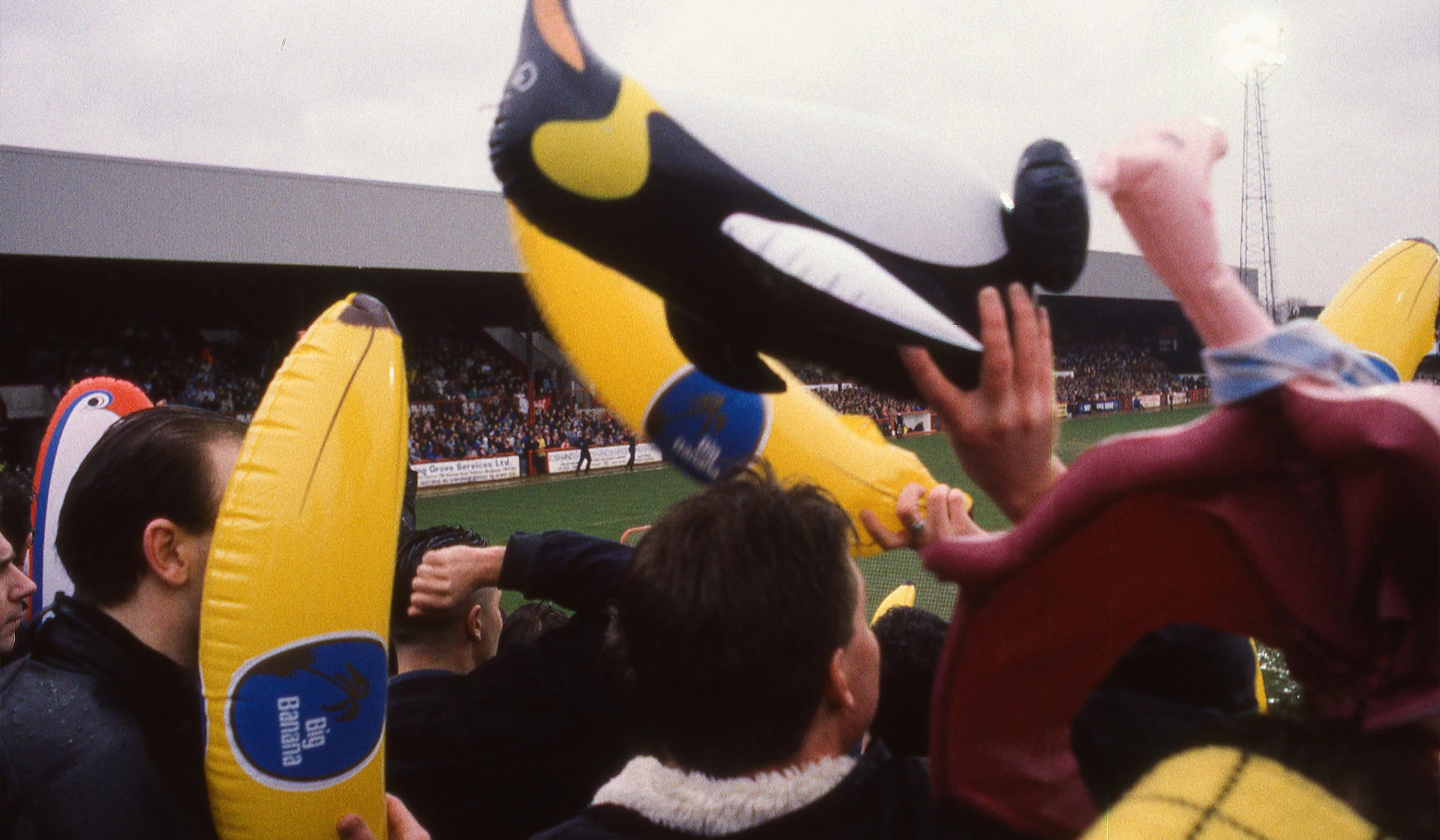
Inflatable bananas began appearing at Maine Road in their dozens, soon swelling into hundreds, with local shops selling out rapidly. Fans quickly recognised that their inflatable ambitions could extend far beyond fruit.

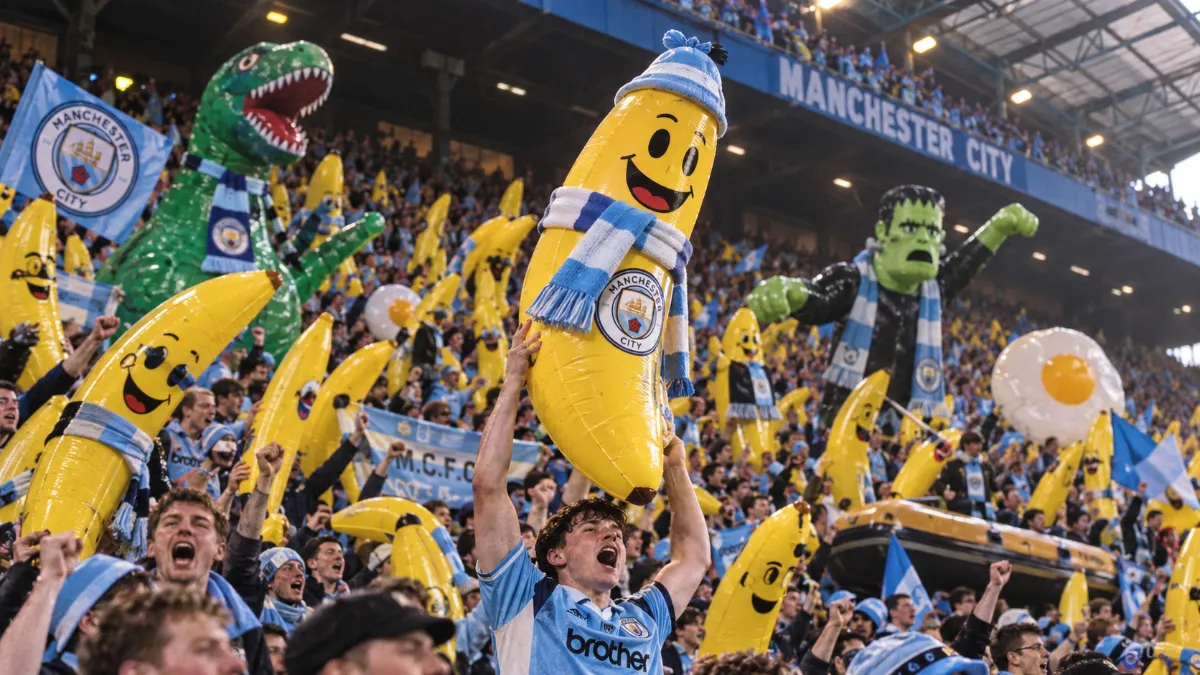
Gradually, the stands were filled with enormous animals, film characters, and the most outlandish inflatables that could be found.
One of the most memorable moments occurred during an away fixture at West Bromwich in the autumn of 1988, where a giant Frankenstein emerged above the heads of fans, while a massive dinosaur was raised on the opposite end of the stands.
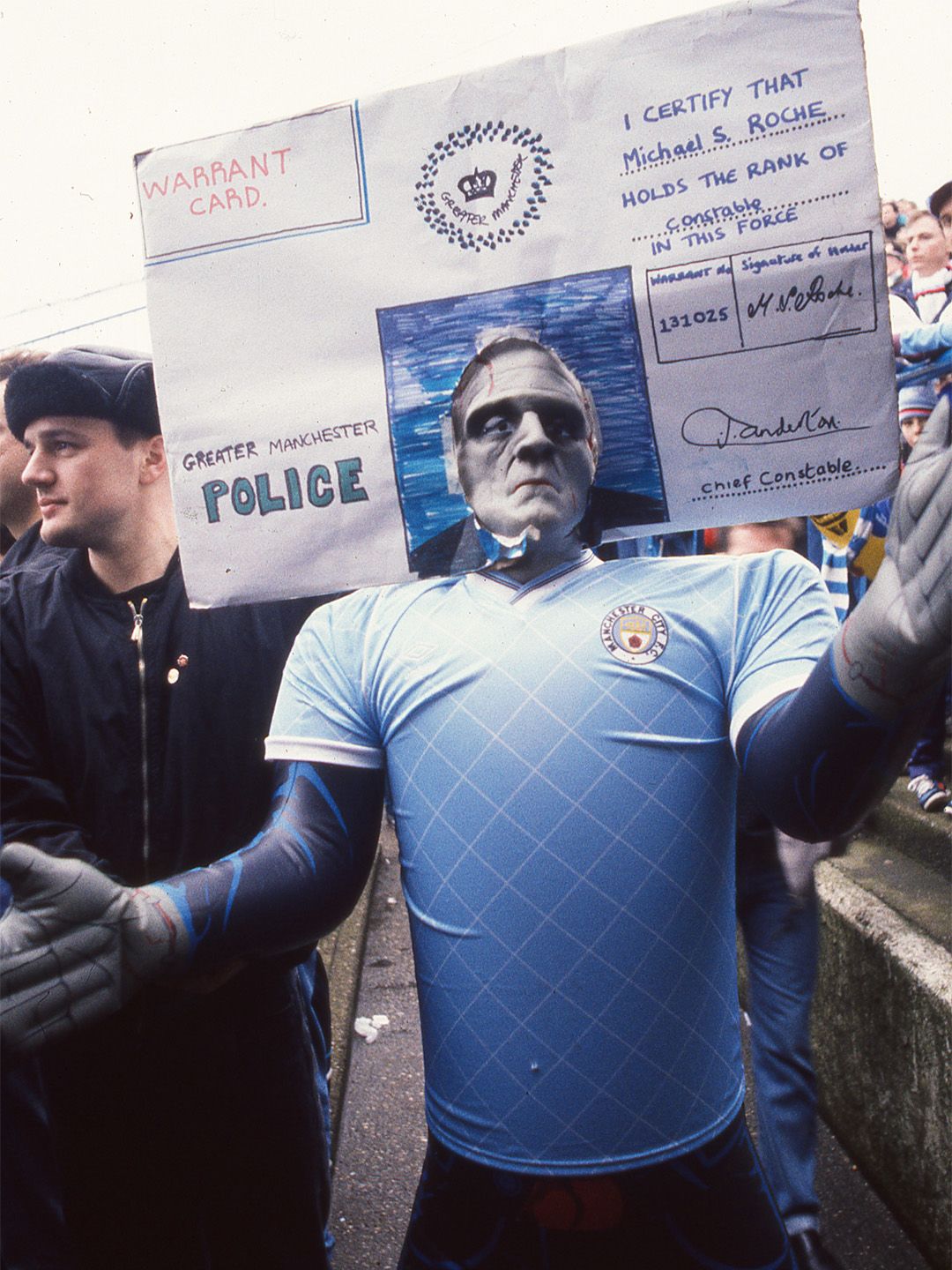
Fans started moving the inflatables closer together, mimicking an epic battle. Some rooted for Frankenstein, others for the dinosaur, as spectators pushed both with their bananas. Somehow, a massive inflatable boat and a giant fried egg joined the fray.
During another away game, the City fans made their seven-foot Frankenstein a quasi-identifying symbol. Ahead of a match against Chelsea, away fans were banned from Stamford Bridge, so club scarves and flags could easily identify City supporters. The colossal monster, however, became a less obvious marker.
By the season 1988/89, the banana phenomena had become a fully-fledged movement. In one away game at Stoke, Manchester City players themselves ran onto the pitch holding giant bananas, with thousands of their fans filling the away section.
The trend quickly caught on across the nation.
West Ham fans brought inflatable hammers, Grimsby Town supporters carried giant fish, and Stoke fans embraced inflatable pink panthers. Even some Manchester United fans got in on the act, brandishing inflatable red devils.
In the context of English football in the late '80s, this was particularly unusual. Stadiums were surrounded by high fences, the issue of hooliganism loomed large, English clubs were banned from European competitions, and authorities were discussing new measures to manage crowds.
Amid all this, thousands arrived for matches brandishing enormous plastic bananas.
By the end of the 1988/89 season, the fad faded as quickly as it arose. Manchester City returned to the top flight, and the inflatable frenzy gradually died down. Newton later simplified this phenomenon: it was a fad, and every fad eventually ends.
Yet the banana has not vanished from the club's history.
Even decades later, City fans occasionally bring it back for big matches, and the club has frequently referenced the tradition. In 2016, ahead of a League Cup semi-final against Everton, Manchester City even encouraged supporters to attend with inflatable bananas.
This seemingly pointless joke by one fan has become one of the most recognisable aspects of Manchester City's vibrant fan culture. Perhaps it was its absurdity that mattered most: in a challenging time for English football, fans found a way to enjoy going to the stadium again.