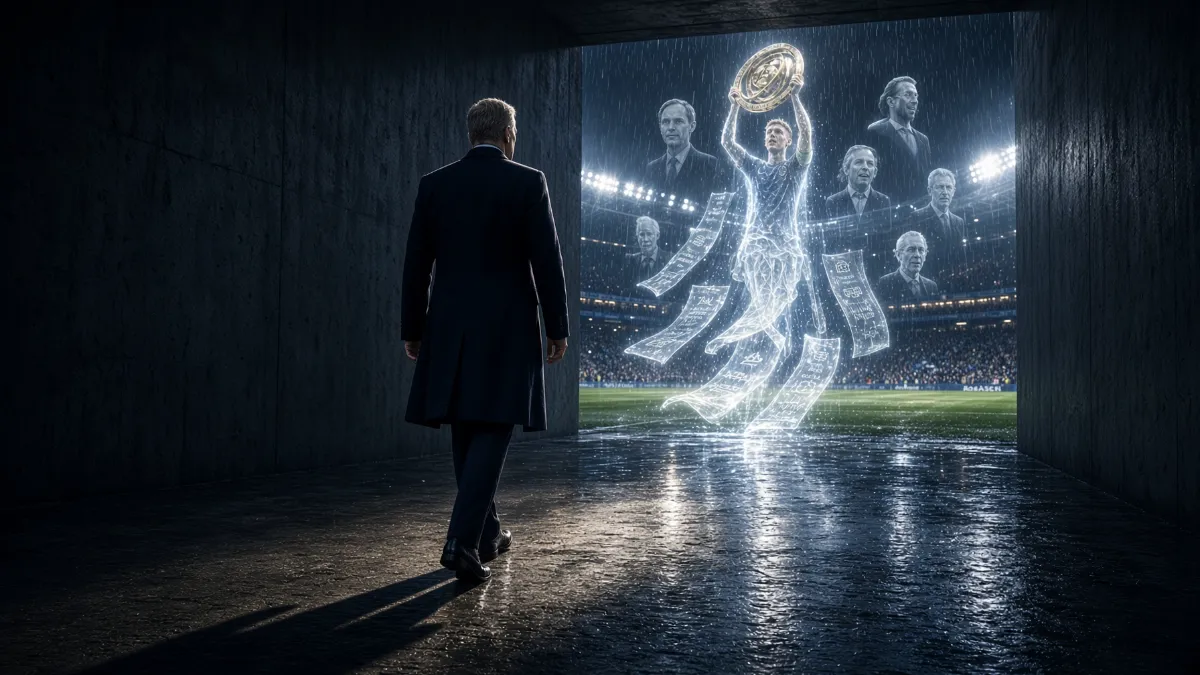
Todd Boehly's reign at Stamford Bridge will be remembered as one of the most chaotic, intense, and controversial periods in football history. In just over four years, the club experienced ownership changes, regular managerial upheaval, over £1 billion in transfer spending, a national transfer record collapse, and the assembly of one of the youngest teams on the continent.
The Blues sold off prized academy graduates, upended global contract practices, established a multi-club empire, prompted fierce debates over a potential move from Stamford Bridge, and engaged in risky financial gymnastics on the edge of regulations. The hierarchy soured relations with a significant portion of the fanbase while simultaneously claiming the Europa Conference League, triumphantly lifting the FIFA Club World Cup, and returning to the Champions League. By September 2026, this tumultuous chapter reached its conclusion as Boehly and Mark Walter sold their stakes to Clearlake Capital, and the American businessman officially stepped down as chairman.
It’s nearly impossible to pigeonhole the events of these four years into simple labels of ‘success’ or ‘failure’. Chelsea fans have lived through multiple versions of their team, often struggling to adapt to any of them. The collective experienced a dramatic shift from Roman Abramovich's era—characterised by secrecy, pragmatism, and a relentless pursuit of trophies—to the reality of American investors promising a technologically savvy, analytical, and commercially robust future. The tragedy was the speed of change; players and fans at Stamford Bridge hardly had time to digest one major transformation before another hit them.
Transfer frenzy and the role of the interim sporting director
Boehly arrived at Stamford Bridge in May 2022, following the sudden end of Abramovich's tenure. A consortium including Clearlake Capital, Mark Walter, and Hansjörg Wyss purchased the club for £2.5 billion and committed to invest another £1.75 billion in its development. Clearlake held the controlling economic package, but it was Boehly who became the primary public face of the consortium and took the chairman’s seat.
They inherited a club with a crumbling sporting structure. The likes of Marina Granovskaia, Bruce Buck, and Petr Čech all vacated their senior roles, while players such as Antonio Rudiger and Andreas Christensen left as free agents. The very architects of the prior decade's success vanished in an instant.
Rather than take a back seat, the American investor plunged into the fray himself, initially taking on sporting director responsibilities. It was a surreal sight—someone entirely new to European football led direct negotiations for transfers. In the first transfer window, Chelsea welcomed Raheem Sterling, Kalidou Koulibaly, Marc Cucurella, Wesley Fofana, and Pierre-Emerick Aubameyang. The question wasn’t about the individual talents but rather a fundamental misunderstanding of the future team concept by the new bosses.
The partnership with Thomas Tuchel was doomed from the start. The German manager, who secured the club's Champions League title just over a year prior, clashed fiercely with the new owners over transfer powers and visions for development. Following a shocking away defeat to Dinamo Zagreb in September, Tuchel was sacked. This decision encapsulated the main paradox of Boehly's leadership: the club publicly claimed a commitment to long-term strategy, yet cut ties at the first sign of trouble.
A chaotic January, contracts into the 2030s, and a fall to 12th
Graham Potter was supposed to be the saviour of the project, with Chelsea paying a substantial compensation fee to Brighton for his services. The idea was to synchronize the rise of a promising coach with a young team. Boehly and Clearlake co-founder Behdad Eghbali intensely engaged in the processes, scouring the globe for promising talents who would appreciate in value and reduce the need for a summer rebuild.
January 2023 marked a high point with a transfer spree that shocked even the most passionate fans. Benoit Badiashile, David Datro Fofana, Andrey Santos, Noni Madueke, Mykhailo Mudryk, and Malo Gusto joined, alongside João Felix on loan, culminating with a record deal for Enzo Fernandez from Benfica for £106.8 million. The club spent over £300 million in a single month, turning the restructuring into chaotic panic-buying mid-season.
The amortised contracts of eight-and-a-half years handed to Mudryk and Fernandez generated as much noise as the transfer fees themselves. The financial logic was evident: spreading transfer costs over maximum durations would artificially reduce annual accounting burdens. The hierarchy did not invent this tactic but pushed it to extremes, prompting UEFA and the Premier League to rush in and write new regulations limiting amortisation periods to five years.
Inside the dressing room, however, these financial manoeuvres spiralled into disaster. With too many players on the books, training pitches became overwhelmed, leaving expensive new signings starved of match action. Potter was drowned in this squad chaos and was dismissed by April 2023. An emergency return for Frank Lampard as a caretaker could not prevent the team's plunge to 12th place, their worst finish since 1996.
Initial fan excitement turned to resentment. Used to Abramovich’s model, where vast sums melded with silence in the boardroom and an unyielding demand for victory, supporters cautiously welcomed the overly public Americans and their experimental tactics from across the pond. For many, the club started to resemble a typical venture asset, being reshaped from above with scant regard for traditions.
A new structure, Mauricio Pochettino's breakthrough, and the unexpected split
Eventually, the owners recognised the perils of hand-on management. They brought in Paul Winstanley from Brighton, Laurence Stewart from Monaco, and Joe Shields from Southampton. This new sporting department formulated a clear direction: in-depth analytics, acquisition of top talents, prolonged contracts, and depth in the squad for long-term stability. What they lacked was patience.
In the summer of 2023, Mauricio Pochettino took the reins. Despite an injury crisis, the Argentine managed to weave a cohesive unit from disparate stars. Cole Palmer, signed from Manchester City for about £40 million, became the driving force of the attack, with Nicholas Jackson and Moises Caicedo also adding to the squad.
The Blues found their feet, winning 9 of their last 11 home matches, scoring 77 league goals in the season, and climbed to sixth place with 63 points (up from 44 the previous year). It seemed the massive investments were finally beginning to coalesce into a competitive side.
And then, abruptly, Pochettino was shown the door.
The dismissal was unrelated to results: the sporting directors prepared an 18-page analytical report recommending parting ways with the coach. Boehly leaned towards keeping Pochettino, but different factions within the hierarchy prevailed. The split at the top exposed deep-seated disagreements: different camps within the leadership had entirely incompatible views on development pace and the powers of the football department.
Boardroom wars, fan fury, and accommodation tricks
By 2024, internal discord erupted into the open. Relations between Boehly and Clearlake Capital representatives—Behdad Eghbali and Jose Feliciano—turned into the primary talking point in footballing circles. The two sides engaged in a cold war for control of the club, probing options for a full buyout of each other's stakes. This standoff lingered for two years.
Meanwhile, supporters had more pressing concerns. Heated debates arose regarding the future of Stamford Bridge: the stadium's limited capacity hampered revenue growth, prompting leadership to seriously consider relocation options, including the Earl's Court area. For fans, the home ground remained a sacred link to history, making the owners’ cynical pragmatism hard to swallow. The situation worsened with rising ticket prices, a scandal involving Boehly’s partnership with ticket reseller Vivid Seats, and the overall corporate coldness. The Chelsea Supporters' Trust warned the board about the risk of creating ‘irreversible toxicity’ in relations with the stands.
A painful blow came with the sale of Cobham academy graduates to balance financial reports. The sales of Mason Mount, Ian Maatsen, and particularly captain Conor Gallagher generated ‘clean accounting profits’, but destroyed club identity in the eyes of supporters. Fans refused to accept their beloved players as mere line items in spreadsheets, watching as the millions earned went towards an endless parade of unfamiliar foreign youngsters.
The financial machine continued to manoeuvre dangerously: total transfer spending exceeded £1 billion and approached £1.5 billion. To fit within strict financial fair play constraints, the club orchestrated the sale of two hotels near the stadium to a sister company for £76.5 million and conducted an internal re-registration of the women's football team, valuing it at £198.7 million. These moves balanced the accounts but sparked an avalanche of investigations from the Premier League and UEFA, which swiftly shut down such loopholes.
Simultaneously, the multi-club franchise BlueCo was developing: the acquisition of French side Strasbourg allowed the establishment of a player and manager training chain. Yet, fans increasingly sensed that their beloved club was turning into a soulless transnational corporation.
A trophy surge, managerial merry-go-round, and the final reckoning
Nonetheless, the massive spending yielded results on the pitch. In 2024, the Londoners scored 135 goals across all competitions—the second-best tally in the club's history—of which 29 were netted by Palmer. Enzo Maresca’s arrival stabilised the tactics: the Blues finished fourth in the Premier League for the 2024/25 season, qualified for the Champions League, and claimed the Europa Conference League.
The pinnacle came at the revamped Club World Cup in the USA during the summer of 2025. Chelsea triumphed in style, defeating Paris Saint-Germain 3-0 in the final, with Palmer netting a brace and assisting João Pedro. The trophy in the hands of the leaders seemed like tangible proof of the correctness of their chosen path.
However, stability at Stamford Bridge remained elusive. By January 2026, Maresca departed. His replacement, Liam Rosenior, who came from Strasbourg, lasted just 106 days before being sacked following a run of five consecutive league defeats without scoring. Over the four years, Thomas Tuchel, Potter, Lampard, Pochettino, Maresca, and Rosenior had all been in the hot seat—paradoxically, the project for the future suffered from a chronic inability to endure managers.
During Boehly's tenure, over 60 new players passed through the dressing room. The squad was in a perpetual state of flux: just as one player settled in, the club bought two new rivals for their position.
Finally, September 2026 marked the end of this drama. Todd Boehly and Mark Walter capitulated in their power struggle, selling their stakes to Clearlake Capital, which gained 100% control. According to the Financial Times, the deal valued the London club at around £5 billion, considering its debt obligations. Boehly stepped down as chairman, calling his tenure a tremendous honour, while Eghbali and Feliciano perfunctorily thanked the former partner for his work.
Boehly departed, leaving behind a European trophy, a world championship title, a budding superstar in Palmer, and tectonic shifts in the club's structure. Clearlake’s full control won’t erase the legacy of these four years: long-term agreements, a multi-club system, transfer commitments, and the unresolved stadium issue do not simply vanish. Todd Boehly left the London boardroom, but the system he built remains—bearing all the triumphs, scars, and risks of the most turbulent era in Chelsea's history.