The gallery of British football icons never far from a drink is as vast as Paul Merson's legendary home bar. But to understand the nature of this destructive flame, we must return to its roots.
There was a time when the world genuinely believed football could take on the qualities of a rock star. Not the haggard face of a working-class man, nor the stern silhouette of a battering ram striker slogging through the mud in pouring rain, but the figure of a long-haired rebel, with a cheeky glint in his eye and dribbling as airy as if the ball existed on the grass solely for a dance.
His name was George Best.
He was dubbed the 'fifth Beatle': when he stepped onto the street, girls would scream at the top of their lungs, while men pretended it was all about the football. But it was never that simple. In Best's narrative, football was never the sole purpose. He was the first player whose poster adorned the walls of a bedroom like a pop idol, and the first to turn the green pitch into a stage for a concert.
Why is the former winger of Manchester United still recognised as the unmatched king among Britain's chief rebels, and why will no figure of such stature ever walk the Earth again? George Best embodied both the prototype of the modern global celebrity and the tragic archetype of the dying genius. He drove crowds wild, basked in the dazzling glow of floodlights, and found himself in the arms of the world’s most beautiful women. But the brighter this fire blazed, the faster the fall became.
Agony before a nation
Let’s start at the end, when the turbulent body of the rebel capitulated. George Best passed away on November 25, 2005, following years of suffering due to severe alcoholism. He spent his final days in Cromwell Hospital in London. Five years before his tragic end, in 2000, he underwent a liver transplant and faced clinical death. The reason was clear to everyone—decades of unrelenting drinking.
His ex-wife, Angie McDonald-Janes, through tears, threw out bitter words:
My husband was killed by strangers. Every passerby wanted to drink with the famous George Best—pushing a glass into his hand in every bar.
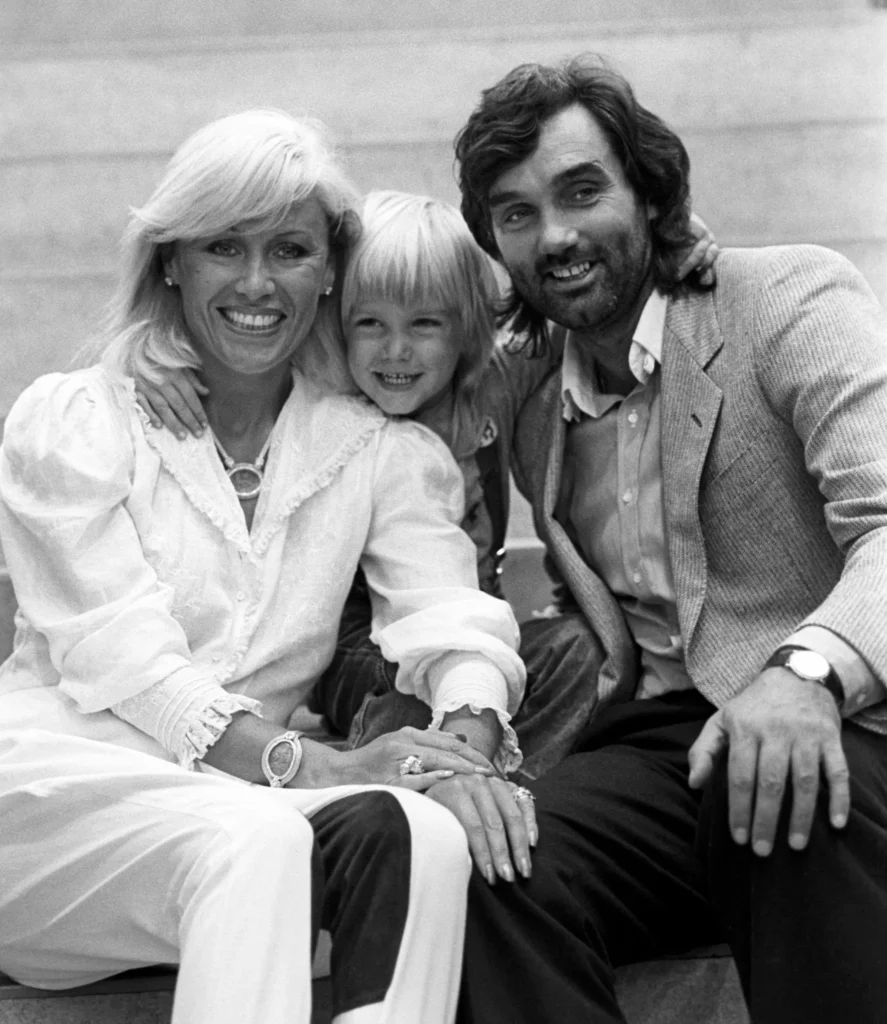 Close friends desperately tried to shield him from alcohol, but there were always those around him who treated having a drink with the 'fifth Beatle' as a matter of prestige. This was a public death; tabloid reporters relished every fall of the Manchester United legend. Best was becoming a crumbling statue of himself, living under the gaze of cameras and dying in the same manner—the press captured every final breath at his hospital bed.
Five days before his death, News of the World published a haunting photograph of the frail, fading George with the chilling headline:
Don’t die like me.
This was the fatal script that would later play out in the life of Paul Gascoigne. Best was buried in his hometown of Belfast, with over 100,000 people turning out to say goodbye. Murals across Northern Ireland still bear the poignant wordplay:
Maradona—good, Pele—better, George—Best.
Twenty minutes of abstinence and boutiques on the streets
George scored masterpieces, but the more virtuoso his goals became, the deeper he sank into the bottom of a glass. Cracks began to form in the late 1960s when the Northern Irishman opened two nightclubs. The venues instantly became his main passion: where free-flowing alcohol and adoring fans filled the air. The enterprises generated solid income—fans queued up for a chance to exchange words with a living legend. Manchester United’s hierarchy made countless attempts to pull the wayward forward from his revelries, but Best evasively slipped out through back doors to continue the party.
George himself disarmed the public with self-irony:
In 1969, I gave up women and drinking. That was the worst 20 minutes of my life.
He balanced on the edge of the abyss, indulging in a hedonistic lifestyle while simultaneously suffering from a sense of wasted talent. In the manner of The Rolling Stones' Keith Richards, he played life all in:
Fate gifted me a unique talent, the whole world lay at my feet. Then I had nothing left: no wife, no home, no money, no self-respect… and hardly any liver left.
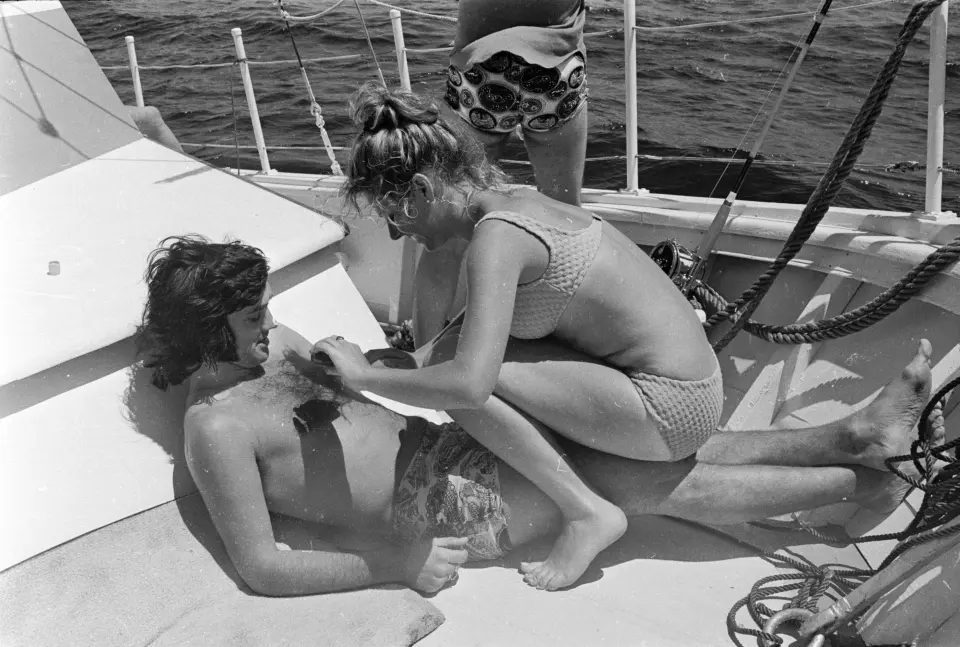 He contemplated death with the shifty eyes of an old alley cat, convinced he had a few lives tucked away. Best had only one life, yet on the pitch, he moved with cat-like grace that no one has been able to replicate. With a fashionable wardrobe, his own clothing store, advertising contracts, luxurious sports cars, and a stylish haircut long before it became a trend among athletes—women swooned over him, and men envied him fiercely. He crowned himself the Prince of Manchester.
But the bubble burst. After 1968, his performance decline was compounded by drunken escapades. In the 1973/74 season, Manchester United's hierarchy pointed the 27-year-old genius towards the exit. His great career had effectively ended; wandering through modest English clubs and his US ventures reminded everyone of a mere shadow of former glory. And the drinking never ceased.
The birth of a legend: from the ruins of Munich to the summit of Europe
The start of his journey didn’t hint at a sorrowful end. George was born on May 22, 1946, in Belfast. At 11, he passed the rigorous entrance exams into the prestigious Grosvenor Grammar School, which cultivated rugby. But the oval ball bore him with boredom; he longed for the schoolyard mates and classic football. He left the elite institution and transferred to the simpler Lisnastraw school.
In the youth club ‘Cregagh Boys’, the boy’s progress shocked specialists. Manchester United scout Bob Bishop sent a historic telegram to the club:
It seems I’ve found you a genius.
While Manchester United painfully resurrected from the ashes of the terrible Munich air disaster, a new generation breathed life into the team. On September 14, 1963, 17-year-old Best made his league debut. Joining forces with Bobby Charlton and Denis Law, he formed the immortal 'holy trinity' of the revived club.
England fell in love with him after a 5-1 thrashing of Burnley, where the Northern Irishman scored his first goal. The continent fell at his feet three years later when his double decimated Lisbon’s Benfica. The apex came in May 1968: Manchester United snatched the European Cup from the same Benfica (4-1), with Pele proclaiming:
George Best is the greatest footballer on the planet.
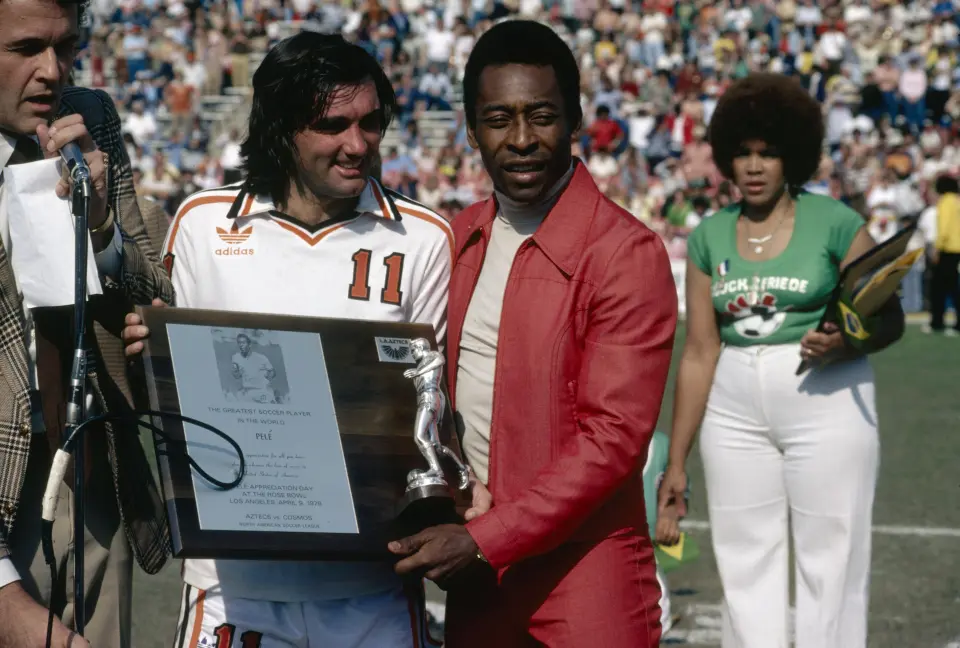 In his 11 years at Old Trafford, George played 474 matches and scored 181 goals. Over his entire career, he played 709 games, netting 253 times. He clinched two English championship titles (1965, 1967), the European Cup, and the Ballon d'Or in 1968. At just 22, he stood atop the world. And from that pinnacle, he plummeted into the abyss.
Fatal legacy and the eternal question
Best carried a heavy family trauma. His mother, Anne, a hockey athlete, did not touch alcohol until the age of 44 but succumbed to madness from tabloid harassment hunting her son, dying at 54. George outlived her by just five years. The monstrous price of fame destroyed the family from within.
When the fifteen-year-old boy from a dock worker’s family first left for a trial in Manchester, he seemed a mere child—his first pair of adult long trousers only put on just before boarding the ship.
Best lived at such speeds it seemed he intended to live ten lives within his allotted time. True, great football in his life came to an abrupt end at 27. An endless trail of escapades followed him: wrecked cars, all-night parties, six goals in a single FA Cup match, and awkward awakenings in luxurious hotels.
The essence of George Best's contradictory life is encapsulated in one famous episode:
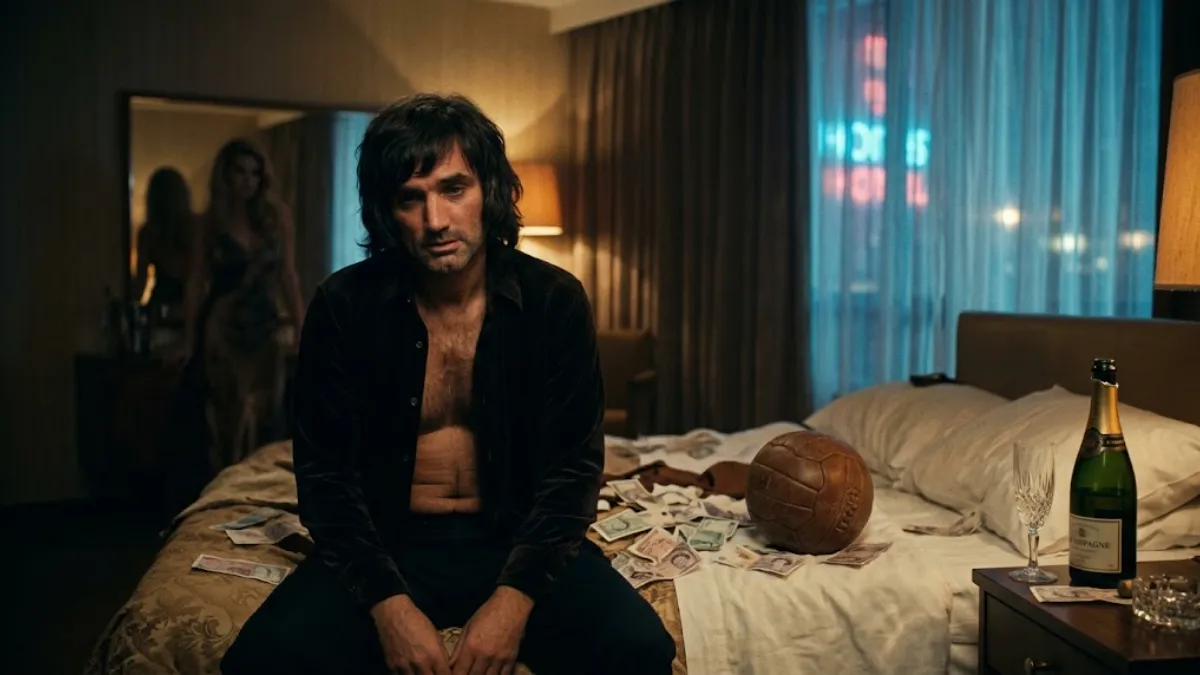
A luxurious room in a five-star hotel with a casino on the first floor. A bucket of expensive champagne, carpets, and a bed strewn with wads of cash won. In front of the mirror, the current Miss World, Mary Stavin, is fixing her hair. Best carelessly pops open a bottle of Dom Pérignon and hands the astonished bellboy a fifty-pound tip.
The young lad gazes at the dazzling woman, the mountain of money, then shifts his gaze to the weary, fading eyes of the superstar and quietly says:
Mr Best… where did it all go wrong?
