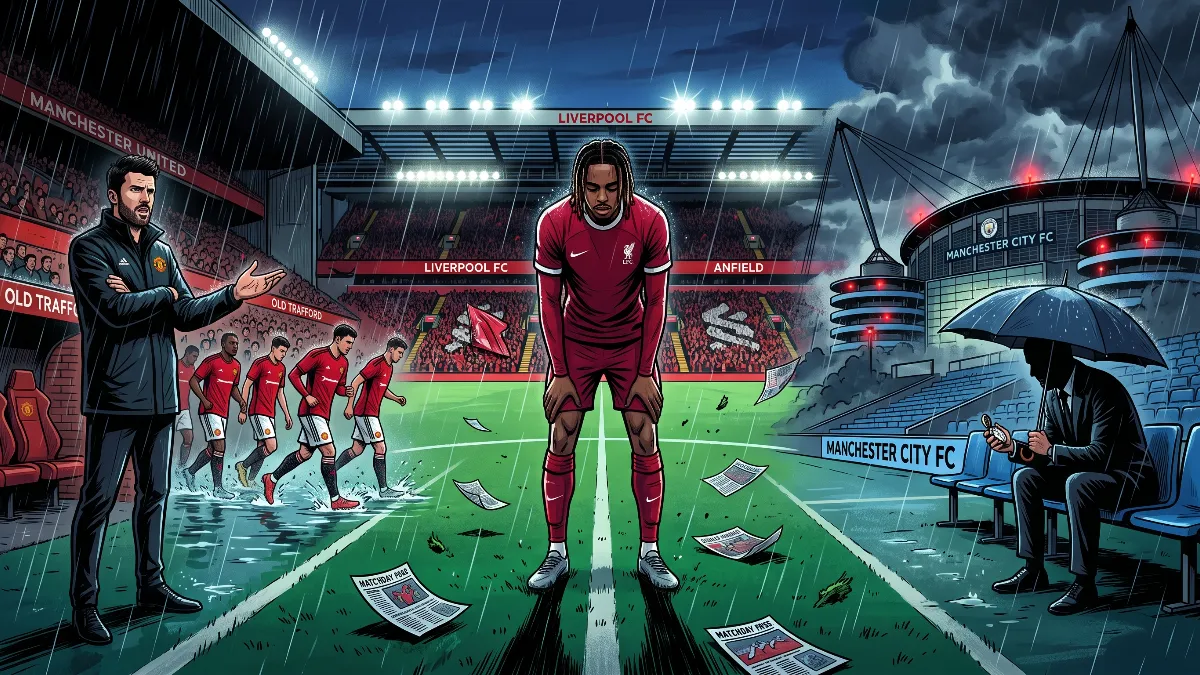
With six matches in the Premier League now completed, it’s time to reflect on the season’s biggest disappointments. While the spotlight remains on the legal troubles of Manchester City, the struggles of both the giants and the mid-table teams have become evident, turning high hopes into sheer disappointment.
Struggling newcomers Tottenham and the slow Manchester United under Michael Carrick
Tottenham have finally loosened the purse strings after years of financial restraint, but their multi-million-pound signings have yet to deliver. The North London side has failed to secure a single league victory and, despite occasional glimpses of attractive football, they appear unable to convert chances into goals. Their hefty investment in attacking players has not paid off, leaving them without anyone capable of reliably hitting double figures for the season.
Equally concerning is Manchester United under the stewardship of Michael Carrick. The Mancunians are playing what can only be described as pedestrian football; players don’t track back, are hesitant in duels, and create almost no pressing opportunities. While Spurs at least show a glimmer of a game plan, United's display has been utterly devoid of purpose. This alarming trend could swiftly lead to Carrick’s sacking, with the hierarchy more likely to opt for a safe choice like Eddie Howe rather than gamble on a charismatic crisis manager.
Liverpool's creative crisis and a silent Anfield
Bradley Barcola has overshadowed Florian Wirtz's struggles entirely, as the French winger has gone ten matches for club and country without scoring or providing an assist. Liverpool, meanwhile, finds themselves languishing in the depths of the league for creativity, having conjured just five clear scoring chances across six matches and netting a modest seven goals despite boasting three forwards each valued above £100 million.
This failure isn’t just confined to the pitch; it has echoed through the stands as well. Fans had three weeks to prepare for the arrival of Manchester City following the announcement of their £830 million financial misconduct verdict. Anticipated as a hostile and fiery reception, what transpired was a standard display of banners and lacklustre chants. The fury turned to apathy and sorrow; the realization that nearly two decades of rivalry with City had lost its competitive edge was enough to shake even the most loyal supporters.
Invisible crises, managerial dead ends, and defensive disasters
- Quiet underachievers: A series of high-profile scandals surrounding the elite clubs has masked disappointing starts from others. Nottingham Forest managed only one win from six, Sunderland are caught in the 'second season syndrome', Bournemouth, now without a win since Andoni Iraola’s exit to Liverpool, have the league's worst defence, and Newcastle have scraped just two victories alongside two heavy defeats.
- Managerial stalemates: Of the eleven managers who took charge this year or at the start of the season, only Enzo Maresca and Gary O'Neil have earned any plaudits. Javi Alonso's situation at Chelsea and Matthias Jaissle at Newcastle still raises questions, while others have been outright disappointing.
- Defensive catastrophes: The standard of defensive play seems to have plummeted across the league: nine teams have conceded over ten goals in just six matches, with Manchester United and Tottenham close behind, each shipping nine goals.
- Everton's sterile streak: David Moyes' Everton remain unbeaten, amassing ten points with two wins and four draws. However, this tally is built on a dull defensive routine, with little in the way of entertainment and only an occasional goal from Ainsley Maitland-Niles against the Mancunians breaking the monotony.