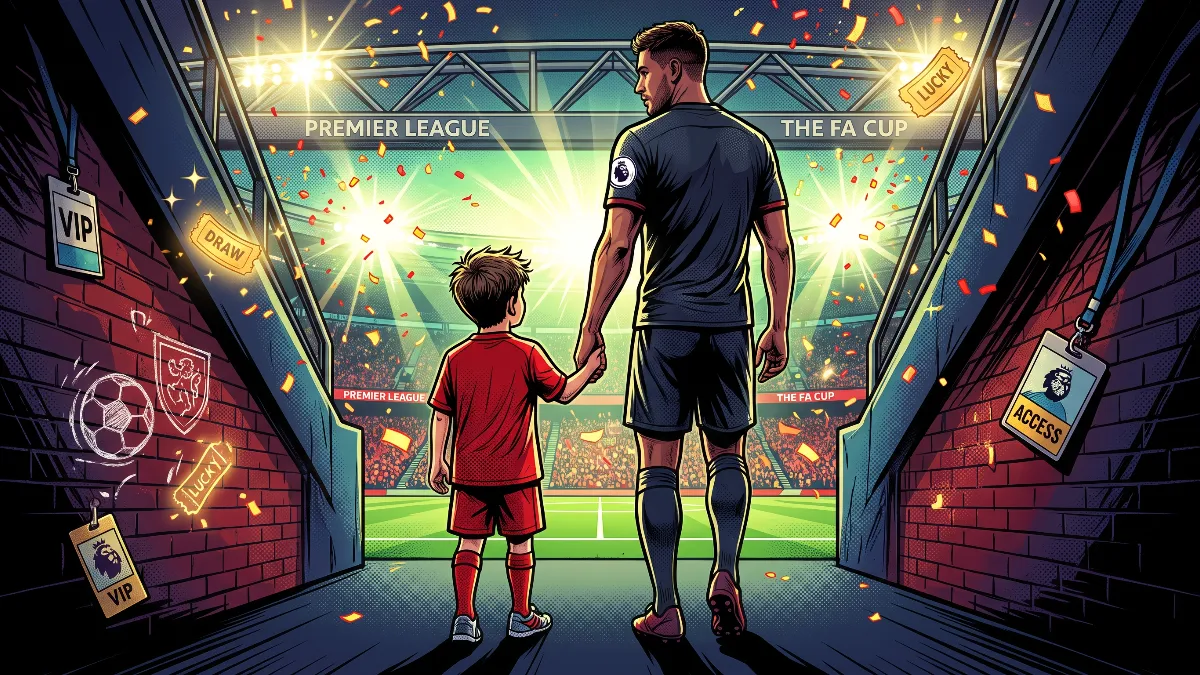
As the starting whistle looms, all eyes turn to the tunnel beneath the stands. World football stars emerge onto the pitch, hand in hand with excited children clad in kits. A brief ceremony, the anthem, applause from the packed stands—then the young mascots leave the field. For the spectators, the match hasn’t even begun, but for those kids, it’s already the highlight of their lives. What started as a heartfelt social initiative has evolved into a complex commercial industry where children’s dreams are often measured by the state of a bank account or a win in a club’s exclusive lottery.
From Wayne Rooney and UNICEF to global sponsorship programmes
This tradition, in its current form, is relatively new. Back in the 1990s, players would often walk onto the pitch alone, accompanied by just one child. Notably, on November 20, 1996, an 11-year-old Wayne Rooney led Everton onto the pitch for a derby against Liverpool at Anfield, posing for pictures with captains Dave Watson and John Barnes, before making his own first-team debut six years later. Even during the 1999 FA Cup final between Manchester United and Newcastle, only two children accompanied the players.
The landscape changed dramatically at Euro 2000, and the pivotal moment came during the 2002 World Cup in Japan and South Korea. FIFA, in collaboration with UNICEF, launched the “Say Yes for Children” campaign, highlighting children’s rights, education, and sports. Young mascots donned official kits as they walked hand-in-hand with stars in front of millions of viewers, so embedding this gesture into the fabric of football.
Before long, sponsors caught on: McDonald's launched a nationwide mascot programme that debuted at Euro 2004. By Euro 2012 in Poland and Ukraine, the initiative had allowed 682 children from 34 countries to share the spotlight with stars, selected through creative contests, essays, and social videos. Charity and brand promotion fused seamlessly as professional clubs realised the commercial potential of these ceremonies.
From budget walks to luxury packages: the price tag on a dream
In the 2026/27 season, Crystal Palace offers two tiers of packages for home matches of the men's team. The silver package prices range from £255 to £315, while the gold package stretches from £470 to £520. For £520, a child aged 5 to 14 can snag a full Eagles kit, two tickets, meals, a dressing room and technical area tour, a meet-and-greet with the manager and players, an autograph session, a warm-up on the Selhurst Park pitch, souvenirs, and of course, walking onto the pitch with a star. The cheaper option requires parents to buy the kit separately, with no meet-and-greets included.
This contrast is especially stark when compared to the women's team at Crystal Palace, where a similar package costs just £110. However, even having hundreds of pounds doesn’t guarantee immediate access—waiting lists for the men's team mascots stretch four to five seasons.
Brighton’s basic package will cost parents between £280 and £340, while leading the team captain costs between £370 and £450, including extra tickets. This model is far from unique; in Poland, Lech sells a silver package for 1100 zlotys, while the VIP gold option, including catering and a post-match meet-and-greet, can reach 3100 zlotys. Here, the child may even be paired with an opposing player or an official. On the other end of the scale, Henley offers the entire experience—field entry and tickets for four family members—for just £30, clearly demonstrating that the cost of the ritual need not be in the hundreds.
Nottingham Forest set a true record when, in November 2025, the club sold premium family packages from £2000 for four seats in the luxury Robin Hood lounge, which all sold out. Football financial expert Kieran Maguire highlights that with ten mascots at £500 each, clubs can rake in £5000 per game, totalling an astonishing £100,000 in additional income over a season, not factoring in family spending.
Public outrage and the hidden cost of “free” programmes
Debates over paid mascot experiences have raged for over a decade. Back in December 2014, eleven of the twenty Premier League clubs charged for mascot status—West Ham was asking up to £600. By 2019, this price had climbed to a staggering £700, excluding the £80 kit, sparking outrage from Gary Lineker, who labelled it shameless greed. By November 2025, UK parliamentarians joined the critics: Conservative Caroline Dinenage asserted that these fees cut young fans off from their dreams, while Labour's Clive Efford called for clubs to abandon monetisation given their multi-million-pound TV revenues.
Some clubs have opted for an alternative route. Arsenal and Tottenham have steered clear of direct sales; instead, spots are raffled off monthly among participants in their Junior Gunners and Junior One Hotspur programmes. Paris Saint-Germain squarely emphasises that places are not for sale, but allocated among MyParis Kids club members, tied to a paid adult subscription (€19.90 for the season). Bayern Munich, boasting a youth club with 75,000 members, allows children to compete for a chance through creative contests. Meanwhile, Japan's Kashima Antlers offer lotteries for club members costing 2200 yen, though families must separately purchase match tickets. The term “free” in football is a flexible concept: payment often comes through membership, travel, or seating.
Auctioning, charity, and strict limitations
At the other end of the spectrum lie charitable auctions. Manchester United regularly donates spots to seriously ill children through its foundation and lists desiring tickets at auctions—during a game against Crystal Palace in the 2024/25 season, a winning bid reached an astonishing £5531. Liverpool collaborates with sponsor Standard Chartered to conduct similar auctions ahead of derby matches against Manchester sides.
Oxford United found a middle ground: at each match, seven spots are sold (ranging from £135 to £180 for walking out with the captain), while four spots are freely distributed to participants in social programmes and those suffering from Parkinson’s disease. At Wembley Stadium, about a quarter of seats are reserved for schoolchildren in London’s Brent for academic achievements. In the 2026 Women’s Champions League final in Oslo, 22 children were selected to represent all 18 regional football associations in Norway.
In May 2026, Ukrainian side Shakhtar Donetsk offered children displaced from combat zones the chance to feature in a match against Obolon through their “Let’s Play!” project, while Indian club Kerala Blasters had 24 children who survived devastating landslides in Wayanad walk onto the pitch in 2024.
Beyond the financial element, another significant barrier can be physical constraints. In the Champions League, only children aged 7 to 9 and measuring between 105 and 135 centimetres tall can join the procession. Due to lengthy waiting times, a child could easily outgrow the eligibility requirements, losing their chance of fleeting glory beside their football idols. Those precious seconds of fame beside a star remain unchanged; however, the journey to get there is now dictated by the decisions of officials, parental wallets, or sheer luck.
