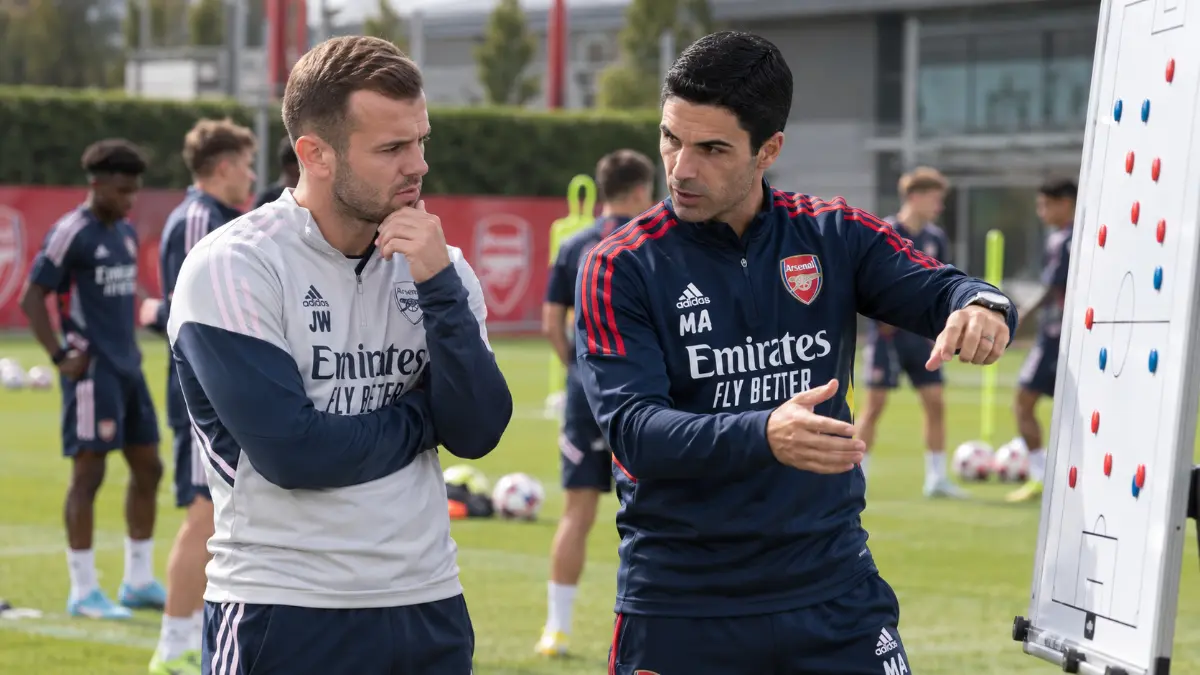
Luton Town manager Jack Wilshere has opened up about his transition from player to coach, the impact Mikel Arteta had on him, and the importance of developing young footballers. The England international also shared memories of working with Max Doughman and explained why he believes in giving players a second chance.
Wilshere has come full circle in his footballing journey, rising from the youth academy at Luton to representing Arsenal and the England national team. After hanging up his boots due to injury, he embraced coaching, now leading the club where it all began for him.
In an interview with BBC Sport, the 34-year-old reflected on his development as a manager, his relationship with Mikel Arteta, and his ambitions to guide Luton into the Championship.
“I truly love this job”
October 13 marks the one-year anniversary of Wilshere's appointment as Luton Town head coach. Prior to this, he briefly took charge of Norwich, overseeing two matches at the end of the previous season.
During his time with the Hatters, Wilshere already boasts a trophy to his name. In April, Luton triumphed over Stockport County 3-1 in the EFL Trophy final at Wembley to a crowd of nearly 50,000.
“I’m 34 years old, and perhaps I could still be playing. Don’t get me wrong: I enjoyed every minute of my playing career, but I really love what I’m doing now. I’m fortunate to have started my coaching journey so early,” Wilshere admitted.
The manager also expressed gratitude to Luton's hierarchy for giving him a chance, especially as the club had no obligation to trust such a young coach.
Immediately following his retirement, Wilshere returned to Arsenal, working with their youth teams. It was during this time he realised that he wanted to commit to coaching.
How Arteta shaped Wilshere as a coach
One of Wilshere's major influences at the start of his coaching career has been Mikel Arteta. They spent five years together at Arsenal, and following their playing days, Wilshere had the chance to observe Arteta in his role as head coach.
Wilshere consistently seized the opportunity to ask Arteta various questions about tactics, training methods, and decision-making processes.
“I watched Mikel, saw how he trains and the impact he has on the team. I’d question him about why he does certain things, and gradually, I fell in love with the process of how he prepares training sessions,” Wilshere shared.
However, he admitted that he had to learn specifically how to explain his ideas to players. Understanding a coach's demands while on the pitch was much simpler than conveying those same ideas to a team.
“I played under some excellent coaches and had a decent grasp of what they wanted from me. But I never really thought about why they asked me to do certain things. Mikel helped me to unpack that. I was lucky to have a relationship where I could ask him questions, and he was willing to share his insights,” Wilshere noted.
Working with Doughman and nurturing Arsenal's young talents
Wilshere took particular satisfaction from Arsenal's championship win in the 2025/26 season, marking the club's first Premier League title in 22 years.
This success was especially meaningful for Wilshere as he had worked closely with several players in the Arsenal academy who later featured in the first team.
Among these players are Myles Lewis-Skelly, Ethan Nwaneri, and Max Doughman.
Wilshere has vivid memories of his time working with Doughman. Recognising his talent at an early age, he first saw Doughman play for his under-18 team when he was only 13 years old.
“Max was playing for my under-18 team when he was just 13. I remember calling his dad and asking if it was too early for him. After all, I played up at 14,” the manager recalled.
After their first game together, it quickly became clear to Wilshere that Doughman was ready to compete with older opponents.
“I called his dad again and told him he needed to come and watch this boy. Of course, he’s biased, but even he said, ‘He’s better than you”,' Wilshere smiled.
Learning from past mistakes and giving young players a second chance
Wilshere believes that his own experiences during his professional career help him better understand young footballers and guide them away from potential pitfalls.
Early on, he found himself under scrutiny for photos showing him smoking and drinking, which did not sit well with then-Arsenal manager Arsene Wenger, who publicly chastised the young midfielder.
Now, Wilshere uses that experience in his guiding of young players. He believes that coaches should set clear expectations but also allow players the opportunity to correct their mistakes.
“Yes, I did make mistakes, but I analyse them. I had coaches with high standards who expressed disappointment in my behaviour, but they also gave me a second chance. You need to explain to young players where the line is drawn and what shouldn’t be done. But it’s also vital to give them a chance to make things right. I truly believe that,” he stated.
Emotional half-time speech and team expectations
Wilshere showcased his management skills earlier this season against Reading. At half-time, Luton were trailing 3-1, but an impassioned speech from the manager turned the tide of the match.
Ultimately, the Hatters achieved a dramatic comeback victory, winning 4-3, and Wilshere’s half-time address quickly went viral on social media.
The manager emphasised that building trust with players while maintaining high standards is essential for success.
“You need to establish relationships with players. They want to meet high expectations and take responsibility for their actions. From day one, the players have fully engaged in what we're trying to build,” Wilshere explained.
According to him, the core principles of his work include intensive training, clear understanding of game tasks, and the drive to make football enjoyable for the team.
For Wilshere, the immediate goal is to help Luton secure promotion to the Championship. He believes that a combination of discipline, hard work, and a love for football will help the club continue to progress.