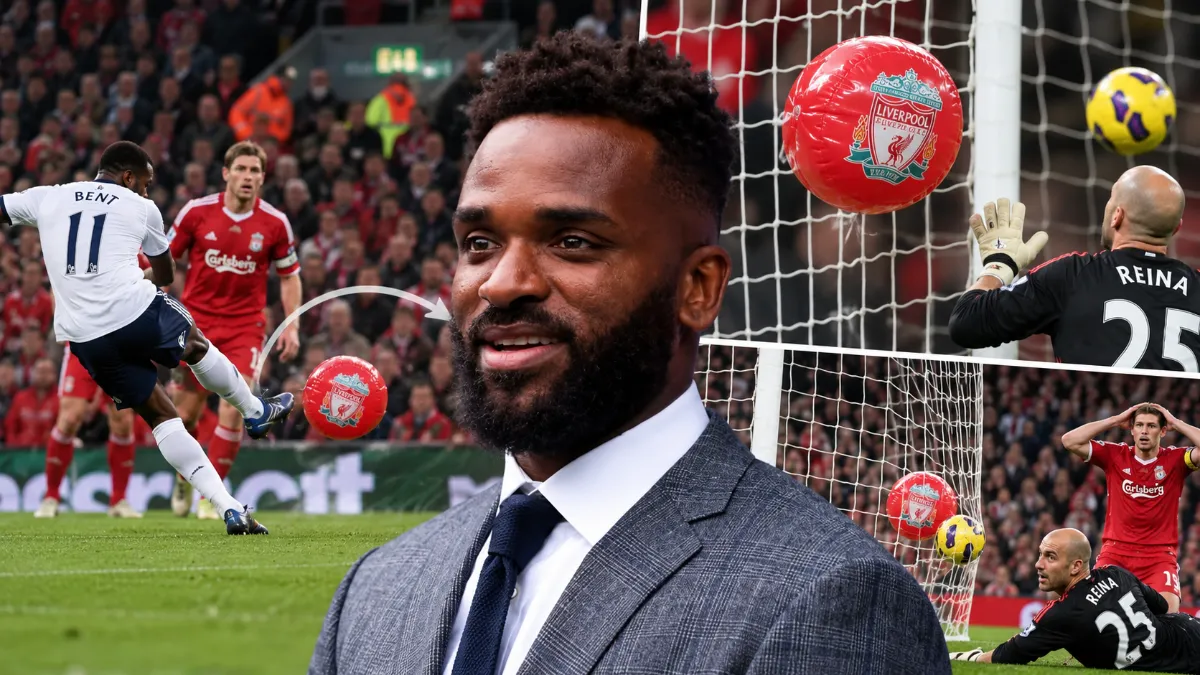
A regular red beach ball adorned with Liverpool's crest became the unlikely hero of a Premier League match. It entered Pepe Reina's penalty area just as Darren Bent took a shot, altering the path of the actual football.
The most shocking part? The goal was allowed.
On October 17, 2009, Liverpool made the trip to Stadium of Light to face Sunderland.
At the time, Rafael Benitez was striving to keep his side in contention for a top finish, but the match began in the worst possible fashion for the visitors.
Within minutes, a stray object lay near Liverpool's goal.
A red beach ball. Essentially, a glorified balloon.
But this was no ordinary toy.
It boasted the emblem of Liverpool itself.
Prior to the match, the ball had been tossed around in the away stand, eventually finding its way onto the pitch beside Pepe Reina's goal. As recounted by those present, the last person to send it onto the field was 16-year-old Liverpool fan Callum Campbell.
You'd think it was just a minor distraction.
A steward should have quickly removed the toy, and play would go on.
But they didn't manage it in time.
On the fourth minute, Sunderland surged forward.
Darren Bent received the ball.
The striker made his move towards goal.
Looking back at the incident without the beach ball, the shot seemed straightforward for Pepe Reina.
However, that very red balloon stood in the way.
The real football struck it.
One flew one way.
The other went a different direction.
Reina was already committed to the original trajectory of the shot and became thoroughly disoriented.
As fate would have it, the football found its way into the net.
For a brief moment, time seemed to freeze.
The Liverpool players looked to the referee.
Reina demanded a review.
There lay the gigantic red beach ball, which had inadvertently played a part in Bent's goal.
The referee, Mike Jones, consulted with his assistant.
Then he pointed to the centre of the pitch.
1-0.
Darren Bent celebrated his goal.
Liverpool protested.
And the irony? By the rules, the visitors were entirely justified.
The beach ball constituted a foreign object that influenced play. In such a situation, the game should have been halted and a dropped ball reinstated.
That goal shouldn't have counted.
But VAR was a distant dream back in 2009.
There was no possibility of rectifying the decision after a replay.
And so the blunder was etched into the record books.
Later, Bent recalled an even funnier moment.
During halftime, the referee approached him and asked if the shot had indeed struck the beach ball.
Bent confirmed it.
He noted that the look on the referee's face made it clear he realised the significance of his mistake.
For Mike Jones, the consequences were quite palpable.
He was dropped from the Premier League fixtures the following weekend and found himself officiating a Championship match instead.
For Liverpool, the fallout was even more unpleasant.
This goal turned out to be the only one of the match.
Sunderland triumphed 1-0.
In a strange twist, that beach ball adorned with Liverpool's crest, brought into the match by a fan, directly contributed to a goal that handed three points to the opposition.
You'd think it would all end there.
But the main character of that match found a second life.
The beach ball was preserved.
Later, it found its way to the National Football Museum in Manchester, where it was showcased as one of the most unusual artifacts related to the rules of the game.
So this inexpensive inflatable toy now sits in a football museum alongside genuine historical relics.
And it deserves that spot.
Because not every balloon can boast it once scored against Liverpool.