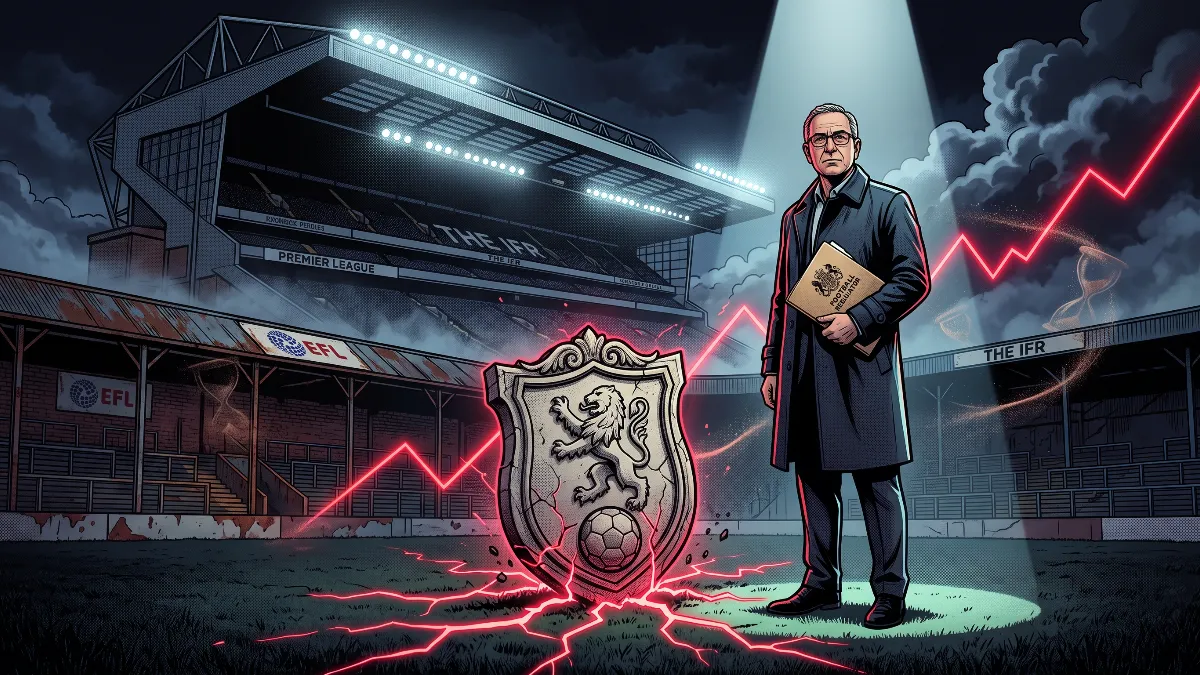
The financial landscape of English football is perilously vulnerable, with the majority of clubs teetering on the brink of financial disaster. This stark conclusion has been reached by the Independent Football Regulator (IFR) in their landmark report, 'State of the Game', which assesses the sustainability of the national football pyramid.
Regulatory experts have warned of a 'dangerous cocktail' of soaring debts and critical reliance on owner bailouts, threatening the survival of clubs and the futures of their loyal supporters. Despite the Premier League's global commercial success, the financial gulf between divisions and within leagues is widening to alarming proportions.
Shocking findings from the independent regulator's report
- 94% of clubs in England's top five divisions ended the 2025/26 season operating at a loss.
- 17 clubs in the English Football League (EFL) and National League would still be in the red even if players played for free, as their administrative and non-playing costs exceed all revenue.
- 66% of clubs cannot survive beyond 90 days without further financial injections from their owners.
- 29% of clubs (32 teams) admitted they could not last more than 30 days: a delay in owner payments at the end of the month could lead to instant bankruptcy.
- Over 60% of EFL and National League teams are technically insolvent, with their liabilities exceeding the book value of their assets.
- 60% of clubs lack even a basic approved business plan.
Seventeen clubs operate in such a way that if players were not receiving wages, the club’s maintenance costs would still lead to bankruptcy, IFR chairman David Kogan highlighted in an interview with BBC Sport. Thirty-two clubs depend on a 30-day cash reserve. If an owner does not transfer funds at month's end, disaster strikes. This level of risk is unacceptable. We must fix the roof while the sun shines, and that is our mission.
Transfer mortgage and a £3.3 billion debt loop
The report underscores a troubling trend over the past five years: clubs are increasingly mortgaging future transfer fees to external financial institutions for immediate cash flow.
Whereas in the 2020/21 campaign, such 'transfer financing' amounted to a modest £55 million, by the 2024/25 season, this figure skyrocketed by more than 14 times to £779 million. To date, clubs have already pledged around £1.2 billion of their future transfer income, a staggering increase of almost 22 times since 2020.
In the 2025/26 season, English teams reported approximately £4.8 billion in transfer obligations compared to just £1.5 billion in anticipated revenues. Consequently, the net transfer debt of English football has climbed to astronomical heights of £3.3 billion, with outgoings on player purchases exceeding incoming transfer incomes by a ratio of 3.3 to 1.
Wage inflation and widening divides
The situation in the lower divisions is rapidly deteriorating:
- Wage expenses have surged by 33% in the Premier League, 32% in the Championship, 71% in League One, and 63% in League Two between the 2021/22 and 2025/26 seasons.
- Twenty clubs are spending over 80% of their revenue solely on player wages, while two League One clubs are shelling out more than 100% of their income on salaries.
- The average loss for League One clubs has jumped from 6% of revenue in the 1992/93 season to nearly 50% by the 2024/25 season. In League Two, it stands at 40%.
- 94% of surveyed EFL club owners support the implementation of strict expenditure controls, acknowledging that player wages pose the greatest threat to the survival of football.
The financial gap between the Premier League and the rest of the football pyramid has also reached historic highs. In the 1992/93 season, the average Premier League club earned £10.5 million (2.7 times more than a Championship club at £3.9 million). By the 2024/25 season, average earnings for elite clubs had surged to £341 million, a staggering 8.7 times greater than Championship clubs at £38.9 million. This situation is further exacerbated by 'parachute payments': relegated clubs receive £48.7 million in solidarity payments in their first year, compared to just £12 million in 2007, while Championship clubs see meagre payments of £5.3 million, leading to a dangerous budget race.
Within the Premier League, the so-called 'big six' generates 56% of all league revenues, leaving the remaining 14 teams with just 44%, as the gulf between top clubs and those in mid-table has widened from £9.4 million in 1992 to a colossal £421 million today.
The regulator reminded clubs that under the Football Governance Act, they must confirm compliance with sufficient financial resource criteria by May 2030. Should the Premier League and EFL fail to reach an agreement on a new fair solidarity payment mechanism, the regulator is prepared to exercise its legal authority to enforce revenue redistribution.
