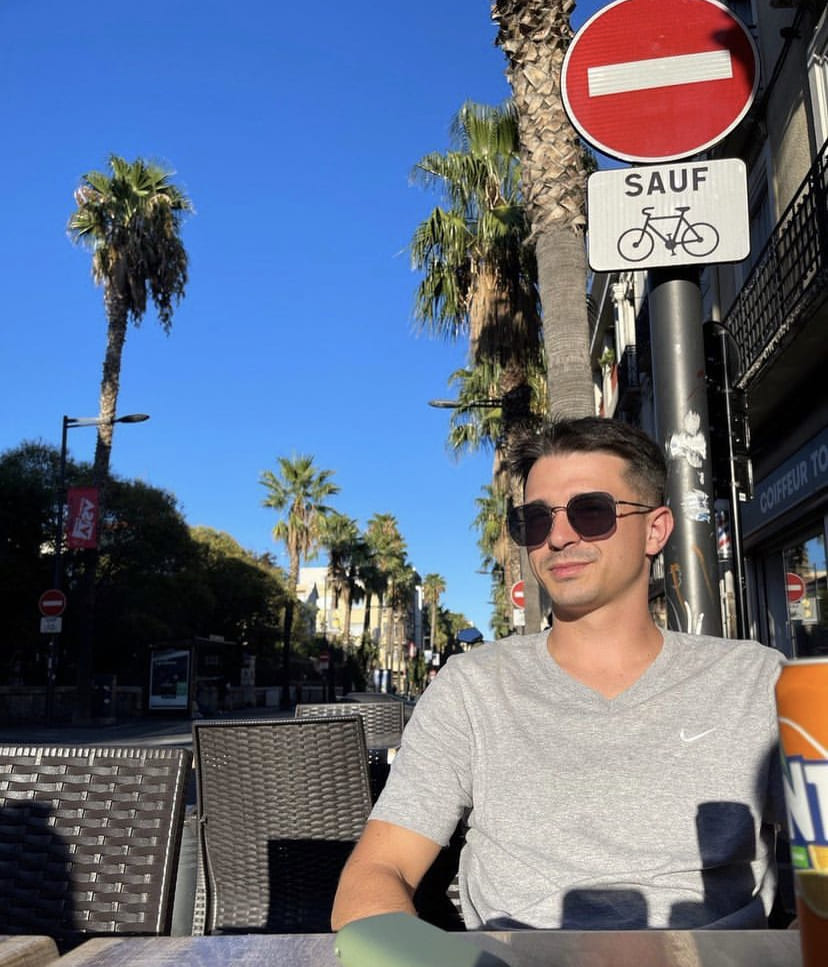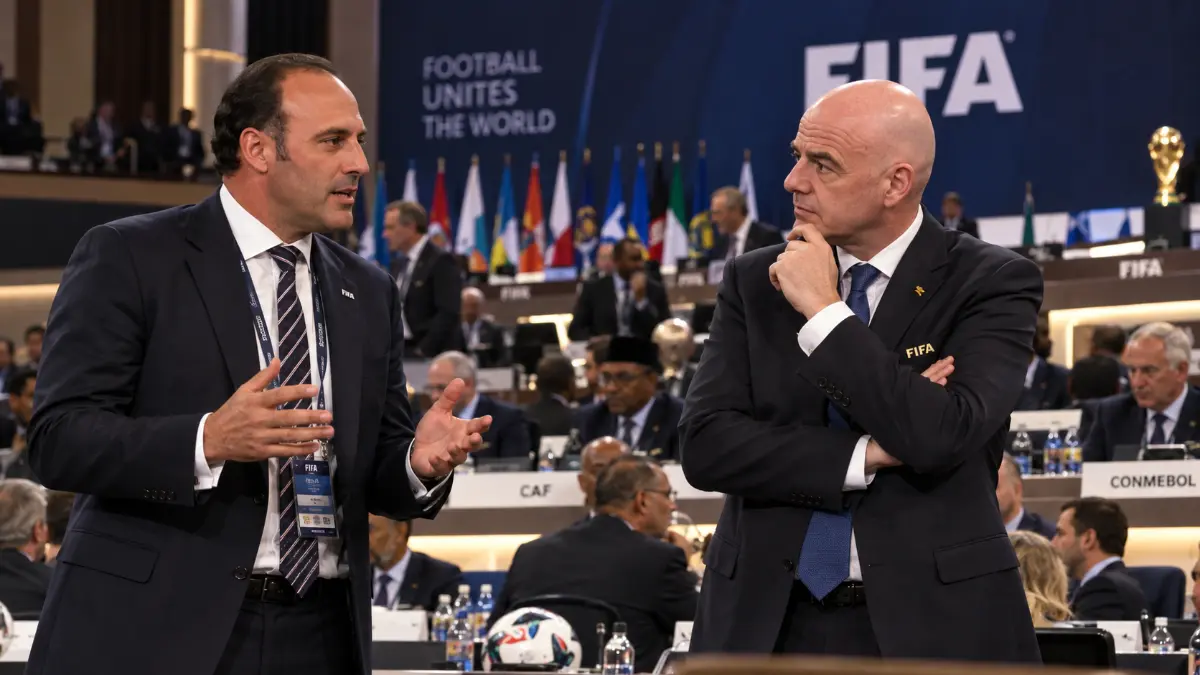
Ramon Vega, the ex-defender of Tottenham and the Switzerland national team, is making moves to contest the FIFA presidency. Now 55, Vega is gearing up to take on Gianni Infantino, who has led the organisation since 2016.
Vega announced his intention to run for the elections scheduled for October 7, 2026, with the voting set for March 18, 2027, in Rabat, Morocco. The former footballer claims to have already secured the backing of five national associations necessary for his nomination, although he has yet to disclose their names. FIFA has not officially confirmed his candidacy.
This is not Vega's first attempt at heading the organisation. He has expressed similar ambitions in 2015, 2019, and 2022, but failed to make it to the final list of candidates on each occasion. This time, the Swiss hopes to exploit the controversies surrounding FIFA's management and financial strategies to garner support from football associations.
From Grasshoppers to Tottenham and Celtic
Born on June 14, 1971, in Olten, Switzerland, to Spanish immigrants, Vega began his professional football career with Grasshoppers, where he enjoyed six successful years, winning the Swiss Championship three times and securing a national cup triumph.
In 1996, he moved to Italy's Cagliari, and a year later, he joined Tottenham. From 1997 to 2001, he made 84 appearances for the London club, including 64 in the Premier League, netting seven goals. Vega won the League Cup in 1999, although his final against Leicester City was marred by an ankle injury.
In December 2000, he was loaned to Celtic, where he picked up accolades including the Scottish Championship, national cup, and the Scottish League Cup in the 2000/01 season.
Later in his career, he played for Watford and French side Creteil before retiring in 2004. Vega earned 23 caps for the Swiss national team and participated in the 1996 European Championship, notably scoring in a friendly against England in 1998.
Career in finance and attempt to buy Portsmouth
Post-retirement, Vega shifted his focus to finance, founding Grupo Duet in 2002 for asset management and establishing Vega Swiss Asset Management in London in 2008.
His business ventures also spanned real estate and various investments, including hospitality in Verbier, a football academy in Marbella, and jewellery in England. In 2009, Vega attempted to purchase Portsmouth, representing a Swiss investment consortium, but the deal fell through when the club rejected the offer due to financing concerns.
Now, he is leveraging his football and financial experience as a cornerstone of his campaign. However, he must demonstrate that the governance skills required for running an investment firm differ vastly from those needed to lead a global football body.
Four attempts and a push for reform
Vega’s initial interest in the FIFA presidency emerged in 2015 when Sepp Blatter’s presidency faced scrutiny amid a corruption scandal, although he did not officially declare his candidacy.
His subsequent attempts in 2019 and the 2022 elections were met with similar obstacles, lacking the necessary backing from five associations. Vega has suggested that he faced unfavourable circumstances during his previous campaigns, describing them as ‘blackmail’, a claim that has not been independently verified.
He believes that time has equipped him with a better understanding of FIFA's political machinations, and in a recent interview with El País, he indicated that the football community has grown more vocal against FIFA's governance.
Currently, Vega maintains that he has garnered the five endorsements needed, though he remains tight-lipped about the associations to protect their identities until official confirmation.
With a deadline for candidacies set for November 18, 2026, contenders must meet FIFA's criteria, receive adequate support, and undergo eligibility vetting. As he retired in 2004, Vega will need to prove that his current activities satisfy FIFA's requirement for recent involvement in football.
Controversy over FIFA's investment project
At the core of Vega's programme is a critique of FIFA Forward Enterprise, a commercial initiative aimed at attracting private investors to its competition rights business, including the World Cup. The project was scrapped in July 2026 following resistance within the football community.
Vega argues that the issue lies not only in the concept of soliciting investments but also in the decision-making processes that were employed by FIFA's leadership. He views this episode as one of the most significant in football history and a rallying point for increased transparency and participatory decision-making.
His platform also addresses the organisation's financial reserves, highlighting approximately six billion dollars and advocating for a fairer distribution of funds among national associations for grassroots development.
However, having such reserves does not imply that the entire sum can be immediately disbursed; FIFA must consider its ongoing commitments and operational expenses. The principal issue remains the balance between what should stay in reserve and what can be allocated to enhance football development globally.
Vega also targets the escalating costs of attending the World Cup, citing an example of a family of four hoping to watch Spain play, with total costs potentially nearing 20,000 euros. This figure illustrates his stance rather than being a comprehensive cost for attending any fixture.
He advocates for the World Cup to remain accessible to fans, not transforming it into a high-ticket event solely for the affluent.
Additionally, he proposes revamping the football calendar to ease the burden on players. The rise in competitions and matches has long sparked debate among players, clubs, leagues, and governing bodies, and Vega believes players should exert greater influence over decisions impacting their workloads.
How does Vega plan to change FIFA?
In an 11-page manifesto, Vega envisions making FIFA a more democratic body, asserting that the president should not wield unilateral power over critical decisions.
He suggests the creation of a committee featuring players, coaches, clubs, and leagues, with genuine influence over the governance of FIFA rather than being merely invited to rubber stamp decisions.
Other goals include restoring trust, enhancing transparency, equitable resource distribution, and enforcing accountability at the leadership level. Vega criticises FIFA's solitary decision-making, including its approach toward disciplinary regulations and the establishment of the FIFA World Prize.
However, several questions in his programme lack clear answers. It remains uncertain how the proposed committee would be formed, the scope of its authority, and how to resolve disagreements among competing interests.
The exact principles for allocating financial resources among national associations also remain undefined. Without practical mechanisms to implement his reforms, it may be challenging for Vega to convince FIFA members of the viability of his agenda.
Can he beat Infantino?
With additional grounds for criticism of the current leadership, it remains unclear how broad the potential support for Vega's campaign is.
In September, the Swiss Football Association withdrew its support for Infantino. UEFA and CONCACAF have also advocated for changes in FIFA's governance, while the Asian Football Confederation's stance on reviewing these matters has sparked debate.
However, dissatisfaction with the current president does not automatically translate into an endorsement for Vega. Some associations may favour greater transparency and increased funding but may not view the former player as a suitable replacement for Infantino.
Infantino has been leading FIFA since 2016 and has built strong relationships with national associations during his tenure. In elections decided by the votes of member organisations, such connections are incredibly valuable.
Vega possesses a background in professional football, a finance career, and a reform agenda. Yet, public evidence of broad backing at the level of international confederations is still lacking.
Additionally, being Swiss might complicate his campaign since another Swiss, Sepp Blatter, previously led the organisation. If successful, Vega would be the third consecutive Swiss president of FIFA, a factor that could hinder his efforts to present his campaign as a break from the past.
In the short term, the pivotal questions revolve around confirming the five endorsements and passing the eligibility procedures. Following that, Vega must convince national associations that he can not only propose changes but also ensure their implementation.
Having spent 11 years attempting to secure a position to officially contest elections, Vega's campaign has been buoyed by the controversies surrounding FIFA’s commercial plans, but ultimately its fate will rely heavily on support within the organisation.