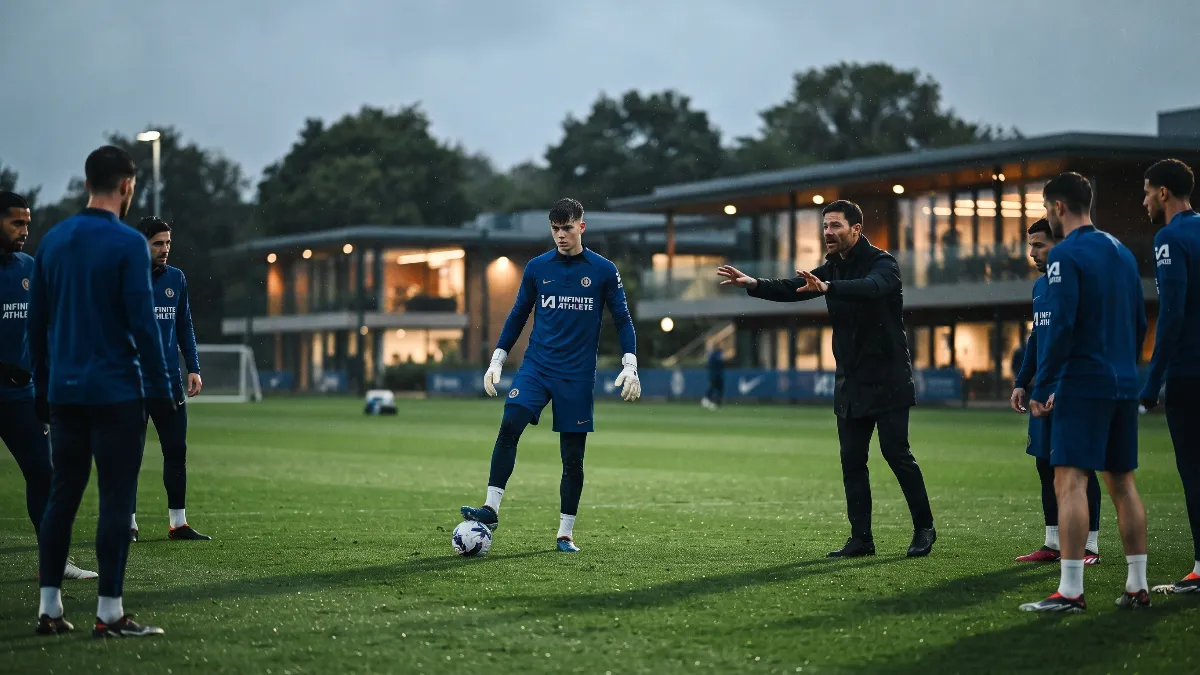
Emiliano Martinez's jaw injury, sustained during the clash with Everton, has left Chelsea without their primary goalkeeper for an indefinite stretch. Mike Penders, who stepped in, managed to guide the team to a clean 2-0 win, yet head coach Xabi Alonso faces a hefty tactical dilemma moving forward.
The need for adaptation, not abandonment of the system
The critical issue isn’t whether the young Belgian goalkeeper can play confidently with his feet, but rather what structure the outfield players provide him. Ditching short passing for a more direct approach will merely simplify pressing for opponents.
Lessons from the recent match against Everton demonstrated the team's capacity to adapt. Alonso adjusted tactics during half-time, recognizing the opponents were marking against goal kicks. Pedro Neto's goal was a result of this flexibility rather than rigidly adhering to a single game plan. Penders doesn’t need to replicate every move of Martinez; he requires a clear system that minimizes risk.
Key aspects of rebuilding the build-up play
Quality of backward passes: Goalkeeping errors often stem from poor passes from defenders. A pass should either relieve pressure, change the angle of attack, or draw the opponent out. If a defender plays a pass when all options are sealed, the goalkeeper finds himself trapped.
Positioning of centre-backs: The gap between defensive players should adjust according to the intensity of the opponent's pressing. Too much compression complicates possession, while excessive width isolates defenders. A balance is essential, with constant communication to the goalkeeper.
Selective midfield support: A common mistake made by defensive midfielders dropping too deep is creating an artificial density with no forward movement options. Some players need to offer a short pass while others remain behind the opponent’s pressing line.
Risk assessment by areas: Losing the ball close to one’s own penalty box poses a far graver threat compared to battles on the flanks. The coaching staff must clearly delineate zones of acceptable risk.
Prospects for Mike Penders
The left-footed keeper has his own skill set that requires adjustments in passing angles, but this shouldn’t cause alarm. Penders has already gained playing time in cup matches, and his Premier League debut doesn’t mean the whole team needs to revert to basic long balls.
Chelsea’s task is to retain the goalkeeper’s value as an additional player in build-up play, alleviating him of having to solve insurmountable tactical puzzles on his own.