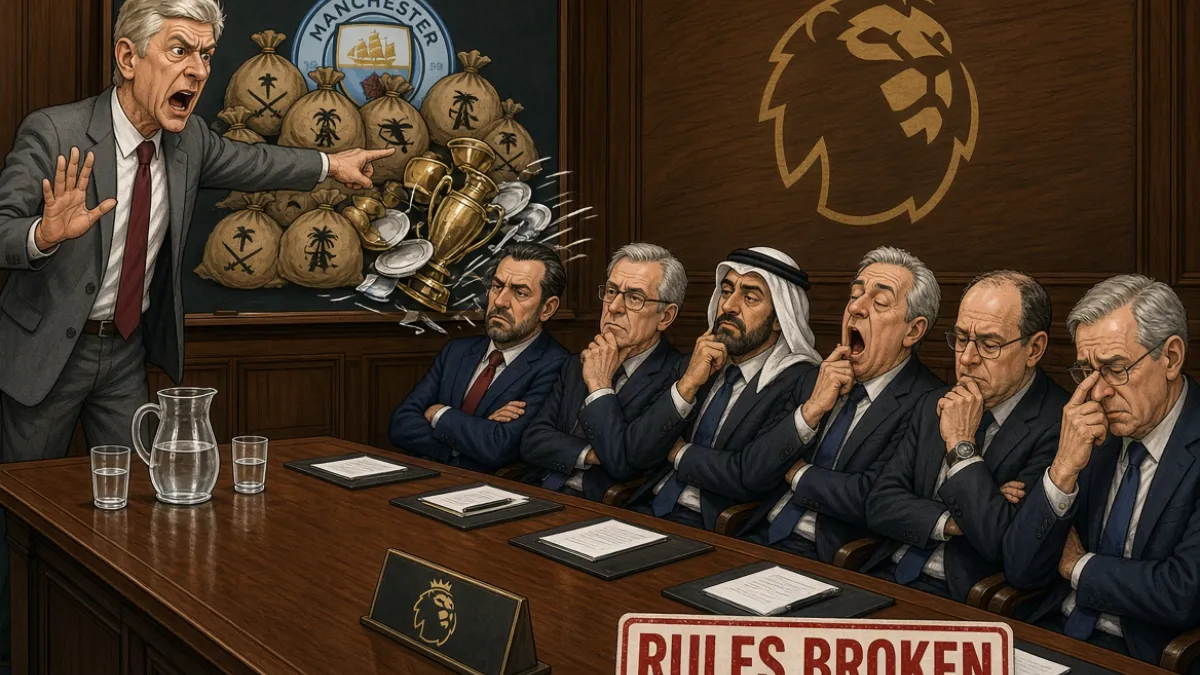
Exactly thirty years ago, on October 1, 1996, Arsene Wenger officially took charge of Arsenal, marking the start of one of the most iconic eras in English football. On the anniversary of this event, his famous address in July 2011 has come to light once again, where he questioned Manchester City's sponsorship deal with Etihad Airways.
At the time, the ten-year agreement was valued at £400 million and included shirt sponsorship, stadium naming rights, and infrastructure development. The issue arose from the fact that Etihad was owned by the Abu Dhabi government, while the owner of Manchester City was Sheikh Mansour. Wenger highlighted a structural problem with financial fair play: if owners' linked sponsors can impose sky-high prices on deals, the rules lose their purpose.
If financial fair play stands a chance of success, sponsorship must be carried out at market value. It cannot be doubled, tripled or quadrupled, Wenger asserted back then.
On commenting about the contrast with Arsenal’s own deals, Wenger joked:
We must have done a poor deal.
However, beneath the light-hearted comment lay a serious concern about whether the regulatory system could survive if club revenues are artificially inflated through associated companies. Manchester City, at that time, dismissed the criticism as unfounded.
The crux of the issue and Arsenal's stance
Arsenal's strategy was built on long-term self-sustainability, revenue from their stadium, player development, and careful wage management. The rapid growth of City through immense owner investments threatened the very idea of fair competition. Wenger feared that if the rules could be circumvented, Arsenal's stringent measures would be for naught.
Fast forward years later, the situation escalated: an independent commission from the Premier League found Manchester City guilty of numerous financial breaches, including the use of fictitious schemes to inflate revenues between 2009 and 2018. City deny the allegations and are preparing an appeal.
The key takeaway from Wenger's warning remains unchanged: regulatory rules are worthless if the wealthiest market participants can dictate the value of their own revenues.