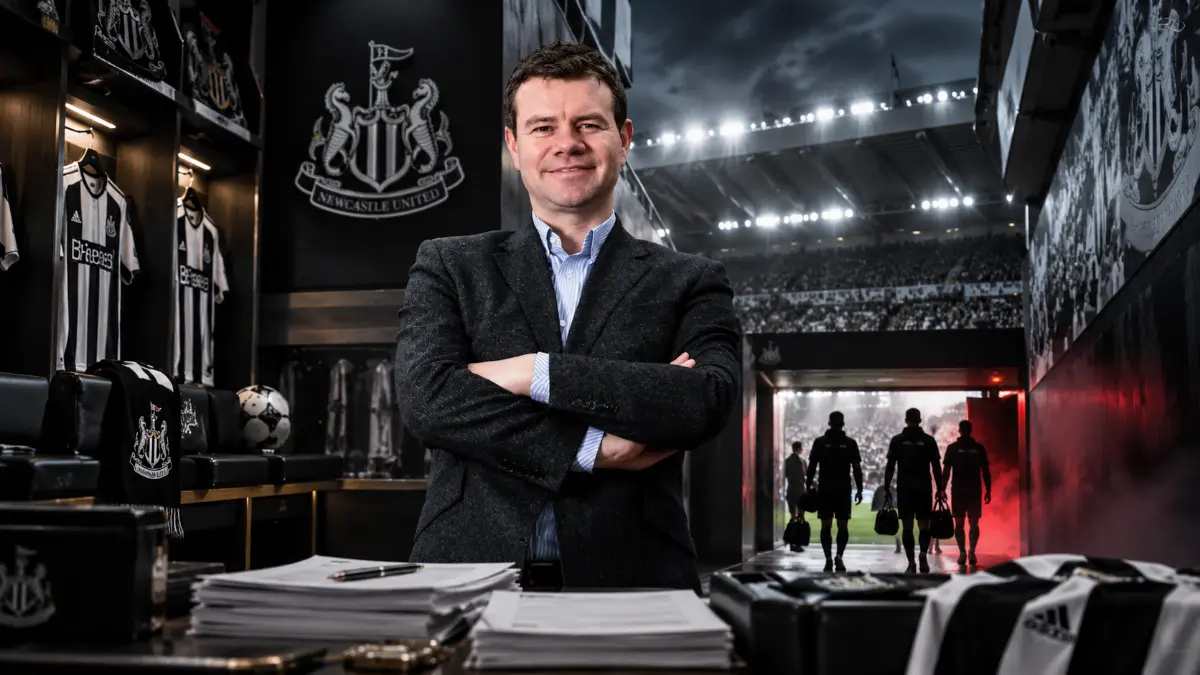
Newcastle United are not planning to shy away from selling key players in the future. Sporting director Ross Wilson has stated that the club's transfer strategy now includes regular player sales, essential for adhering to Premier League and UEFA financial regulations.
Over the past year, Newcastle have parted ways with a number of significant players. Alexander Isak joined Liverpool, while this summer the club sold Anthony Gordon, Sandro Tonali, and Bruno Guimaraes. These deals were part of a major squad overhaul.
The Magpies raised around £231 million from player sales last summer, while also investing heavily in squad renovations. The club acquired eight players, predominantly focusing on younger talents. According to reports, their net spend was approximately £31.5 million.
Wilson emphasises that Newcastle are not under immediate pressure to sell anyone, but in the long run, further high-profile departures seem almost certain.
“If you want to be a successful club in the Premier League, you need to sell players. If you don’t, you risk stalling your development,” Wilson said.
The sporting director noted that this is not solely about Newcastle’s financial strategy. Modern financial sustainability rules compel clubs to find a balance between expenditures, revenues, and squad value.
Attention now turns to Lewis Hall's situation. Newcastle are working on a new contract for the defender, which should strengthen the club's position should interest from other teams arise. However, a new deal does not guarantee the player will spend his entire career at the club.
Furthermore, Wilson does not rule out the possibility that some of the young players acquired this summer could also leave St James' Park by 2030. If their market value surges, sales could become part of the club's growth strategy.
As such, Newcastle fans must adjust to this new reality: the club aims to build a side capable of regularly contesting for top honours while simultaneously viewing players as assets that can be sold at the right moment.
The hierarchy hope that this approach, combined with increased commercial revenues, will enable Newcastle to remain financially stable and compete with traditional giants of English football by 2030.