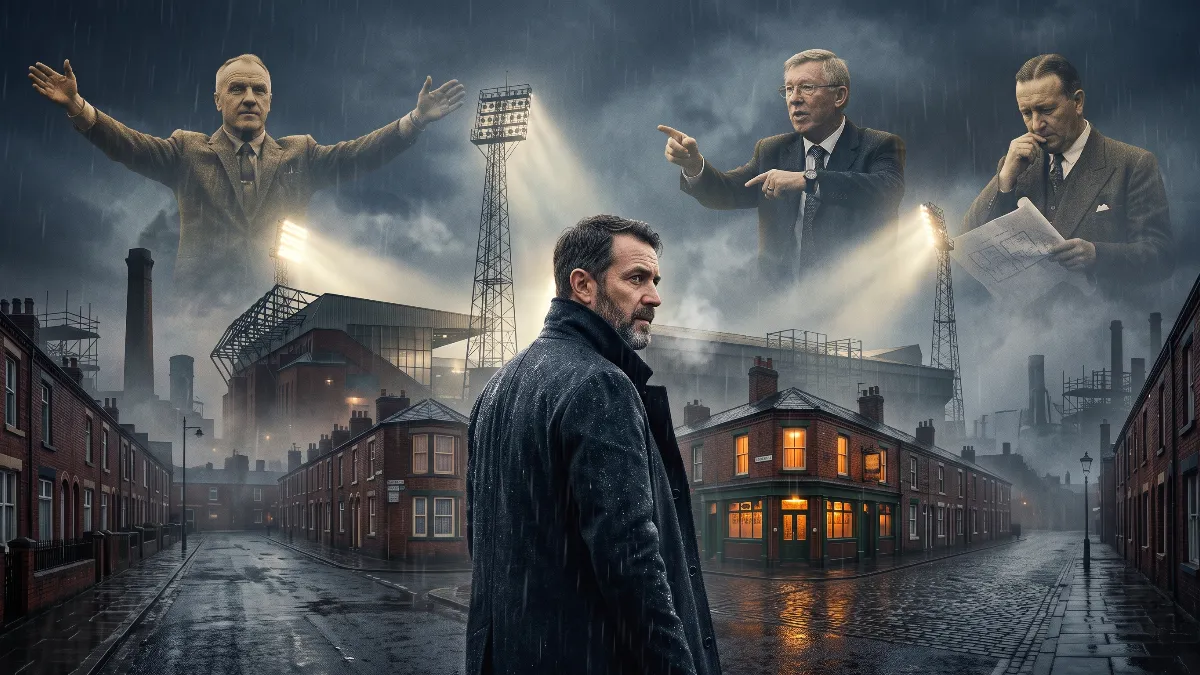
Pep Guardiola's farewell message following his departure from Manchester City was far removed from typical managerial fare, focused instead on the very heartbeat of the city. The camera lingered on rain-soaked streets, corner shops, and the faces of devoted supporters, as the Catalan described the deep connection he forged with Manchester, leaving behind not just a job, but a home.
This city means absolutely everything to me, — the manager shared.
People, culture, how we lived football together. Manchester has been etched into my skin, and it was incredibly joyful.
Guardiola's sentiments resonate with a fundamental truth about British football: great managers are rarely mere cold tacticians or trophy collectors. The best are interpreters of their locale's spirit. They understand that clubs are not abstract sporting entities but emotional embodiments of geography, working-class roots, history, and local identity. Clubs belong to the streets, local dialects, factories, and collective memories long before they pass into the hands of owners or ledgers.
Arsenal: London's modernism in Chapman and Wenger's cosmopolitanism
Arsenal has experienced two significant revivals thanks to managers who expertly grasped the shifting spirit of the capital.
When Herbert Chapman took charge of the Gunners in 1925, the club was not yet among England's footballing hegemonies. Chapman immediately recognised the transformation in North London: the Highbury area was becoming increasingly home to a burgeoning middle class connected by a network of tube lines. While the structure of the stands remained working-class, the club embodied progress. Chapman instilled principles of methodical efficiency and metropolitan flair at Arsenal, introducing shirt numbers, modern physiotherapy methods, and revolutionary tactical shapes that were ahead of their time.
He had the foresight to rename the nearest tube station to Arsenal, permanently linking the club's name to London's map and overseeing the elegant art-deco redevelopment of the iconic Highbury Stadium.
Decades later, Arsene Wenger inherited a wholly different squad but harnessed a similar momentum. London in the 1990s was rapidly evolving into a wealthy, cosmopolitan global city. The Frenchman, initially perceived as an outsider due to his intellectualism, multilingualism, and strict diet, grasped London more intuitively than many native managers. The quick passing game, technical finesse, and multicultural squad matched the demands of a vibrant, modern capital. Wenger's move to the state-of-the-art Emirates Stadium marked a logical next step for a club that had outgrown its local roots.
Liverpool: Shankly's dockers' solidarity and Klopp's communion
If Arsenal epitomises metropolitan ambition, Liverpool is inexorably tied to civic solidarity and class unity.
Bill Shankly arrived at the struggling club in 1959, taking charge of a city bruised by economic uncertainty yet overflowing with pride. The culture of Merseyside had long been built on port-bound cohesion, union movements, and a biting humour that buoyed spirits in hard times. Shankly not only embraced this milieu — he became its flagbearer.
Socialism is when everyone works for each other, — proclaimed the great Scot, turning collective effort on the pitch into a dogma that eclipsed individual egos.
Fans recognised him as one of their own: the manager joked in their dialect, respected their values, and asserted that the people passing through the turnstiles were the most critical figures at the club. It was then that the legendary magic of the Kop at Anfield emerged, giving voice to the pride of the city.
More than half a century later, Jurgen Klopp echoed this triumph, resonating psychologically with the city. At his first press conference, he dubbed himself 'The Normal One,' instantly breaking down barriers and contrasting sharply with the pretentious persona of Jose Mourinho. Klopp openly confessed that the atmosphere in Merseyside reminded him of the working-class neighbourhoods of West Germany where he grew up. His signature gegenpressing became not just a tactical model but an extension of Liverpool's character: boisterous, passionate, emotional, and resilient. Klopp's reverence for the city's memory and the tragedy of Hillsborough played a pivotal role, as fans witnessed his sincerity and respect transform the 2020 championship victory after a 30-year drought into a citywide catharsis.
The provincial comeback of Clough and Ferguson's global nerve
At Celtic, Jock Stein once created a European sensation with the Lisbon Lions in 1967, assembling a team of lads born within miles of the club's ground, turning the club into the voice of Glasgow's Catholic working class («Football without fans is nothing»).
In the English provinces, Brian Clough became a master of psychology leading modest Nottingham Forest. In the late 1970s, Nottingham lay overshadowed by London and other major industrial hubs. Clough took this provincial inferiority complex and turned it into pure sporting fuel. He imbued Forest with daring self-confidence; their back-to-back European Cup triumphs proved that small towns could dictate their own rules to the footballing capitals. Clough's charisma, wit, and brashness perfectly matched the independent spirit of Nottingham, longing for recognition without the frills.
At Manchester United, Sir Alex Ferguson ruled for 27 years not merely through iron discipline. Manchester has historically combined grand confidence of an industrial giant with deep anxiety. The club embodied the working-class ambition on a global scale, demanding nothing less than victory, attacking passion, and fearless youth. The famous 'Fergie Time' epitomised Manchester's character: a categorical refusal to accept defeat and a fierce drive until the final whistle. Ferguson expertly navigated the emotional landscape of the nation, turning the dethronement of Liverpool («knock them off their f****** perch») and rivalry with noisy neighbours City into a personal battle for supremacy.
Identity matters more than trophies: Keegan, Moyes, and Pulis' Stoke City
English football's culture is unique in that popular affection is measured not solely in gold medals.
- Kevin Keegan at Newcastle United: The North East demands football soaked in heartfelt passion and entertainment. Keegan's famous emotional outburst on live television in 1996 («I would be happy if we could do it!») during the title race with Manchester United showed fans that the coach felt defeats just like the working man in the stands. His carefree attacking side may not have secured the title, but it offered the city hope and dreams.
- David Moyes at Everton: The manager dubbed the Toffees as ‘the people's club’, emphasising resilience, discipline, and honesty to the fans. Supporters valued collective effort over surface glamour.
- Tony Pulis at Stoke City: The Potteries' style in the Premier League was ridiculed by football aesthetes, yet the pottery city adored its team for their rock-solid determination, toughness, and fighting spirit. The meme «Can they do it on a cold, rainy night in Stoke?» emerged as a result of the unique bond between the team, harsh weather, and the demands of local supporters. Meanwhile, the squad included places for graceful football artists like Ricardo Fuller alongside the rugged warriors like Ryan Shawcross.
In an era of transnational corporations, global television audiences, and sterile interviews, great managers in England have become more than mere tacticians with clipboards. They are 'cultural cartographers', capable of capturing the genetic code of the terraces, conversing in the language of local pubs, and ensuring that clubs feel entirely at one with the streets of their cities on the pitch.
