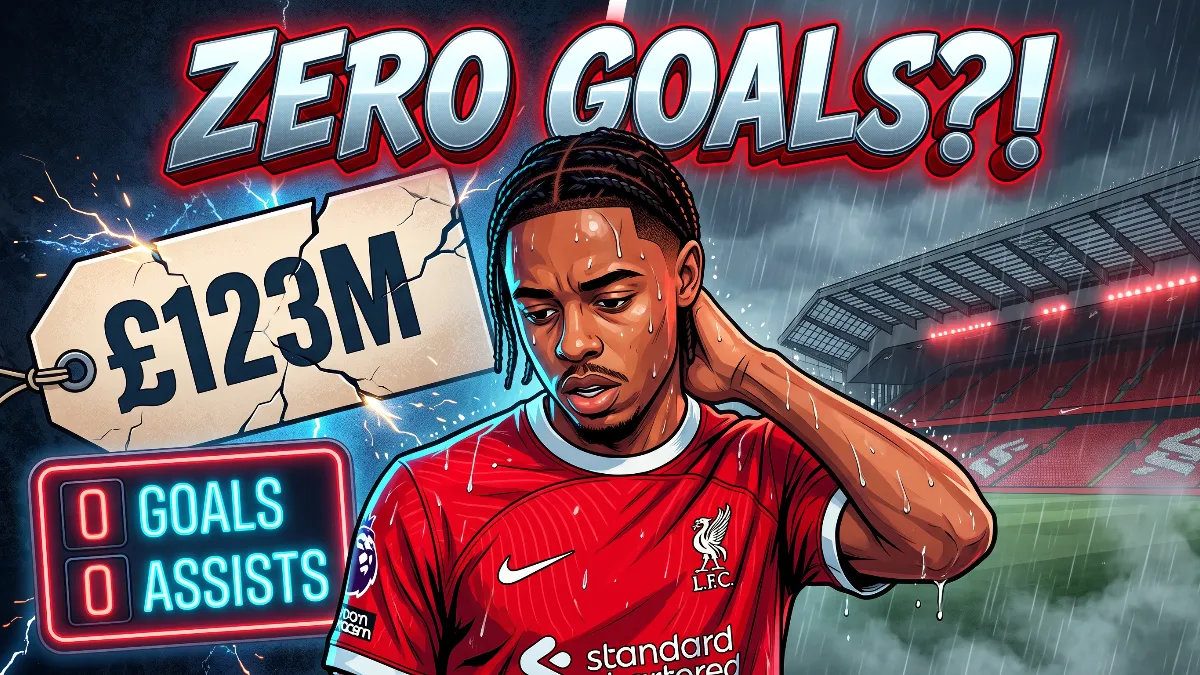
French winger Bradley Barcola has yet to register a single goal or assist for Liverpool since his high-profile move from PSG for £123 million on transfer deadline day.
In six matches played, the attacking player has struggled to make a significant impact going forward; notably, during Sunday’s home defeat to Manchester City (0-3), Barcola managed just one inaccurate shot on target across 88 minutes. This goal drought has drawn considerable attention from the football community, given his status as the second most expensive signing in the history of the Merseyside club and his strong scoring record in domestic competitions and the Champions League during his time in Paris.
There are several reasons behind this challenging start at Anfield:
Late transfer, lack of pre-season, and the pace of the Premier League
Barcola’s transfer was completed at the very last moment of the summer window, meaning he missed out on vital pre-season training under manager Andoni Iraola. The coaching staff had to introduce the newcomer gradually; in his debut match in the Champions League against Atletico Madrid, Barcola suffered from cramp, and his playing time was paired with a steep learning curve in adapting to the coach's complex tactical system.
The need to build fitness and adjust tactically came at the same time as getting accustomed to the relentless pace of English football. After the game against the Cityzens, the player himself acknowledged that the level of running, physicality, and constant movement from box to box in the Premier League far exceeds that of Ligue 1.
This directly impacts his performance: while Barcola defends admirably and tracks back to assist teammates – something commentators praised during the match against Manchester City – he seems to lack decisiveness in the final third. In duels against Matheus Nunes, he appeared constrained, repeatedly running into the defender and avoiding aggressive shifts towards the centre or rapid bursts into the penalty area.
Creative crisis and the weight of expectations
The overall team dynamics aren’t aiding quick progression either; Liverpool’s attacking line is grappling with a significant creativity drought, and fellow star signing Florian Wirtz is also struggling for consistency. Injuries to Alexander Isak and Cody Gakpo, sustained in the battle with Manchester City, have thrust Barcola into the role of lead attacker — a responsibility for which he is not yet tactically prepared. Meanwhile, frequent rotations with young players like Rio Ngumoko and Victor Munoz are disrupting his rhythm.
Manager Andoni Iraola has publicly defended his player, emphasising the mistake in judging wingers solely by their goal tallies, stating their primary task is finding the right spaces. However, the statistics are unforgiving: Barcola’s expected goals (xG) tally in the Premier League stands at under 0.5, indicating he is rarely getting into the kinds of dangerous positions he regularly found while at PSG.
To add to the pressure, Barcola’s hefty price tag means that every action by the new £123 million winger is scrutinised, especially following the departure of Mohamed Salah. Adaptation for flair players in England often takes time, yet the combination of a scrappy preparation, the intense pace of the Premier League, and systemic issues in Liverpool's attack has placed Barcola under the harshest spotlight in the league.