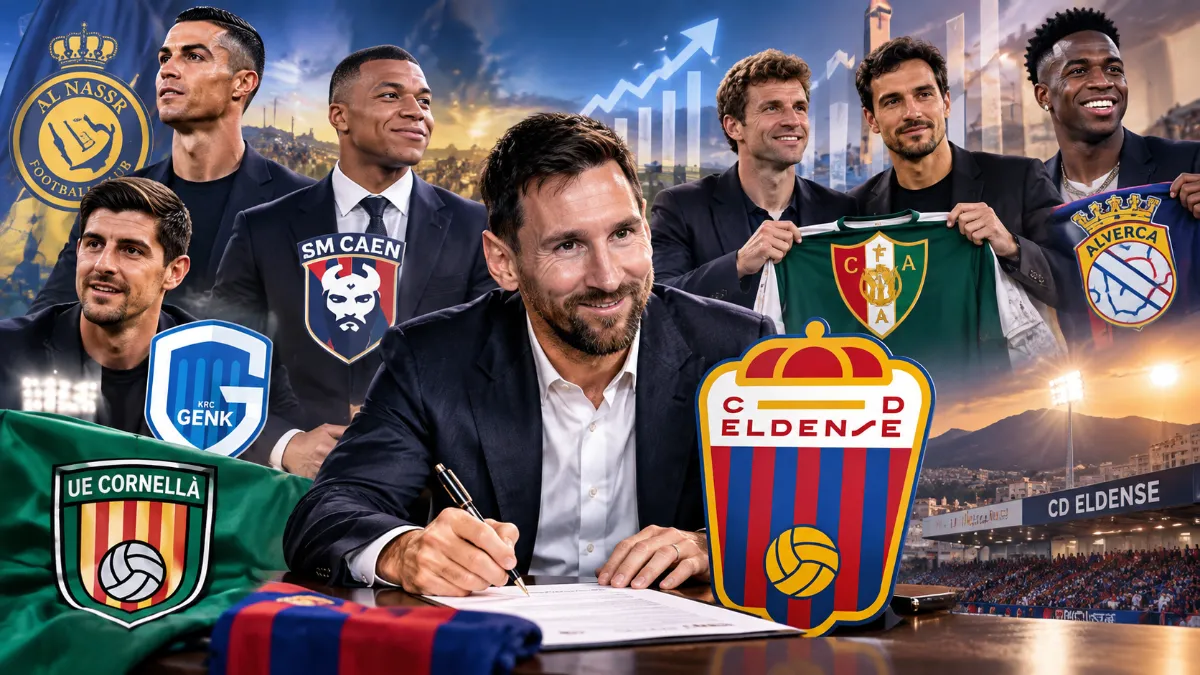
Lionel Messi has become part of an emerging trend among elite footballers who have started investing in football clubs. Notably, many of these stars are opting for smaller teams rather than the usual big names, where their presence can transform the club's commercial fortunes.
In a recent announcement, Messi is set to become the majority shareholder of Spanish side Eldense, continuing his investment journey after previously acquiring a stake in Catalonia's Cornellà.
But Messi isn’t alone on this path. Thomas Muller and Mats Hummels have joined a consortium to buy Portuguese club Estrela da Amadora, while Thibaut Courtois is carving out his own niche with stakes in multiple clubs. Other big names like Cristiano Ronaldo, Vinicius Junior, and Kylian Mbappe have also dabbled in football investments.
One clear motivation behind these moves is the desire to maintain a connection to football after hanging up their boots. Take Courtois, for instance; his investment in Genk stems from a longing to return "home," where he started his professional career at just 16.
Yet, there are concrete commercial strategies underpinning these investments as well.
A star player can bring to a smaller club something that traditional investors often cannot: a worldwide fanbase, heightened interest from sponsors, and vast social media reach. This impact is especially noticeable in lower leagues.
Recent financial reports showed that Eldense's commercial revenues were less than €2 million. For a club of this scale, having Lionel Messi among the owners could unlock a whole new level of interest from advertisers and partners alike.
The broader implications are significant too. Owning a football club enables players to retain influence and business connections even after their football career, while the club can become a part of a larger investment portfolio.
A prominent example includes former Manchester United players who became co-owners of Salford City back in 2014; Gary Neville has since explored other projects in Manchester, including establishing University Academy 92 in 2019.
Modern footballers are increasingly diversifying their investments. Mario Gotze, for instance, is delving into venture capital, while Chris Smalling has invested through the athlete-focused fund, The Players Fund.
This trend in Europe mirrors a similar evolution seen much earlier in American sports. A well-known example is Michael Jordan, who invested in the Charlotte Hornets and, in 2023, sold his majority stake in a deal that valued the club at around $3 billion.
Thus, for current and former players, buying football clubs is transforming from an odd hobby into a bona fide business venture. A star’s name can significantly elevate a small club's commercial profile, while the player enjoys the dual benefits of staying connected to the sport and investing in an appreciating asset.