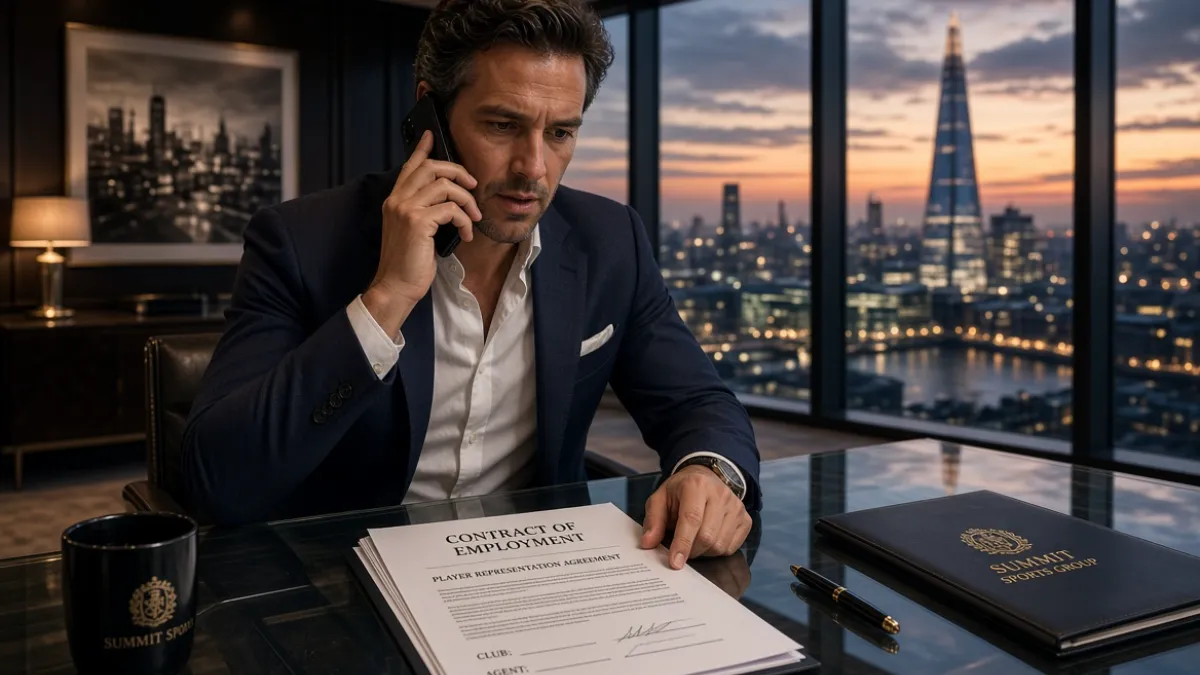
While a footballer can score 30 goals in a season, clinch the Champions League, and become one of the most recognised athletes in the world, the ultimate say on where their career continues often lies elsewhere. Behind the scenes, agents, club sporting directors, and lawyers play crucial roles.
Modern football agents have become indispensable figures in the industry: they protect players from exploitation, engage in complex contract negotiations, and help navigate a business where the wrong decision can upend a career.
How agents became key intermediaries in football
The explosive rise of agents coincides with the internationalisation, commercialisation, and growing complexity of football's legal landscape. The surge in sponsorship deals and transfer fees has transformed player contracts into valuable financial assets.
- The Bosman ruling (1995): A landmark decision that solidified the freedom of movement for players with expiring contracts, altering the balance of power. This has given players more maneuverability while clubs face stiff competition for top talent.
- The emergence of global networks: Legendary agent Mino Raiola represented stars like Zlatan Ibrahimovic, Paul Pogba, and Erling Haaland, building an empire through personal connections across Europe. His legacy continues with Rafaela Pimenta. Similarly, Jorge Mendes constructed a vast network through his agency Gestifute.
Controlling the narrative and influencing careers
Today, agents not only impact transfer sums but also manage the public narrative surrounding players.
- When contract negotiations hit a stalemate, timely leaks to the media about interest from other clubs can shift the balance in negotiations.
- Controversies involving players are often smoothed over (or, conversely, amplified) through their representatives. A prime example is Jonathan Barnett's collaboration with Gareth Bale during his record move to Real Madrid in 2013, which led to the player winning five Champions League titles.
- In contrast, Erling Haaland's transfer to Manchester City in 2022, facilitated by an activated release clause, illustrates how a well-crafted contract strategy can lead a player to the perfect club.
The flip side: when agents overshadow players
Excessive publicity and the overlap of personal and business interests can occasionally lead to crises:
- Mauro Icardi and Wanda Nara: The spouse and agent of the Argentine forward became embroiled in a long-running and contentious saga at Inter, culminating in his removal as captain.
- Adrien Rabiot: His mother and representative, Veronique Rabiot, has openly acted as a 'shield' for the player, leading to harsh public confrontations with club hierarchies (including PSG and Marseille).
- Mo Salah and Rami Abbas Issa: They exemplify the evolution of agents in the social media era, where representatives can communicate directly with fans, quash false rumours, and advocate for players' interests without relying on club press offices.
The financial scale
The numbers confirm the colossal role agents play in the sport's economy:
- English Premier League clubs alone paid agents and intermediaries £460 million between February 2025 and February 2026 (a 13% increase year-on-year). Chelsea topped the list of payers (£65 million).
- According to FIFA's Football Agents Report for 2025, the total commissions paid to clubs in men's professional football for international transfers amounted to $1.3 billion.
