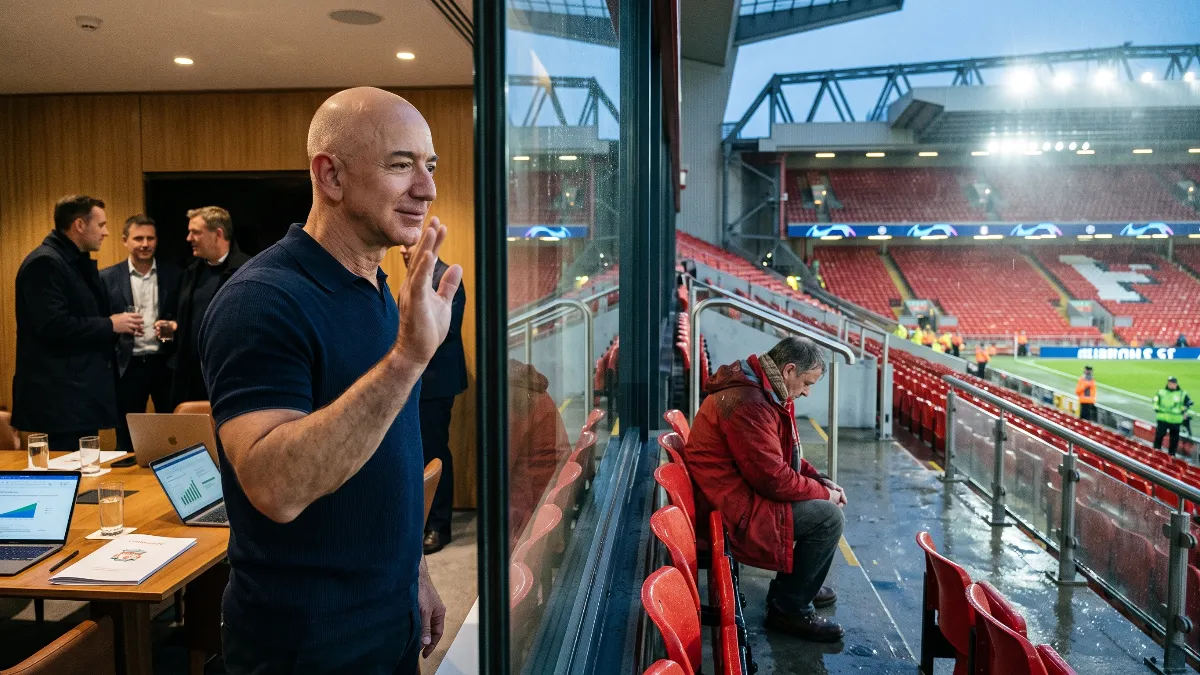
Jeff Bezos built an empire capable of delivering any purchase straight to your door, while Mark Zuckerberg has united billions of people on one platform. For decades, the wealthiest tech investors on the planet have mastered the art of capturing audience attention, predicting human behaviour, and monetising habits. But in football, they are facing a phenomenon that cannot be programmed or bought: the unwavering loyalty of fans, capable of surviving relegations, managerial chaos, humiliating defeats, and decades without a single trophy.
This unbreakable passion has turned European football into a prime testing ground for these tech giants. The question remains: how much will they be able to commandeer the beloved game of millions before they destroy its soul?
IT capital expansion: Bezos at Anfield, Tether in Turin, and Google in Munich
In August 2026, a consortium led by Amazon founder Jeff Bezos and Facebook co-founder Eduardo Saverin acquired a 38% stake in Liverpool for just over £2 billion, valuing the club at £5.5 billion. Although the FSG owners retained operational control over day-to-day management, the arrival of Bezos—a figure often criticised for his strict warehouse labour conditions—stirred tensions among Reds supporters.
In Italy, cryptocurrency firm Tether (the issuer of the USDT stablecoin) bought a minority share in Juventus back in February 2025 and later made aggressive moves to take over the club from the Agnelli family's holding company, Exor. Despite Exor refusing to sell their controlling stake, Tether CEO Paolo Ardoino explicitly voiced ambitious plans to integrate the historic club into a digital asset ecosystem, driven by artificial intelligence and biotechnology.
Meanwhile, Bayern Munich struck a massive strategic partnership with Google, and the Premier League launched a joint five-year ecosystem with Microsoft based on generative artificial intelligence, attracting 60 million users in the initial months. Football clubs are no longer seen simply as sports teams; for tech corporations, they represent gateways to vast amounts of personal data and the consumption habits of millions of spectators worldwide.
Algorithmic loyalty: dynamic pricing and the illusion of participation
The implementation of technology is gradually altering the fabric of the relationship between fans and their teams:
- Flight pricing for seats: On 8 October 2026, Leeds United chairman Parag Marathe proposed introducing dynamic pricing for tickets akin to airlines at Elland Road. The idea was to offer discounts to regular attendees while making casual visitors pay significantly more. The club's supporters' trust vehemently opposed the initiative. The European association of Football Supporters Europe demanded a legislative ban on dynamic pricing in sports back in July 2026, reminding all that football is not a free market where fans can simply 'switch' to rival clubs if the prices soar.
- Fan tokens and the illusion of choice: Platforms like Socios.com allow digital token holders to vote on team bus designs, kit aesthetics, and warm-up tunes. Fans pay for the illusion of involvement, yet remain entirely powerless concerning fundamental matters affecting their clubs.
The financial abyss and the illusion of salvation from oligarchs
The chief paradox of the era of super-rich investors revealed itself on 13 October 2026, when the Independent Football Regulator of England published a draft report titled 'State of the Game'. The findings shocked the public:
- 94% of clubs in the top five divisions of English football are operating at a loss.
- Nearly two-thirds of teams in the English Football League and the National League are deemed technically insolvent.
- More than a quarter of English professional clubs would struggle to survive beyond 30 days if their owners abruptly cut off funding.
Regulator chairman David Kogan pointed out that a significant portion of English football hangs by a thread, urging strong control over financial safety nets. Even wealthy owners do not guarantee stability: after Roman Abramovich's departure, the BlueCo consortium and Todd Boehly merely provided Chelsea with temporary respite, which soon unravelled into further boardroom strife.
Fans are not demanding a total ban on investments or a halt to technological advancement—investments in stadiums, training grounds, academies, and women's teams are crucial. However, football requires legislative protection of fans' basic rights and the historical legacy of clubs so that the digital transformation and profit-driven initiatives do not displace the very people whose enduring loyalty has made the game appealing to billionaires.
