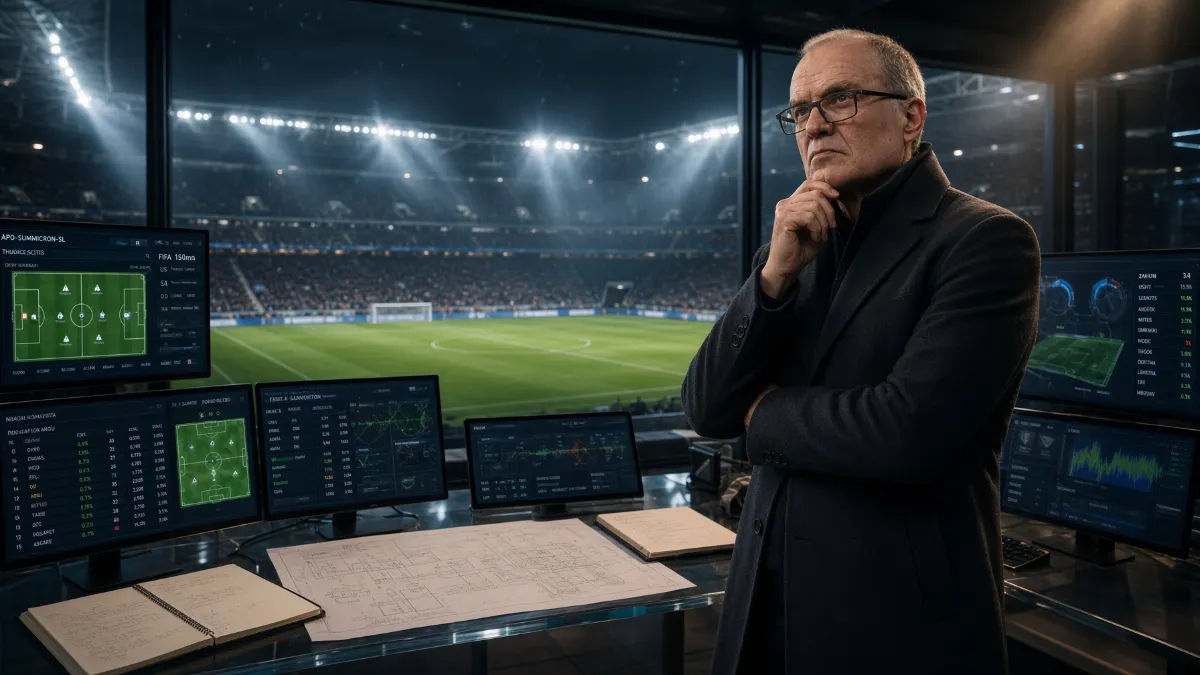
In modern football, the work of managers is often assessed solely based on trophies won, tactical schemes, and transfer campaigns. However, a number of elite specialists have built impressive academic careers either before or alongside their football activities, applying scientific disciplines in team building.
Arsene Wenger: the economic foundation of Arsenal
Arsene Wenger's academic reputation is considered one of the most impressive in the world of sport. After a brief period studying medicine, the Frenchman enrolled in the Faculty of Economics and Management at the University of Strasbourg in 1971, where he studied political science and economics. He successfully graduated in 1974 while balancing his studies with semi-professional appearances for Mulhouse. At that time, this French qualification was equivalent to a master's degree. Wenger's economic background helped him develop an approach to the rational distribution of Arsenal's budget during the financing of their new Emirates stadium. His fluency in French, German, English, Spanish, Italian, and basic Japanese earned him the respectful nickname 'the Professor'.
Carlo Ancelotti: honorary Doctor of Science
In 2026, the University of Parma awarded Carlo Ancelotti an honorary master's degree — the title of Doctorate Honoris Causa in the field of preventative and adaptive motor activity. This accolade recognised his long-term contribution to the development of sports science and leadership. Although the degree is honorary, it emphasises a key feature of the Italian's coaching philosophy — his focus on fitness, injury prevention, and extending veterans' sporting longevity, a theme evident during his time with Real Madrid.
Marcelo Bielsa: agronomy and total selection
Marcelo Bielsa boasts one of the most unconventional educational backgrounds among football managers. After a brief playing career, he delved into physical education and agronomy — the science of managing soil resources and crop production. He garnered his first coaching experience with a university team in Buenos Aires, where he personally scouted around 3,000 students to form a final squad of just 20. This meticulous attention to detail later became a hallmark of his work at Athletic Bilbao, Marseille, Leeds, and with national teams.
Thomas Tuchel: business administration and structuring
Thomas Tuchel was forced to end his playing career at the tender age of 24 due to a chronic knee injury. This prompted him to enroll at Stuttgart University to study Business Administration. To fund his education, he worked as a bartender in a Stuttgart nightclub, which helped him hone his communication skills under pressure and understand psychology. The systematic training he received at university shaped his coaching style: viewing football as a complex technical and structural task, solved through detailed preparation and pragmatic effectiveness.
Ralf Rangnick: teaching experience and pressing principles
In Germany, Ralf Rangnick was dubbed 'the Professor' long before this moniker was attached to Wenger in England. Rangnick studied at Stuttgart University and interned at Sussex University in the UK, successfully passing the First State Examination in Germany, which grants the right to teach at secondary schools. Prior to fully committing to professional football, he worked as a school teacher for English and physical education. This pedagogical background defined his approach to pressing: not merely pushing players to run harder, but explaining triggers, educating on interaction mechanisms, and ensuring collective understanding of each situation.
Zlatko Dalic: kinesiology and Croatia's stamina
Croatia's head coach Zlatko Dalic balanced his playing career with studies in kinesiology at the University of Zagreb from 1994 to 1998. The programme covered biomechanics, anatomy, physiology, and neuropsychology. Experts directly associate his profound knowledge in sports science with the phenomenal stamina of the Croatian national team during extra times and penalty shootouts — a key factor in their progress to the 2018 World Cup final.
Jose Mourinho: academic foundation in physical education
Jose Mourinho graduated from the Faculty of Physical Education at the Higher Institute of Physical Education (ISEF), part of Lisbon’s Technical University. The Portuguese deliberately chose the academic path to study training methodologies, physical conditioning, and coaching long before embarking on his own coaching venture. This academic foundation allowed him to become a meticulous organiser: his teams were noted for their detailed preparations against specific opponents, on-field discipline, and clear role distribution.
Roger Schmidt: engineering mind on the football pitch
Prior to a successful managerial career in the Bundesliga and European competitions, Roger Schmidt studied mechanical engineering at Paderborn University and worked in various industrial enterprises. While playing in lower leagues, he balanced matches with his studies and engineering practical work. His engineering education fostered systematic analysis and structured thinking — his renowned high-pressing game and positional tempo football at Red Bull Salzburg were built like a strict technological process.
Julian Nagelsmann: synthesising business and sports disciplines
Julian Nagelsmann's playing career ended prematurely due to severe injuries at the age of 20. Following this, he spent several semesters studying business administration before switching to sports science. After progressing through scouting departments and youth teams, he became the youngest manager in the history of Hoffenheim. Nagelsmann's methodical approach reflects the evolution of the modern manager: tactical flexibility, workload management, big data analytics, psychological preparation, and sports analytics all converge into a cohesive system of team management.