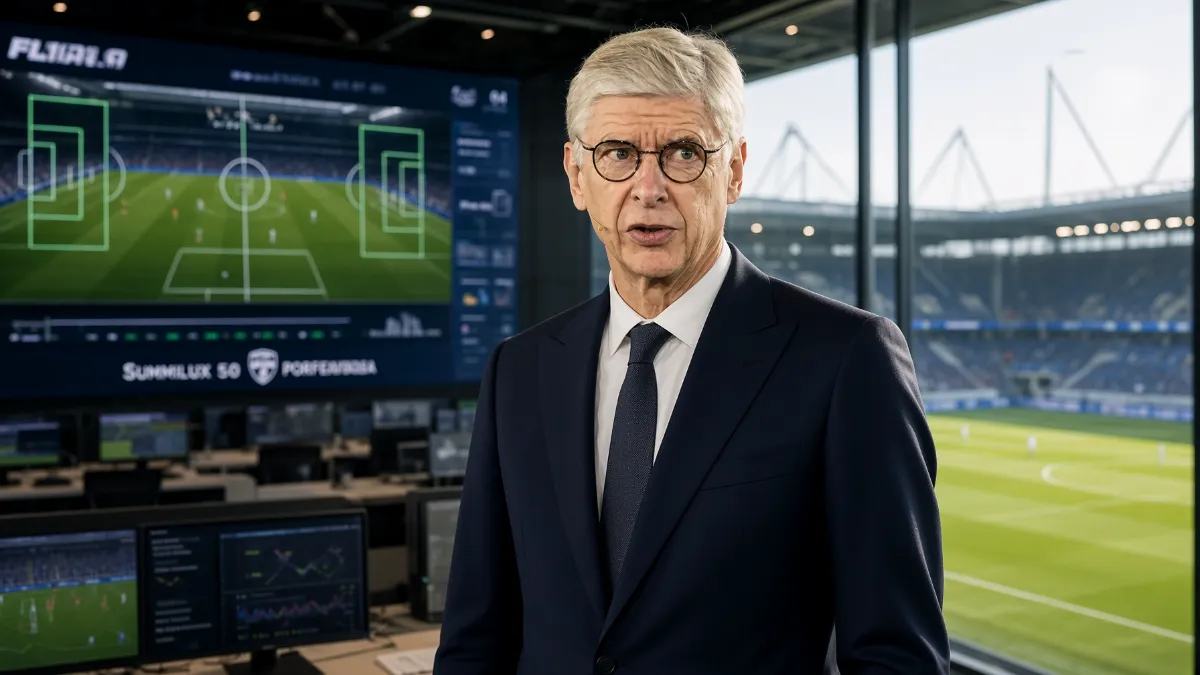
Former Arsenal boss Arsene Wenger has spent six years as FIFA's chief of global football development. Since taking on the role in November 2019, the Frenchman has wielded significant authority in shaping the future of world football, focusing on talent development, coaching education, and technical transformations. However, despite his stature, Wenger's legislative power is limited; he can propose changes and launch pilot projects, but ultimate rule approval lies with the International Football Association Board (IFAB), and any structural changes require national associations' backing.
World Cup every two years: a failed idea
One of Wenger's most ambitious and contentious proposals was to revamp the international calendar by reducing the World Cup cycle from four to two years, alternating with continental tournaments. Wenger argued that this initiative aimed to give opportunities to many developing nations, reduce travel through consolidated international breaks, and funnel profits into youth football development.
The commercial angle was hard to ignore: the 2018 World Cup raked in around $6 billion for FIFA, and doubling the tournament's frequency promised significant profit growth. However, leading European leagues and UEFA were staunchly opposed to the reform. La Liga president Javier Tebas described the idea as a direct threat to football's traditions, while Jurgen Klopp slammed it as a naked pursuit of money. By the end of 2021, the initiative was deemed a failure—as Wenger rightly identified the issue of calendar congestion, his solution would have exacerbated the crisis facing clubs and national leagues.
Offside rule by 'enlightenment': steps towards adoption and disputes
A key practical achievement of the French reformer has been the push for a new interpretation of the offside rule. Since 2020, Wenger has advocated that a player is offside only if their entire body is ahead of the second-last defender. If any part of the attacking player involved in the play is level with the opponent, offside is not called.
The goal of this rule is to restore the attacking advantage and put an end to the absurd VAR decisions over millimetres of players' bodies. At the beginning of 2026, IFAB officially approved testing the rule in the Canadian Premier League. Retrospective analysis indicated that, under the new system, 17 of 24 goals ruled out for offside in the 2026 World Cup would have counted.
Nonetheless, debates continue:
- Sceptics argue that the offside line merely shifts, and VAR will still need to handle contentious millimetres;
- A tactical threat arises: defending teams may abandon a high defensive line and retreat into a deep block;
- UEFA has so far rejected the rule for its tournaments, discussing a compromise that would fix offside to the player's body.
Summing up six years of work
Wenger's tenure at FIFA showcases a duality. He has an uncanny ability to pinpoint vulnerabilities in modern football—from the pitfalls of microscopic VAR decisions to player overloads. However, the solutions he proposes can sometimes be overly radical, excessively commercialised, or detached from the practical concerns of clubs. Should the 'enlightenment' offside rule be permanently adopted in the 2027/28 season, it will mark Wenger's most significant legacy as a reformer.
