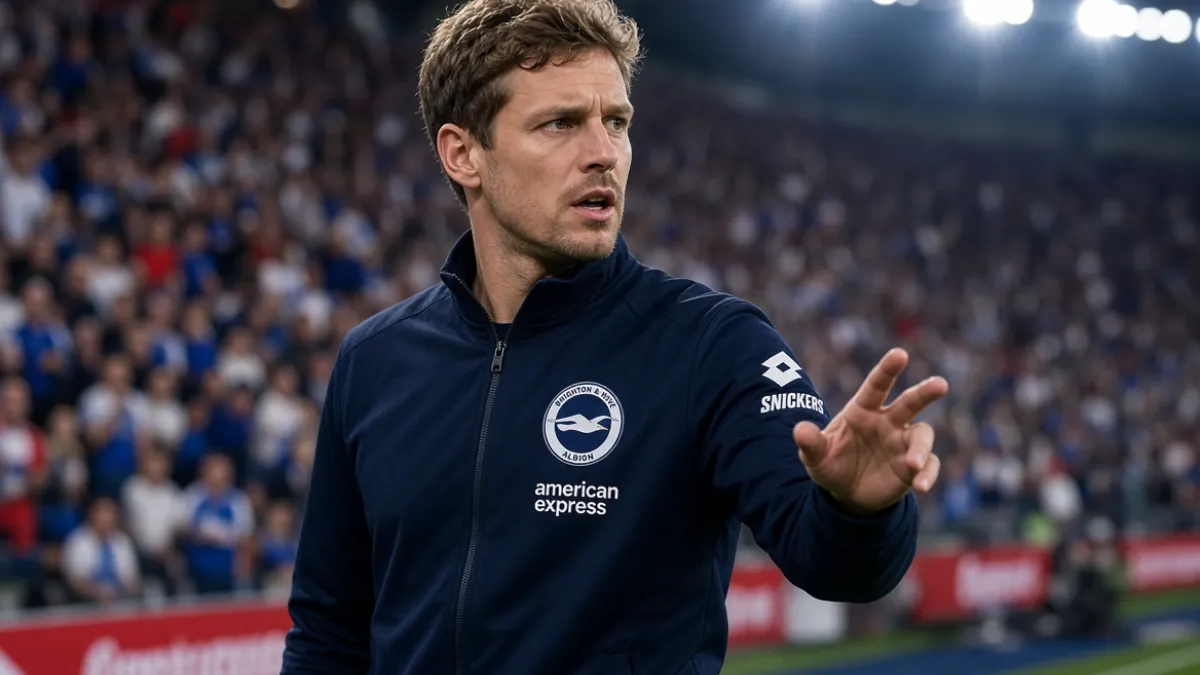
The journey of Brighton & Hove Albion to success is not just a tale of shrewd transfers but also of a well-structured system where scouting, loan strategies, player development, and financial planning work seamlessly as a unit. Despite losing their home ground in 1997 and enduring years of wandering, the club has managed to rise from the lower leagues to contending in the upper echelons of the Premier League.
From survival to Premier League heights
A new home: The opening of the Amex Stadium in 2011 under the guidance of chairman Tony Bloom laid a robust foundation for the club's future growth.
Sporting milestones: Promotion to the Premier League under Chris Hughton in 2017, the development of a progressive style with Graham Potter, and a historic qualification for European competitions under Roberto De Zerbi have been pivotal moments in the club's evolution.
Navigating change: The sale of key players to wealthier clubs for substantial sums has compelled Brighton to craft a strategy ensuring the departures of star talents do not derail their overall playing philosophy.
Data and the human touch in scouting
Analytics: Tony Bloom's experience in professional betting has equipped the club with tools like Jamestown Analytics, enabling systematic identification of undervalued players worldwide.
Market efficiency: Over five seasons (as of October 2026), Brighton has executed 62 permanent transfers — the second most behind Chelsea — while achieving a transfer profit of £10 million, in stark contrast to their London rivals who have dived deep into the red.
Character matters: Sporting director Paul Barber emphasises the importance of a player's adaptability, character, and family readiness for a new culture, rather than solely relying on statistical output.
The art of transfers: from Moises Caicedo to new challenges
Moises Caicedo: His transfer from Independiente del Valle in 2021, after a loan spell at Beerschot, has greatly benefited the team on the pitch, culminating in a record sale to Chelsea for £115 million in 2023.
Alexis Mac Allister: Signed in 2019 from Argentinos Juniors, he progressed through various loan spells in Argentina, helped his country win the World Cup in 2022, and subsequently joined Liverpool.
Current transitions: The summer of 2026 saw the departures of Carlos Baleba to Manchester United, Jan Paul van Hecke to Tottenham, and Danny Welbeck to Chelsea, necessitating a rapid reconfiguration and integration of young talents such as Luka Vuskovic and Chema Andres.
The loan system as a pathway to the first team
Strategic scale: The club regularly sends out over 20 players on loan each season (27 loans in the 2025-26 season and another 16 in summer 2026) to ensure players gain essential game time in other leagues.
Flexible pathways: Malik Yahkoue and Ibrahim Osman exemplify this successful route, having prepared themselves for first-team action at Brighton through loan experiences across European clubs.
The role of the coach and modern style under Fabian Hurzeler
Trust in the club: In winter 2026, despite a dip in form and calls for his dismissal following a defeat to Crystal Palace, the hierarchy retained faith in Fabian Hurzeler, leading to a contract extension until 2029 and a rapid rise to third in the table at the start of the season.
Intensity and pressing: Under Hurzeler's stewardship, Brighton prioritises ball domination, aggressive pressing in the opposition half, and quick recoveries in the final third.
