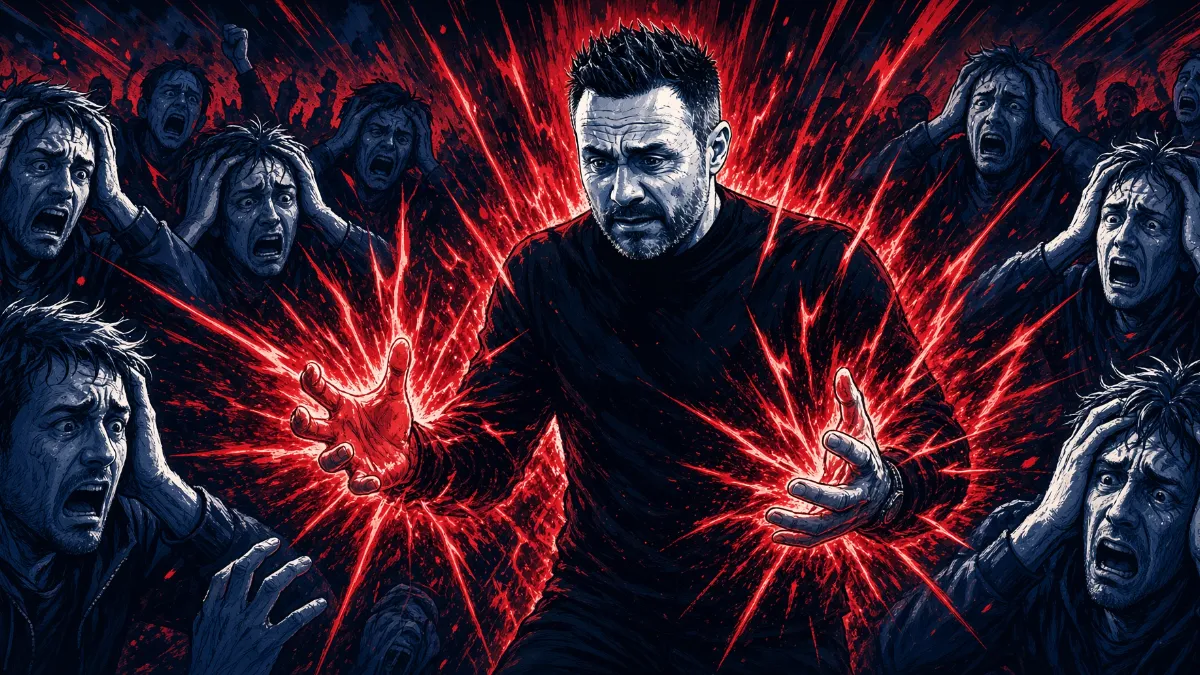
The fallout from rapid change is rarely benign, and in North London, Tottenham's struggles are unfolding with brutal clarity. The club has failed to score a single goal in their first four Premier League games and has already crashed out of the League Cup. When asked if the hierarchy has overdone it with such a massive overhaul in one transfer window, the answer seems glaringly obvious: yes.
For the first time in their history, regardless of division, Tottenham have kicked off a season with four consecutive games without a goal. What’s even more concerning is that there are few signs indicating an immediate turnaround.
A flicker at Anfield: a glimmer of light amidst the downfall
Tuesday's League Cup clash at Anfield against Liverpool was arguably the best display of the season for Roberto De Zerbi's men. The Spurs created two clear-cut chances in the first half, missed by Lucas Bergvall and Mohammed Kudus, enjoyed possession, threatened the goal more consistently, and arguably deserved a better outcome.
However, the final scoreline remained unchanged: yet another defeat. Tottenham's attacking play is rife with disarray; the team repeatedly lost possession too easily and too soon. They finally found the net, but it was only from a set-piece against a Liverpool side made up largely of youngsters and reserves.
Defensively, Tottenham looked alarmingly vulnerable, allowing Liverpool to bypass the midfield with ease and repeatedly succumbing to pressure near their own box. If Liverpool had fielded their first XI, the repercussions would likely have been more severe.
Still, there are positive signs emerging; some combinations sliced through the opposition's defence. The Spurs accumulated an impressive 2.33 expected goals (xG) — their highest against an English side since December 2024 against Southampton. However, their inability to exploit this territorial advantage underscores a glaring issue: the players simply don’t have a grasp of how to connect on the pitch.
Chaos for £300 million: a squad without foundation
This imbalance is hardly surprising. Over the summer, the club spent significantly more than £300 million in the transfer market while also signing several free agents. Expecting immediate cohesion from a completely revamped squad was naïve, something De Zerbi admitted after the disastrous opening loss to Brentford:
We are not yet a team.
The Italian is attempting to find balance blindly: across four matches, there have been 12 changes to the starting XI — a record rotation for a season's start in the club's Premier League history. Demanding consistent results in such a constantly changing lineup is simply unrealistic.
Before the trip to Liverpool, Tottenham's stats in the Premier League were dire: a mere 2.22 xG from open play over four matches — the lowest of all 20 top-flight clubs.
This massive influx of players styled for De Zerbi's demanding positional approach, coupled with the departure of dissenters (notably leading defender Cristian Romero), has completely undermined their chief weapon. Last season, Tottenham set a club record for goals from corners (18), though arch-rivals Arsenal managed 19. Now, their set-piece threat has evaporated: generating only 1.22 xG from set-pieces, placing them seventh from the bottom in the league with zero goals scored.
A historical verdict: mass signings lead to a battle for survival
After two shameful seasons finishing 17th, the hierarchy had to go all in for the manager. But football history is harsh: instant squad makeovers rarely lead to instant success.
Tottenham have become only the 12th team in Premier League history (excluding Championship newcomers) to entrust more than 20 starts to players without a year’s experience at the club in the first four matches.
- The fates of the previous 11 gamblers are telling:
- Only five teams managed to improve their final standing compared to the previous season.
- From the six clubs whose fortunes worsened, one was relegated outright, while four finished perilously close to disaster in 17th.
Among the five teams that improved, only a couple sustained long-term growth: Tottenham in the 2004/05 season and Manchester City in 2008/09 (backed by endless investment from Sheikh Mansour).
Alas, there are many sorrowful examples: West Ham narrowly avoided relegation after a mass signing spree in the summer of 2018 and ultimately dropped to the Championship. Sunderland plummeted to League One following their chaotic summer in 2013. Even Chelsea, after a colossal overhaul, found themselves down in tenth place.
The weight of price tags and empty stands testing patience
Fans often believe that sinking below 17th is impossible, assuming that the quality of the new arrivals is enough to evade the drop. But even stars require time, especially when they are brought together all at once.
There’s immense psychological pressure from above. Savinyo and Mateus Fernandes are both only 22 years old but are expected to lead the team straightaway. Sandro Tonali and Omar Marmoush, both 26 and 27 respectively, have more experience, yet the weight of expectation is still colossal.
The trust from the stands is fading faster than usual. Supporters are frustrated by the sheer amount the club has spent, while there's currently little emotional connection with the new players: no shared history, no great wins, and no fond memories. Fans demand returns immediately.
In the league, Tottenham's goal drought has surpassed 407 minutes; the last ball that hit the net was a scrappy salvaging goal by Joao Palhinha against Everton in the dying moments of the last season. Time for this Italian regime to get it together is running out, with a titanic battle looming against the impending chaos.
