Andy Burnham, the Mayor of Greater Manchester, has reignited an age-old debate by suggesting a review of the alcohol ban that has been in place since 1985 on English football grounds. The case for change is stronger now than it has been for decades: match attendance is more regulated, stadiums are safer, and a recent trial in the Women's Super League has yielded promising results.
However, simply reframing the current rule as outdated won't resolve the issue. Football policing still confronts crowd disorder that is rarely seen in other sports, with alcohol often a contributing factor to various incidents. A hasty repeal of the ban could pose significant risks for stewards, families, and ordinary fans.
A more sensible approach would be to conduct a carefully controlled and independent trial in men's football. This should be a voluntary decision for clubs, backed by strict sales regulations, security measures from stewards, and the ability to halt the scheme immediately if things go awry.
What the law actually forbids
There's a common misconception that alcohol is completely banned in English stadiums. This isn't the case. The 1985 Sporting Events Act (Control of Alcohol etc.) allows fans to purchase and consume alcohol in concourse areas, pubs, and hospitality zones.
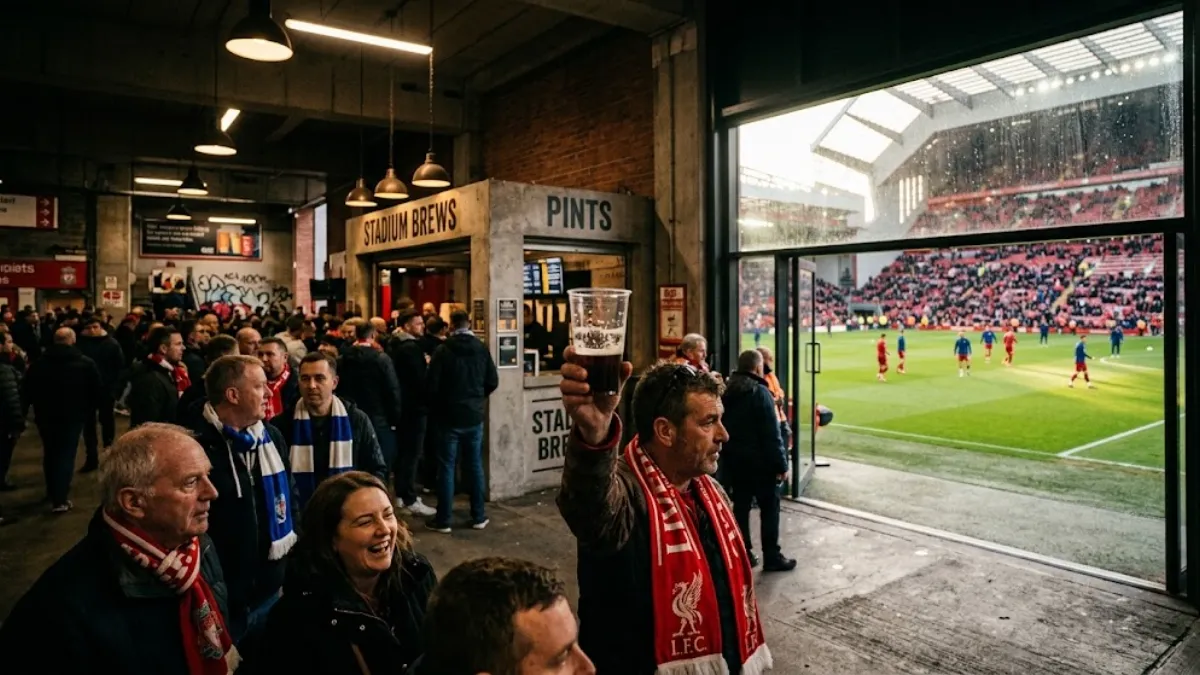
The law prohibits fans from having or consuming alcohol in areas with direct sightlines to the pitch during the game—specifically from 15 minutes before kick-off to 15 minutes after the final whistle. Thus, fans can enjoy a pint in the concourse during half-time but must leave it behind before returning to their seats.
The law also forbids entry to the stadium while intoxicated and restricts the carrying of alcohol on buses and trains heading to certain matches. This limitation is a legislative act, not club policy. Any permanent change for men's football would require Parliament to amend or repeal the relevant section of the 1985 Act.
Historical context of the ban
The 1985 Act was introduced during a time when English football faced severe crowd violence issues. The sport was globally associated with hooliganism, unsafe stadiums, poor infrastructure, and regular disturbances. The government's intent was clear: to ban alcohol in football grounds and 'under no circumstances' allow it in standing or seated areas.
This law was passed just weeks after the tragic fire at Bradford City, which claimed 56 lives, and the disaster at Heysel Stadium, where 39 Juventus fans died before the European Cup final. Although alcohol wasn't the sole cause of the violence, the rationale for the ban was preventative: it was thought to lower self-control thresholds, heighten confrontations, and exacerbate already poor crowd management systems.
Four decades later, the situation in stadiums has radically changed: they are now fully seated, equipped with modern surveillance and electronic ticketing systems, and use security orders and police intelligence. Many fans now attend games with children, expecting a safe and comfortable environment. These changes underpin the arguments for reform, but they don't erase the historical reasons for the law nor guarantee that alcohol doesn't play a role in current disorder.
Arguments for alcohol's return
Burnham has branded the restrictions on football fans as unfair and discriminatory, suggesting that the law belongs to a bygone era. The Prime Minister also proposed that conducting a trial is the right way to test the reforms. The Football Supporters' Association (FSA) holds a similar stance, arguing that fans shouldn't be criminalised for enjoying a pint where they can legally drink on the same stadium during a concert or a rugby match. Four main arguments for change emerge.
Football fans shouldn't be perpetual exceptions. A fan can legally drink at a concert in a stadium, at rugby, cricket, or rugby league matches. Yet once they attend a football match, an open plastic cup within sight of the pitch becomes a legal infraction. The law should respond to current risks, not historical reputation.
The current system encourages rapid drinking. The ban doesn't prevent alcohol consumption; it concentrates it in specific locations and moments. Fans often drink in pubs before matches and then rush to down drinks in crowded concourse areas at half-time. A controlled system could stagger purchases and make service more orderly.
Clubs could increase revenue. Matchday income from food and drink is crucial for clubs, especially those outside the Premier League. A fan who stays in their seat with a drink is more likely to order via an in-seat service. However, this additional revenue should go towards improving stadiums, family zones, and the financial viability of smaller clubs, rather than solely boosting alcohol sales.
The trial in women's football has shown tangible results. The 1985 law doesn't apply to women's football. In the initial stage of the trial from January to May 2025, four clubs participated in 19 matches attended by 51,000 fans. Players and officials reported no change in fan behaviour. By June 2026, the experiment expanded to 190 matches across 29 grounds involving 20 clubs. Both divisions were allowed to offer alcohol in the stands from the 2026/27 season, but only on a voluntary basis. During the trial, no alcohol-related incidents or evictions were recorded, and fan safety assessments remained high. This is strong evidence that alcohol can be managed without automatically compromising safety. However, it doesn't prove that a high-risk men's match would yield the same results.
Arguments for maintaining the ban
Arguments from the police cannot simply be dismissed as a yearning for a bygone football order. The UK Football Policing Unit asserts that other sports do not encounter the same level of violence and fan-related crime as football. Alcohol is often a significant factor in disorder.
Football retains a specific problem with disturbances. While the sport is safer, it is not without risks. Long-distance fan travel, intense rivalries, antagonistic crowd dynamics, flares, pitch invasions, and confrontations remain serious concerns for police. An analysis published in 2026 revealed that incidents are recorded at 50% of matches. This doesn't imply serious violence, but it underscores why the police don't view football as a routine concert audience.
Alcohol can heighten existing tensions. It is rarely the sole cause of violence but can lower self-control, complicate conflict de-escalation, and increase the risk of verbal disputes turning physical. The fact that fans drink before entering doesn't alleviate this issue.
The burden will largely fall on stadium staff. Reforms would place a significant burden on stewards and security officers. They would require clear rules for refusing service, preventing drink-throwing, managing spilled alcohol, and identifying intoxicated fans. The 1985 Act also covers containers that could cause injury. Any trial would necessitate controlled plastic cups without lids and bans on bottles, cans, and glass in areas.
Verdict
At its core, this debate is partly about how English football perceives its own fans. The ban was formed in an era when authorities viewed football crowds as a social problem. This perspective was shaped by real dangers but has become a cultural stigma. Modern fans don't fit a single profile. A fair alcohol policy should respect this diversity. It shouldn't assume that every fan is one drink away from disorder, nor should it presume that every fan wants the stadium to resemble a pub overlooking the pitch.
English football should move towards a rigorously regulated trial of alcohol consumption in the stands. However, any reform must be approached with caution. Allow clubs to participate voluntarily. Limit what may be sold. Exclude high-risk matches. Independently measure every outcome. Halt the scheme where evidence turns against it.
Football fans shouldn't bear an eternal legal penalty for the failures of earlier eras. Any changes should be earned through responsible implementation and evaluated based on actual matchday occurrences.