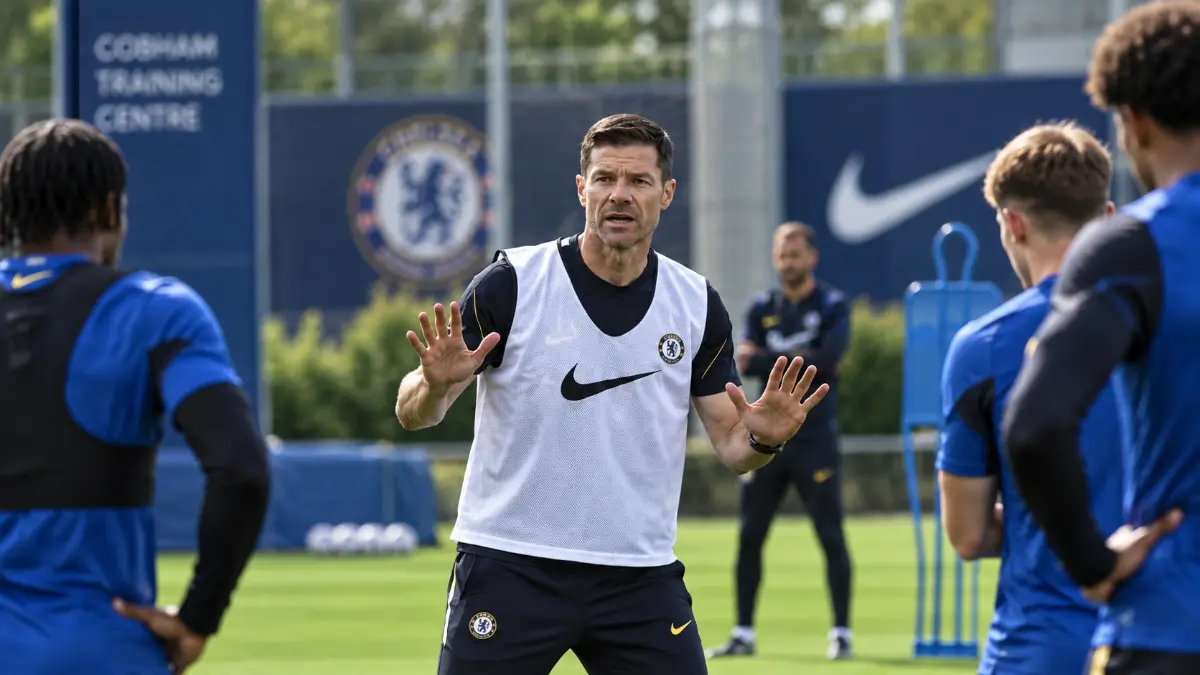
The first defeat to Brentford since 1938 marked a painful conclusion to Chelsea's start of the season. After five Premier League matches, Xabi Alonso's side has accumulated seven points, leaving the new head coach with several pressing challenges ahead of the campaign's continuation.
There is still plenty of time to rectify the situation, but the issues within the London club are becoming increasingly apparent.
1. Tighten up the defence
This is the primary concern for Chelsea. The Blues have conceded 12 goals, the most in the Premier League, and have let in at least two goals in each of their five matches.
Alonso has already tried different formations, deploying both three and four at the back, but this has yet to deliver the necessary stability.
Some of the issues can be attributed to the adaptation of new signings. Maxence Lacroix and Emiliano Martinez joined the team only this summer and are still figuring out how to gel. Levi Colwill is also returning from a serious knee injury and is now operating slightly out of position.
Interestingly, in their first two league matches, Chelsea averaged just 32.4% possession but won both games. In the following three fixtures, possession increased to 47.4%, yet the team managed to secure only one point.
Opponents seem more wary of Chelsea's attacking potential and are prepared to capitalise on errors. Brentford illustrated this vividly; after the break, they had less than 34% possession but still scored three times.
2. Await the return of key players
Alonso isn’t keen on using injuries as an excuse, but the impact on the season's start is undeniable.
Moisés Caicedo is particularly missed. The Ecuadorian sustained a calf injury during pre-season and has only managed 14 minutes in the league.
Marco Palese, who impressed during pre-season, has yet to make his competitive debut due to a quadriceps injury. His return should bring pace and physicality to the full-back position.
Fans also look forward to the returns of João Pedro and captain Reece James.
Caicedo's comeback is vital for Alonso since Chelsea's struggles go beyond leaking goals; it’s how easily opponents penetrate through the midfield.
3. Avoid over-reliance on key players
Cole Palmer, Morgan Rogers, and João Pedro have been Chelsea’s primary threat.
These three account for eight of the ten goals and six of the nine assists in the league.
However, the match against Brentford highlighted the downside of this dependency. With João Pedro sidelined due to injury, Rogers had a quiet game, while Palmer faded after the break.
Other players need to step up and take on more responsibility.
In the Premier League, only Pedro Neto and Romeo Lavia have scored, while Yorel Hato and Lacroix have registered assists.
Alonso shouldn’t abandon his attacking trio altogether, but opponents should not find it too simple to stifle Palmer, Rogers, and João Pedro to diminish Chelsea's threat.
4. Find solutions in midfield
Midfield issues have been evident since the close of the summer transfer window.
Chelsea lost Enzo Fernandez and Andrey Santos, while Dario Esugo was sent on loan to Strasbourg. Furthermore, Caicedo and Jordan Henderson have missed significant portions of the season due to injuries.
Romeo Lavia and Reece James also have a history of fitness issues. The two have started together three times without proving their effectiveness.
Alonso has already experimented with various combinations – Malo Gusto and Lavia against Brighton, and Valentin Barco and Henderson against Brentford.
The issue lies in opponents easily launching counter-attacks. The midfield currently fails to provide adequate protection for the defence.
Caicedo's return should help, but Alonso must find a workable combination before January. Chelsea had attempted to sign Lamina Kamara from Monaco, but that transfer fell through.
5. Make substitutions more effective
One area of scrutiny for Alonso has been his timing of substitutions.
A prime example is Estevao Willian. The Brazilian has come on as a substitute four times in the Premier League, but his minutes on the pitch have been at 83, 81, 86, and 87.
That’s often not enough time for a young attacker to significantly influence the game.
In the match against Arsenal, with a score of 1-2, Alonso introduced Pep Chavarria and Gusto on the hour mark, while attackers Danny Welbeck and Estevao came on much later.
A similar situation arose against Hull City when Chelsea needed a winning goal.
However, the League Cup match against Leeds showcased Alonso's ability to make impactful changes. He made four substitutions at half-time, leading to a stunning turnaround from 0-1 to a 6-3 victory.
Alonso now needs to translate that kind of reaction to Premier League matches.
6. Address set-pieces woes
The final significant issue is set-pieces.
Brentford scored their first goal from a corner. Chelsea have conceded a total of five goals from set-piece situations, the worst record in the Premier League.
This summer, the club brought in set-piece specialist Austin McPhee from Aston Villa with the goal of improving this aspect.
However, visible progress has yet to materialise.
The problem is even starker when contrasted with Chelsea's attacking set-pieces; they themselves scored four goals from such situations, ranking among the best in the league.
Alonso's main task ahead
Chelsea possesses serious attacking potential, yet the team is currently losing control of matches too easily.
After five games, the primary issues are interconnected: an unstable defence, insufficient midfield protection, over-reliance on a few attacking players, late substitutions, and poor performance at set-pieces.
The returns of Caicedo, João Pedro, and Reece James could change the situation, but Alonso will still have to find a more sustainable playing structure.
With seven points accumulated after five matches, it’s clear that the team's potential and actual results are markedly divergent.