Each year as part of Birmingham's Heritage Week, the city aims to both celebrate and re-evaluate its multifaceted past. Two neighbouring sites to Aston Villa Football Club open their doors: the historic Aston Hall estate and the Aston Parish Church.
Aston Hall was conceived and built by Sir Thomas Holt between 1631 and 1635. The estate and surrounding lands hold immense historical significance. For the footballing world, they are particularly notable as the Holt family's name gives rise to the legendary supporter terrace at Villa Park — the 'Holt End'. The estate's grounds also provide a glimpse into the historical landscape of Aston Lower Grounds, where the Birmingham club's home ground is now situated. In the past, these green expanses were part of the estate’s park, highlighting the monumental stature of the entire area.
Likewise, the Aston Parish Church, with its cathedral-like features, harkens back to a time when Aston competed directly with Birmingham itself. During the frenzied development of the urban agglomeration, Aston was a vital centre of trade and industrial production, even vying for the status of an independent city.
Times have changed dramatically since then. Today, the combined parish of Aston and Nechells finds itself in a disheartening 118th place out of 12,382 in the Church of England’s wellbeing and deprivation rankings, with the top spot representing the worst living conditions. The contrast is stark: around 40,000 fans gather at Villa Park every fortnight — a figure that massively exceeds the parish’s population of about 23,808.
The industrial decline and the closure of major local employers, such as Kynochs factories and Ansells breweries, have led to significant population outflows. The congregants and church staff express a bittersweet irony: the area's biggest economic player — the football club — pays millions to specialists from around the world, yet these individuals are rarely spotted in Aston outside match days. Meanwhile, fans who make the strenuous climb to the church tower are rewarded with breathtaking panoramic views of the surroundings and the historical facade of Villa Park.
Fading footprints: a historical journey through a century
What is Aston Villa’s own historical legacy? Club legends are well known, but what remnants of those days remain, and in what form is this memory preserved? How does the team’s history fit into Birmingham’s broader narrative? Has the multi-billion pound global business of modern Premier League football overshadowed local historical context? In Richard Weiner’s recently published monumental work, 'The Second City — Birmingham and the Forging of Modern Britain', Aston Villa is mentioned only once in the index.
In May 1997, Claret and Blue magazine celebrated the club’s centenary at Villa Park with a special issue featuring a historical trail through key locations tied to the club’s inception.
Following in the footsteps of researchers Bernard Gallagher and Richard Whitehead decades later, one begins at the starting point — the Aston Villa Methodist Chapel. It was from the cricket team members associated with this chapel that the football club was founded in 1874.
The original chapel building stood on the bustling Lozells High Street until 1997, when it was sadly demolished and replaced by a modern structure. While the new building is undoubtedly better suited to the needs of the congregation, the loss of the club’s original home is keenly felt.
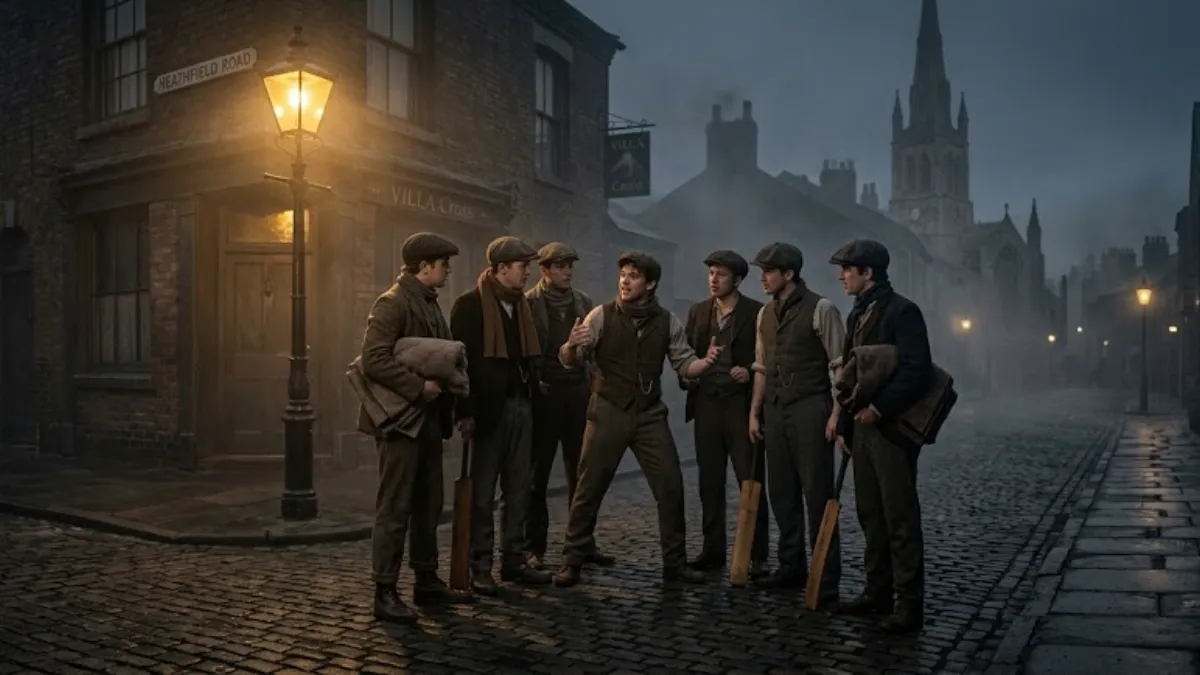
The site of the chapel is just a stone's throw from Hitfield Road. Legend has it that it was here, beneath the light of a gas street lamp, that a fateful conversation took place regarding the establishment of the team. As one walks from the chapel to Hitfield Road, the now-closed Villa Cross Jobcentre comes into view, which used to serve as a pub in Victorian times. Hitfield Road may not appear to be a tourist hotspot, but for dedicated fans, it carries a sacred significance. Modern lamp posts stand almost where their gas predecessors once flickered, and nearby residential homes from that era remain.
Moving further down Hitfield Road, one reaches Westminster Road. On these grounds, the first teams practised. A church was soon built on the site, which still stands today. In the decades since that first publication, this quiet spot has changed little.
Wandering years: from cricket pitches to stability in Perry Barr
The trails of the team's early playing history span along Trinity Road. Near Fentham Road once lay the Excelsior Cricket Club ground, where the wandering Aston Villa side played its first matches in 1873.
Closer to the bowl of the modern stadium lies Nelson Road. In Victorian times, this line marked the boundary of Aston Lower Grounds, dubbed 'The Meadow'. The early teams played practically next to the grand amusement park of Aston Lower Grounds, which once hosted world-renowned acts — from legendary cricketer William Gilbert Grace to the shows of Buffalo Bill. Many older fans still recall the old aquarium sign at the Trinity Road offices (demolished around 1981), a reminder of the area’s exuberant entertainment past.
In its early years, the club's existence was marked by a constant change of locations until it finally found stability in 1876 with its move to premises in Perry Barr. The stadium on Wellington Road became a crucial platform that turned the club into a dominant force in English football.
However, imagining the past on these streets today requires a vivid imagination. The popular Crown and Cushion pub, which served as a regular meeting spot for the club's founders to engage in heated debates, has long been erased from existence. For the uninitiated passerby, there remain few hints of the sporting greatness — an unavoidable, yet sad, price of time's relentless march.
Founding fathers: eternal rest in Handsworth
A little farther from Aston’s borders lies St. Mary’s Church in Handsworth. Its burial grounds hold the memories of those who stood at the very origins of football civilization. Here lies George Ramsey, whose modest gravestone bears a distinguished epitaph:
Founder of Aston Villa FC.
Legendary Birmingham captain Archie Hunter once referred to Ramsey as the ‘actual founder’ of the team. While George's contribution to transforming a modest circle into a sporting empire is undeniable, this phrasing somewhat overshadows the merits of those who laid the first brick before him. The club had already existed for some time when the Scot fortuitously wandered into Aston Park; the story began in March 1874 under that very gas lamp on Hitfield Road, propelled by the enthusiasm of Methodist chapel cricketers. Acknowledging the contributions of predecessors does not diminish Ramsey's grand stature; rather, it highlights the intricate tapestry of early club history.
Another towering figure from that era is William McGregor, immortalised in a bronze statue outside the Trinity Road stand at Villa Park. The Scot's role is indisputable: a committee member, referee, and president of Aston Villa. His strategic vision extended far beyond the confines of postal code B6, as he was the ideologue and architect of the Football League in 1888, where the Birmingham club occupied a central role.
The fates of the two Scots are forever intertwined: William McGregor also found his final resting place at St. Mary’s Church cemetery in Handsworth.
George Ramsey's poignant words, which could just as easily have been echoed by McGregor or any devoted fan, ring true:
Aston Villa has always been my one true love. I helped plant that little tree and have seen it grow into a majestic oak.
The memorable locations tied to the club are deeply meaningful to football fans, unlike the universally acknowledged historical landmarks such as Aston Hall. Nonetheless, the football club remains a key pillar of regional identity and a driving force for community development. The club's hierarchy must recognise its role as a meticulous steward of a unique heritage while also supporting the districts that birthed it. In this era of commercial expansion, balancing global branding with local roots remains an arduous task for football giants.
