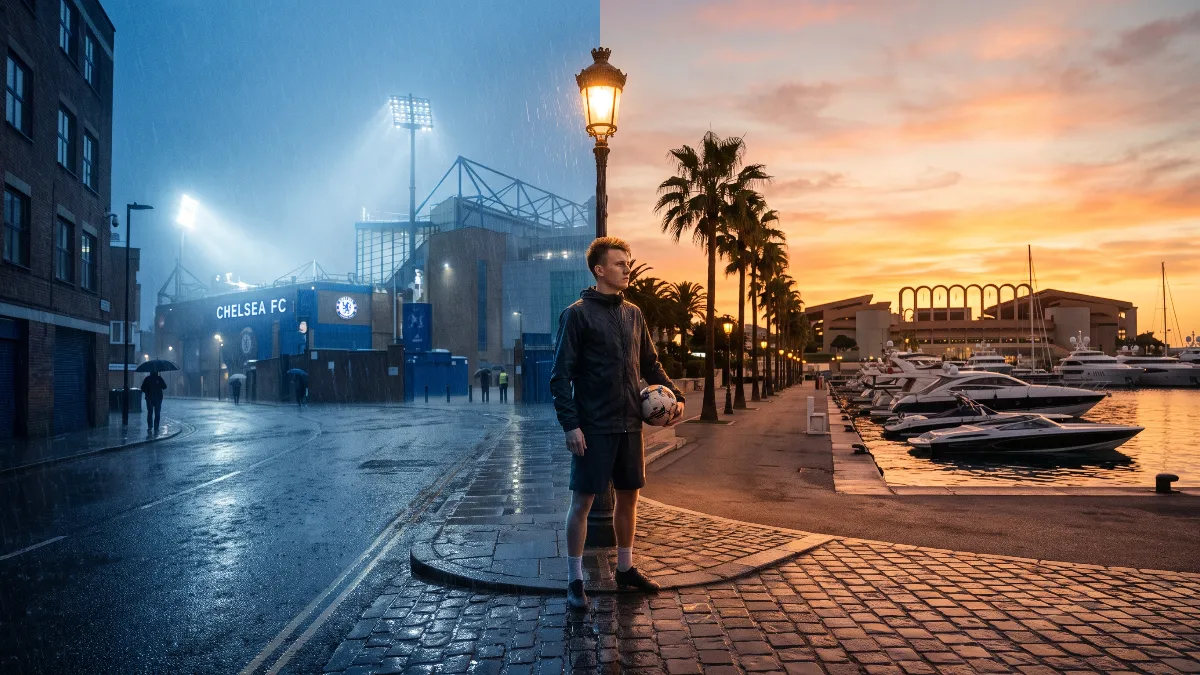
In the summer of 2018, Alexander Golovin emerged as one of the standout players of the home World Cup. The CSKA Moscow midfielder attracted the attention of leading clubs across Europe, with Juventus, Chelsea, and Monaco all keenly watching his progress.
British outlets almost exclusively touted his move to Stamford Bridge as a done deal. Chelsea’s Russian owner, Roman Abramovich, had a personal interest in the Russian talent, and negotiations between the clubs were reportedly advancing swiftly. However, the 22-year-old opted to sign a five-year contract with Monaco for a fee of €30 million.
Prioritising game time and fear of the bench
The primary argument for Golovin's decision was the guaranteed playing time. Making a transition from the Russian Premier League to a top-tier club in the Premier League came with significant risks. In London, the midfielder would have faced immense pressure for immediate results from both the British tabloids and fans. Monaco provided Golovin with the opportunity to assume a pivotal role as a key player and leader in their project.
Language barrier and cultural adaptation
Golovin has openly discussed in interviews how, at that time, he was not proficient in foreign languages and did not feel psychologically ready for the harsh environment of British football. The lifestyle and mentality in the principality turned out to be much more comfortable, facilitating a gradual integration into European culture.
I decided that I needed to adapt in a team like Monaco first. I didn’t know the language and wasn’t ready for European culture, he explained his choice.
Managerial changes and Jorginho’s transfer to Chelsea
In the summer of 2018, Maurizio Sarri took over as head coach of Chelsea. The Italian brought with him Jorginho from Napoli, making him the centrepiece of his ‘sarri-ball’ strategy. Chelsea also had strong competition in the midfield, featuring N'Golo Kante, Mateo Kovacic, Cesc Fabregas, and Ross Barkley. Struggling to secure a starting spot amid such fierce competition would have posed a significant challenge for any young foreign player.
The role of Vadim Vasilyev and Michael Emenalo
Monaco's hierarchy undertook a focused and convincing campaign to secure Golovin. Vice-president Vadim Vasilyev personally negotiated with CSKA and the player's family, providing a clear career plan modelled after the development of stars like Kylian Mbappe and Bernardo Silva. At the time, Michael Emenalo, a former Chelsea executive, served as Monaco’s sporting director and was well aware of Chelsea's strengths, tipping the scales in favour of the Ligue 1 project.
Ultimately, Alexander Golovin's decision proved to be both pragmatic and well-considered. He avoided the fate of many young talents who get lost in loan spells at top Premier League clubs, instead becoming vice-captain and a long-term leader for Monaco, regularly competing in European competitions.