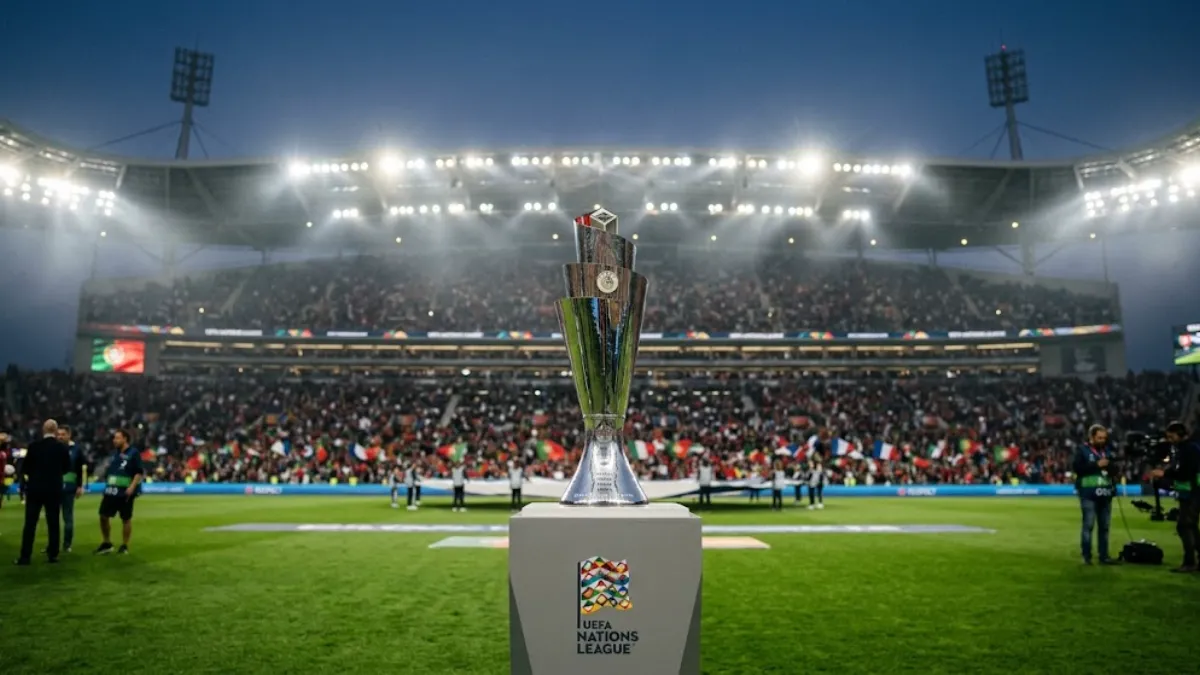
The fifth edition of UEFA's Nations League has kicked off. Launched in 2018 as a sporting alternative to friendlies, the tournament maintains a multi-tiered structure with four divisions, including promotion and relegation mechanisms. Beyond the chase for continental silverware, the tournament's results play an essential role in the allocation of playoff spots for the Euro 2028 qualification cycle.
Format and schedule of the tournament
A total of 54 European nations are participating in the competition. Teams are divided into four leagues: Divisions A, B, and C each have four groups (16 teams per league), while Division D consists of six national sides split into two groups of three.
- Group stage (September – November 2026): Each team competes in a double round-robin format (home and away matches). Due to extended windows for international matches, the first four rounds will take place from late September until early October 2026, with the final two rounds concluding in November.
- League A playoffs (March – June 2027): The top two teams from the four groups in League A will advance to the quarter-finals, consisting of two-legged ties (25–30 March 2027). The four quarter-final winners will proceed to the final stage ('Final Four'), set to take place in June 2027, featuring semi-finals, a third-place playoff, and the final.
- Promotion and relegation between leagues: The group winners in Leagues B, C, and D will be promoted to the higher division, while the bottom teams in the upper leagues will face relegation. National teams finishing in borderline positions (third in League A against the second from League B, and third in League B against the second from League C) will meet in two-legged playoff matches for survival and promotion in March 2027.
- Connection to Euro 2028: The highest-ranked teams in the Nations League that fail to qualify through the traditional qualifying process will receive reserve spots in the qualifying playoff for Euro 2028.
Group compositions for the 2026/27 season
League A
Group Teams
A1 🇫🇷 France, 🇮🇹 Italy, 🇧🇪 Belgium, 🇹🇷 Turkey
A2 🇩🇪 Germany, 🇳🇱 Netherlands, 🇷🇸 Serbia, 🇬🇷 Greece
A3 🇪🇸 Spain, 🇭🇷 Croatia, 🏴 England, 🇨🇿 Czech Republic
A4 🇵🇹 Portugal, 🇩🇰 Denmark, 🇳🇴 Norway, 🏴 Wales
League B
Group Teams
B1 🏴 Scotland, 🇨🇭 Switzerland, 🇸🇮 Slovenia, 🇲🇰 North Macedonia
B2 🇭🇺 Hungary, 🇺🇦 Ukraine, 🇬🇪 Georgia, 🇬🇧 Northern Ireland
B3 🇮🇱 Israel, 🇦🇹 Austria, 🇮🇪 Ireland, 🇽🇰 Kosovo
B4 🇵🇱 Poland, 🇧🇦 Bosnia and Herzegovina, 🇷🇴 Romania, 🇸🇪 Sweden
League C
Group Teams
C1 🇦🇱 Albania, 🇫🇮 Finland, 🇧🇾 Belarus, 🇸🇲 San Marino
C2 🇲🇪 Montenegro, 🇦🇲 Armenia, 🇨🇾 Cyprus, 🇱🇻 Latvia
C3 🇰🇿 Kazakhstan, 🇸🇰 Slovakia, 🇫🇴 Faroe Islands, 🇲🇩 Moldova
C4 🇮🇸 Iceland, 🇧🇬 Bulgaria, 🇪🇪 Estonia, 🇱🇺 Luxembourg
League D
Group Teams
D1 🇬🇮 Gibraltar, 🇲🇹 Malta, 🇦🇩 Andorra
D2 🇱🇹 Lithuania, 🇦🇿 Azerbaijan, 🇱🇮 Liechtenstein
Countries in other confederations are adopting the Nations League format too. Fully-fledged tournaments are being held in the CONCACAF region (North and Central America) and the AFC (Asia). In South America (CONMEBOL), a men's equivalent hasn't yet launched, though discussions are ongoing at the leadership level, while a women's Nations League already exists on the continent. In Africa (CAF) and Oceania (OFC), tournaments in a similar format are not currently in place.
