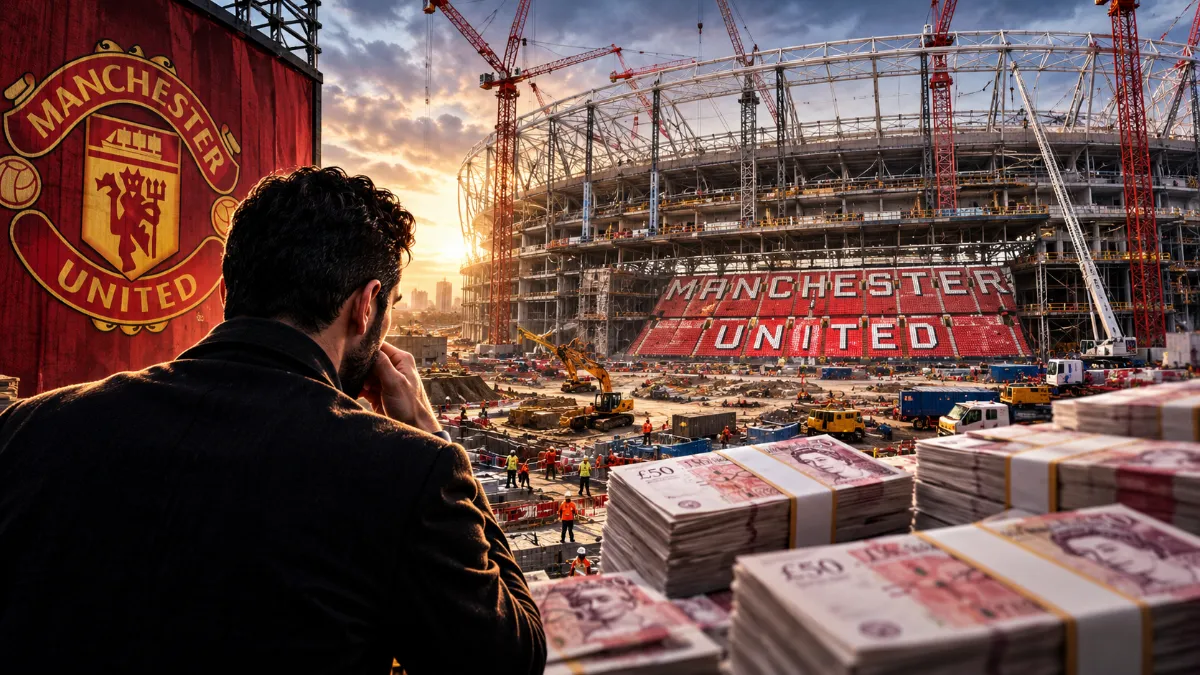
The construction of a new stadium could demand Manchester United to secure an additional £1 billion in loans. Financial expert Stefan Borson believes that without incurring new debts and significant owner investment, executing a project over £2 billion will be incredibly tough.
Recently, Manchester United took a significant step towards building a 100,000-seat arena by acquiring around 25 acres of land adjacent to their current home, Old Trafford. The plot cost the club £63.5 million, but that is just a small slice of the overall expense that awaits.
According to the latest financial reports, the club’s total debt burden has already surpassed £1.1 billion since the Glazers took over in 2005. The scale of financing required for the new stadium will be on a completely different level.
Borson explained:
To simplify, let’s say you need around £100 million in cash every month for a period of 24 months.
Where do you find £100 million each month for two years just to finance the construction of the stadium? The club's existing borrowing capacity is almost exhausted.
In Borson’s view, theoretically, Manchester United could tap into future club revenues to raise some of the needed funds, but relying solely on debt financing might not be enough.
Borson continued:
I think there are ways to structure about £1 billion in debt, relying on future cash flows of the business.
But I would be surprised if they can undertake this project without roughly £1 billion in equity – meaning funds from the current owners or a new investor.
As a result, Manchester United faces not only the challenge of the construction costs but also the sourcing of this vast amount of capital. One option is further investment from the owners or the introduction of a new investor.
While a high level of debt doesn’t automatically breach Premier League regulations, the financial strain already limits Manchester United’s options, and the new stadium project could intensify the funding issues for the club.