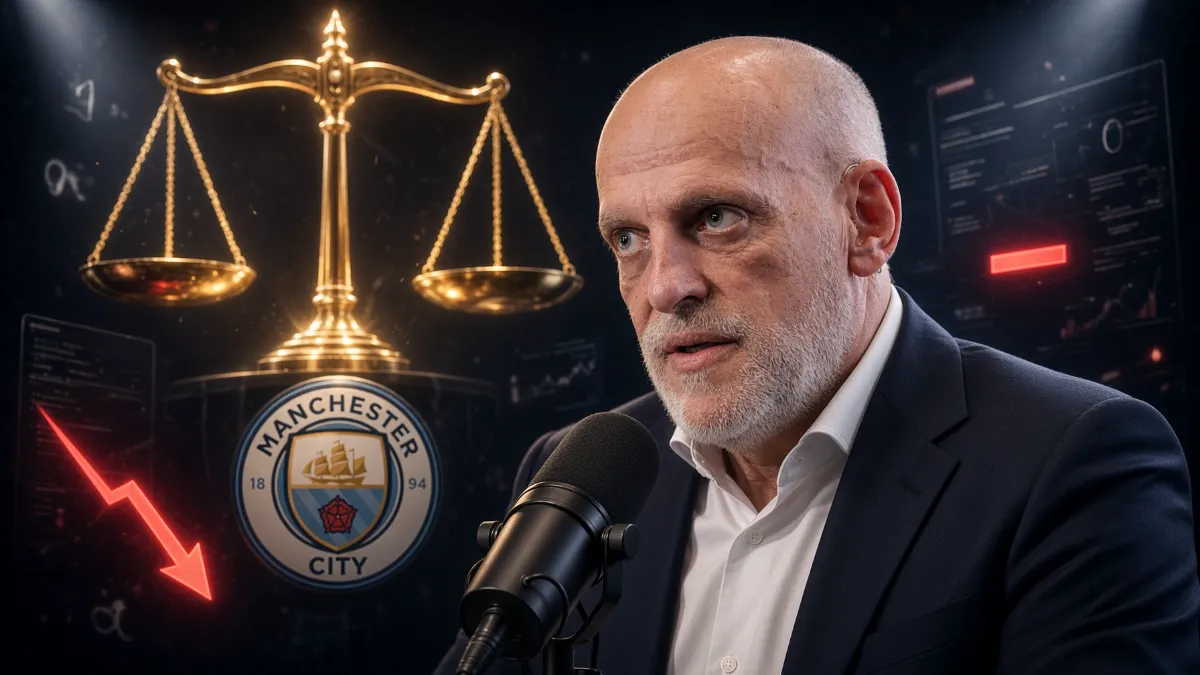
La Liga president Javier Tebas has called for tough penalties against Manchester City after reports emerged that an independent commission found the club guilty on 114 out of 115 counts related to financial breaches. Official sanctions are yet to be revealed.
Throughout the proceedings, Manchester City maintained their innocence regarding the allegations. Potential consequences being discussed include hefty fines, points deductions, and even relegation, although a final decision is still pending.
Tebas has been raising concerns about City’s finances for years:
I have been talking about issues with Manchester City for many years. I first mentioned it back in 2017 at Soccerex. At that time, it did not sit well with either City or the Premier League.
Now it has come to light that breaches have been occurring since 2009.
According to the La Liga president, the case carries weight beyond English football:
We are trying to make football sustainable and fair across all competitions. As many clubs have stated, there have been titles lost that shouldn’t have been lost. What has happened is very significant, and we hope it will serve as a turning point not just for the Premier League.
The Manchester City case has implications for the whole of Europe, especially concerning financial doping. The punishment needs to set an example.
Tebas underscored the importance of the duration of the alleged violations when considering the severity of sanctions:
Breaking the rules for over a decade is very serious. Therefore, the punishment should be severe—not just to set an example, but because the rules were systematically breached.
He also recalled UEFA's 2020 decision to ban Manchester City from European competitions for two seasons. That ban was later overturned by the Court of Arbitration for Sport. Tebas stated:
In my view, the decisions from the Court of Arbitration for Sport need to be re-evaluated. They lifted the sanctions from UEFA, and that decision raised serious questions. Now it has emerged that UEFA was right to impose sanctions on Manchester City.
The chief of the Professional Footballers' Association in England, Makhaya Molango, took note of the protracted nature of the investigation:
If we are to extract one lesson from this saga, it’s that rules must exist, they must be adhered to, and breaches must have consequences. However, these consequences also need to be swift.
According to Molango, the prolonged nature of the case creates uncertainty for the players themselves:
Behind all these stories are real people, striving to achieve in their careers.
We owe it to everyone in this industry to provide clarity. Everyone needs to understand the rules and be confident that they are being enforced.