
In 1985, Ken Bates decided to tackle hooliganism at Stamford Bridge in the wildest way possible: he erected a 12-foot electric fence around the pitch.
It was the mid-80s, a turbulent time for English football, rife with hooliganism, and Stamford Bridge was regularly invaded by pitch invaders. Bates was determined to address this in his uniquely bold manner.
If people could easily climb over a standard fence, then surely a more imposing barrier was required.
For instance, a fence charged with electricity.
This led to the construction of a towering 12-foot barrier—over three and a half metres—complete with electric wiring at the top, which was set to carry a shocking 12 volts.
Yes, it was actually built.
A month before, Stamford Bridge had descended into chaos
One of the pivotal triggers was a League Cup semi-final against Sunderland on 4 March 1985.
Chelsea lost 2-3 on the night, exiting the tournament with an aggregate score of 2-5. However, the football quickly faded into the background as mayhem ensued.
Fans invaded the pitch, and disorder erupted as police scrambled to restore order, leading to over a hundred arrests that evening.
Such scenes were unfortunately commonplace in that era of English football.
But for Bates, enough was enough.
The idea came from cows
The most fascinating aspect of this whole tale is where the idea for the electric fence originated.
Bates owned a dairy farm in Beaconsfield.
Electric fencing was used there for livestock.
And one day, a rather simple thought crossed Bates' mind: if it could keep cows from wandering off, why not stop a football hooligan?
Thus, the design at Stamford Bridge mimicked that agricultural principle.
Football safety via farming techniques—classic Ken Bates.
The fence was indeed constructed
This wasn’t just another outlandish scheme leaked to the press.
By April 1985, the barrier was fully installed around the pitch.
On 24-25 April, it was revealed to the media. Iconic photographs emerged of Bates in a suit proudly standing beside the massive fence, clearly thrilled to showcase his new anti-hooligan weapon.
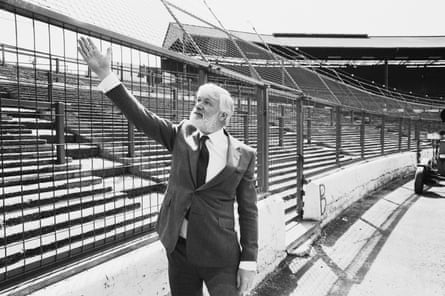
The electric wire was there, and the plan was to switch it on during the next home match.
And what a match it would be.
On 27 April, Tottenham were the visitors to Stamford Bridge.
Imagine the Chelsea vs. Tottenham derby with an electric fence
26,310 fans attended the match.
Tottenham took the lead with a goal from Tony Galvin, but Pat Nevin equalised in the second half—1-1.
Yet between the players and the fans stood the imposing new fence.
There are archival images from that game showing fans literally watching the match through the metal mesh with the electric element looming overhead.
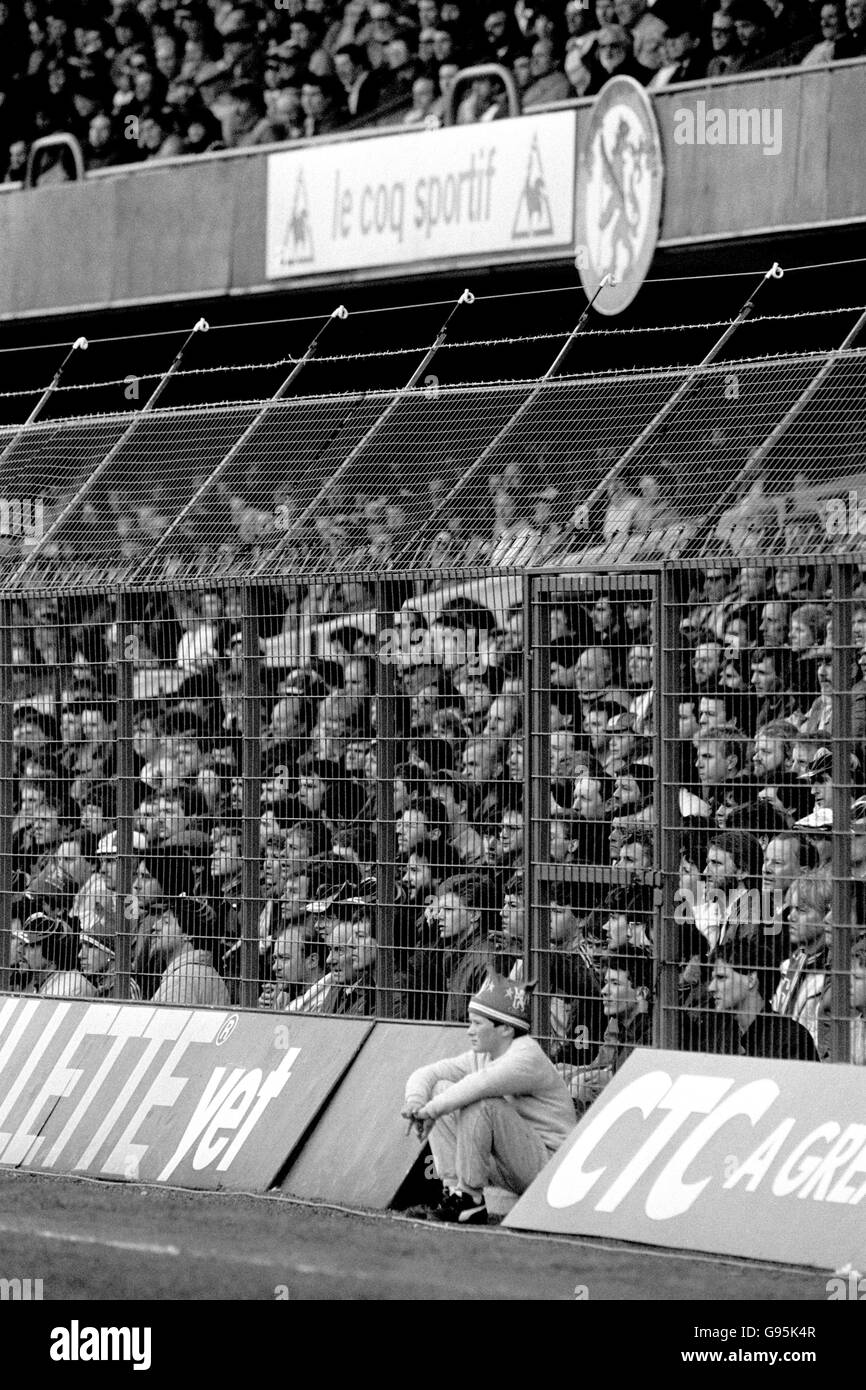
All that was left was to power it up.
But authorities had a different idea.
“You can’t be serious about energising it with thousands nearby?”
London council officials and football authorities were far from impressed by the plan.
Any substantial changes to the stadium required consent, which Chelsea hadn’t obtained.
Moreover, safety concerns over what could happen if a crowd pressed against a live fence during a panic were significant.
The project was ultimately blocked.
The Football Association and London authorities refused to sanction the electric system's use.
The match against Tottenham went ahead.
The fence remained standing.
But the electricity was never switched on.
Not that day.
Not ever.
Thus, the most expensive standard fence was born
In the end, the electric aspect of this venture amounted to little more than a glorified fence.
Though it stood at Stamford Bridge for a time, it lost its initial purpose.
Bates wanted to create a psychological barrier: invade the pitch and feel the shock.
Instead, it became an enormous iron cage surrounding the game.
Months later, the idea was fully abandoned.
However, the photos live on.
Today, they evoke an almost surreal sense of nostalgia.
Though at the time, it wasn’t quite as amusing
Looking back 40 years, it’s easy to see this episode as yet another eccentricity of a football boss.
Cows.
12 volts.
Tottenham.
The chairman with the electric fence.
Yet, behind this idea lay the grim reality of English football in the 80s.
Clubs truly struggled with how to curb violence.
Tall metal barriers were then regarded as a standard way to keep fans at bay. People were increasingly treated not as spectators to be safely accommodated but as a crowd to be physically contained.
Soon, English football would face far more horrifying reminders of the dangers associated with such thinking.
And Bates remained Bates
This curious tale of the fence perfectly encapsulates the man who managed Chelsea for over two decades.
When problems arose, calm and rational solutions were seldom the first option.
He bought the club for £1.
For years, he battled against developers for Stamford Bridge.
He constructed hotels right near the ground.
He clashed with football authorities, fans, the press—essentially anyone he could argue with.
And at some point, he thought about enclosing the pitch in electricity.
Ironically, the fence proved to be useless.
Yet, four decades later, it’s still a story told.
Perhaps that is exactly the kind of impact Ken Bates sought to achieve.