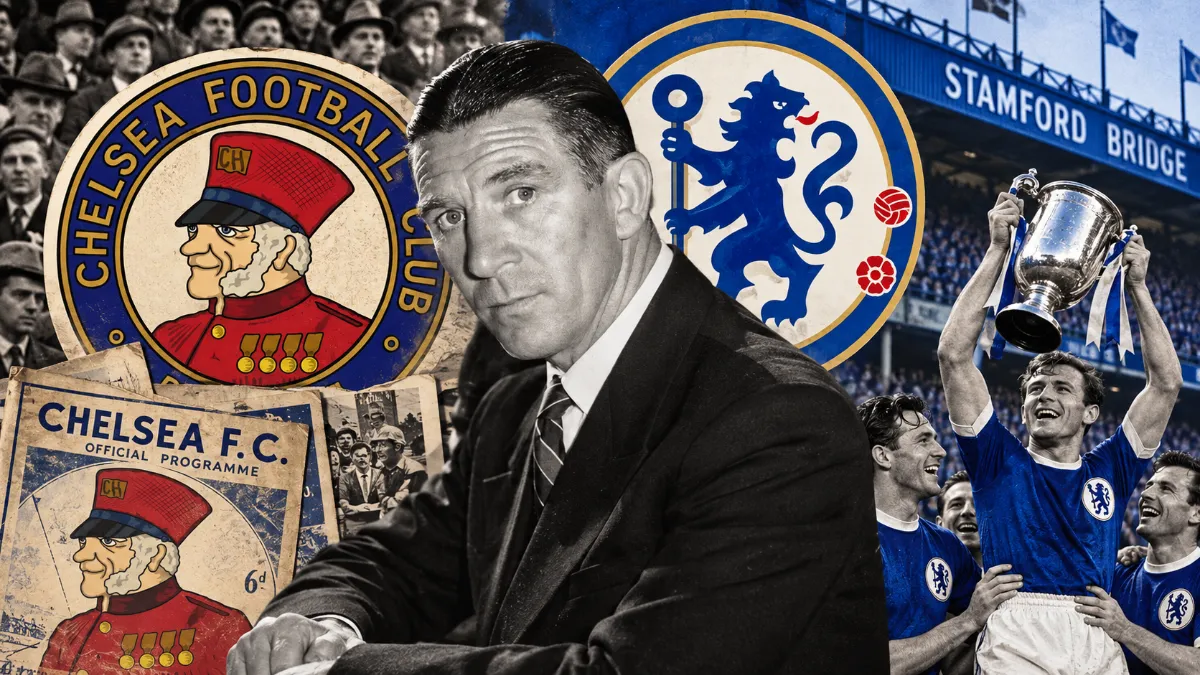
In 1952, Ted Drake arrived at Chelsea and wasted no time in ushering the old 'pensioner' into retirement. He transformed the club's identity, ditched its traditional nickname, and introduced a new emblem, ultimately bringing the team its first league title just three years later. This marked the beginning of the Chelsea we recognise today.
When Ted Drake made his entrance at Chelsea in 1952, the club was already almost fifty years old.
The stands were filled with fans.
The squad boasted notable players.
But there was one thing lacking.
Real trophies.
Determined to make a change, Drake set about revamping nearly everything associated with the club.
Even the long-standing image of the pensioner on their crest.
What pensioner?
Chelsea had long been dubbed The Pensioners.
This wasn’t a dig at the players’ age.
The moniker stemmed from the renowned Chelsea Pensioners — veterans of the British army residing at the Royal Hospital Chelsea, known for their distinctive scarlet uniforms.
In time, they even introduced a mascot, Percy Pensioner, who featured on club programmes.
Crucially, the iconic round image of the pensioner was never actually used as a badge on Chelsea shirts.
It lived on as the image of the club.
Drake was bored of the pensioner
Drake arrived from a vastly different footballing world.
A former star forward for Arsenal, his ambition was clear: to turn Chelsea from an attractive, unpredictable side into a team that genuinely challenged for silverware.
The 'pensioners' simply didn’t fit into his vision.
Too outdated.
Too easy a target for jokes.
Opponents had little need to break a sweat — if the team struggled, they could simply make fun of the 'pensioners'.
Drake effectively declared the old symbol well and truly retired.
Fans were less than thrilled
Today, it seems like Chelsea have always been known as 'the Blues'.
But that wasn’t the case.
Many supporters were attached to Percy and inundated the club with protest letters.
For them, Percy felt like family.
A piece of club heritage.
The old chap was being shown the door by a manager who'd only just arrived.
However, Drake held firm: the club needed a modern image.
And he pushed through his changes.
Thus, the 'pensioners' became 'the Blues'
Out with The Pensioners, and in with The Blues.
Simple as that.
No particular poetry in the new name.
Yet it became significantly harder to mock the team for playing like old men.
During the 1952/53 season, a temporary crest with the letters CFC was used.
Then in 1953, they unveiled the now-famous heraldic lion, which ultimately evolved into Chelsea's modern badge.
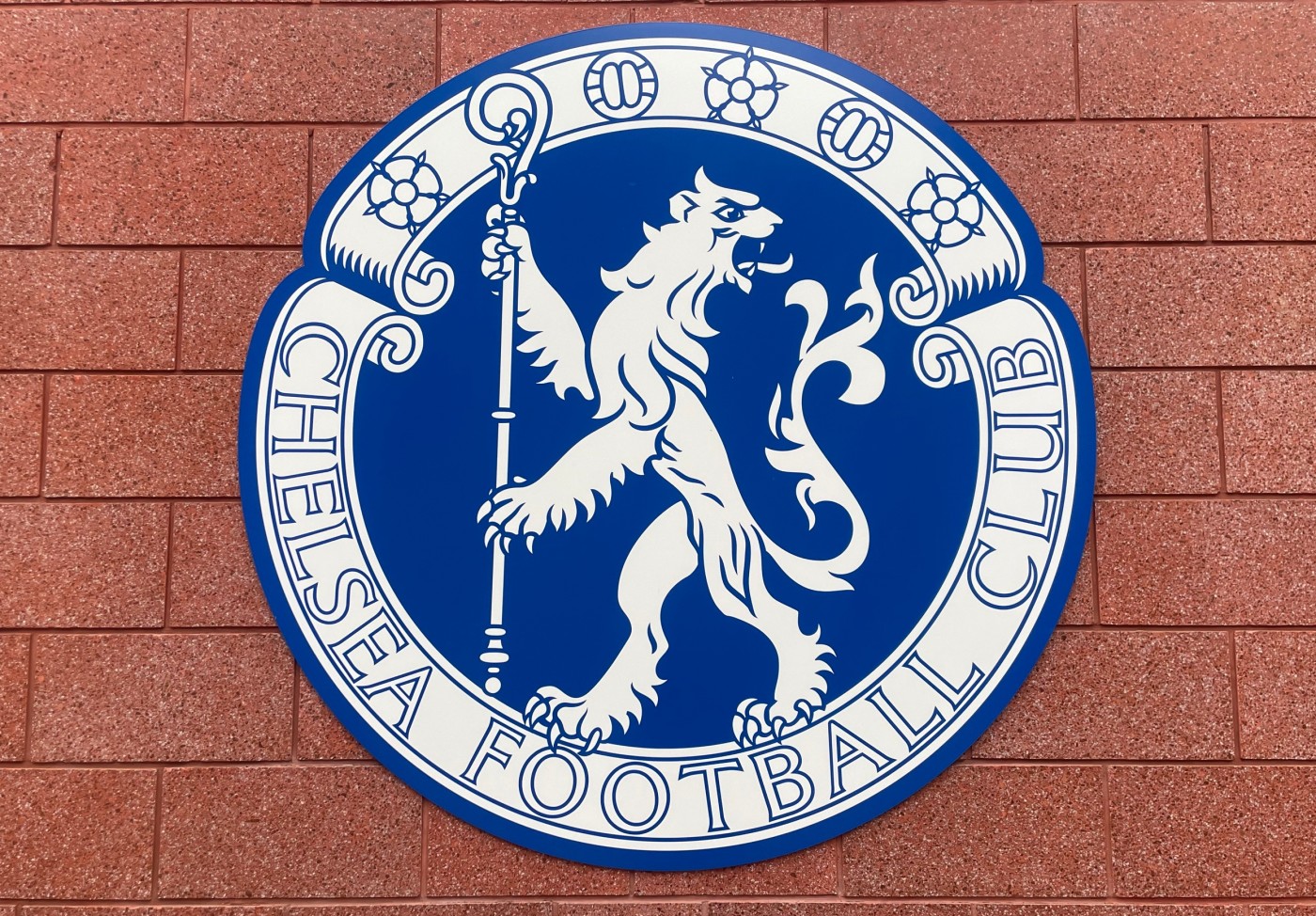
The lion was linked to the local heraldry of Chelsea.
In its paw — a staff.
Surrounding it were elements reflecting the area’s rich history.
Finally, Chelsea had a symbol that didn’t resemble a character from a comedy column.
But Drake didn’t just change the badge
If it had been merely a rebranding exercise, it would have been an interesting footnote.
Drake was hands-on with the footballing aspects as well.
He raised the intensity of training.
He incorporated more ball work — a far cry from the tactics of English football at the time.
Rather than just chasing big names, he began scouting players from lower leagues and youth setups.
The old Chelsea had a penchant for stars.
Drake wanted a proper team.
By the time the 1954/55 season rolled around, the pensioner was forgotten
The 1954/55 season.
Chelsea had never won the English championship.
Not even once.
And yet, Drake’s team was suddenly in title contention.
On 23 April 1955, the Blues triumphed over Sheffield Wednesday with a 3-0 win.
A result elsewhere ensured Chelsea were crowned champions for the very first time in history.
The club had turned fifty exactly.
What a fitting time for a rebrand, both visually and meaningfully.
It turned out to be quite symbolic
For half a century, Chelsea was seen as wealthy, popular, occasionally stylish, but ultimately a bit of a joke.
Then Drake arrived.
He sent the Pensioner packing.
He changed the nickname.
He revamped training.
He altered the recruitment strategy.
Three years later — champions.
Of course, football doesn’t operate that simply.
The crest alone didn’t win them the title.
Yet the symbol was too iconic to be forgotten.
The lion has survived decades of change and still graces Chelsea's badge today.
As for the Pensioner?
He hasn’t completely vanished.
Old Percy occasionally makes appearances at retro events and is fondly remembered in club history.
He now knows his place.
In retirement.