Nearly three decades ago, Brighton was on the verge of collapse. Today, they sit third in the Premier League, having scored the most goals this season and preparing for another European campaign.
Back in the spring of 1997, things looked very different. Facing severe financial difficulties, the club was forced to sell their home ground, Goldstone Ground, and was on the brink of liquidation. In the final match of the season, Brighton needed at least a draw against Hereford United to retain their Football League status, and that draw marked the starting point of a new era for the club.
After losing their home, Brighton initially shared a stadium with Gillingham, before moving to the athletics arena at Withdean in 1999.
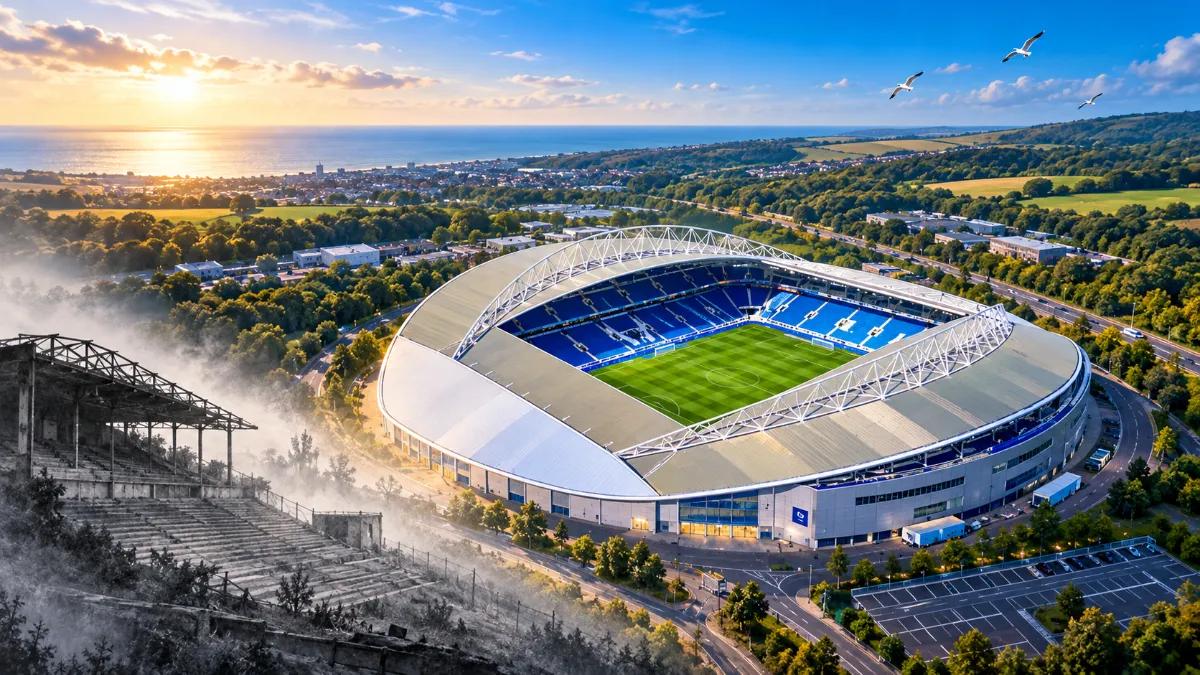
A pivotal moment came in 2009 when Tony Bloom took control of the club. Brighton moved to their new stadium, Amex, in 2011, and just six years later, they returned to the top tier of English football after a 34-year absence.
The manager who led them to the Premier League, Chris Hughton, departed in 2019, and since then, Brighton have continued their evolution under Graham Potter and now Roberto De Zerbi.
De Zerbi’s work with the Seagulls has drawn accolades even from the esteemed Pep Guardiola.
Guardiola spoke highly of De Zerbi:
Roberto De Zerbi is one of the most influential managers of the last 20 years. There is no other team playing in such a unique style as Brighton. When he joined, I realised his influence in the Premier League would be significant, but I didn’t expect him to achieve it so quickly. They create on average 20–25 chances per game and control ball possession like we’ve never seen. This involves everyone, even the goalkeeper acts almost like a holding midfielder.
After De Zerbi's departure, Bloom made a bold decision by appointing Fabian Hürzeler, who at 31 became the youngest head coach in Premier League history.
In his first two seasons, Brighton finished an impressive eighth. This current campaign has seen them soar to third place, scoring 16 goals — more than any other club in the Premier League.
Recent results have been particularly striking: Brighton came back from 2-0 down to defeat Manchester United 3-2 at Old Trafford in the League Cup, thrashed reigning champions Arsenal 3-0, and the likes of Aston Villa and Coventry have also been humbled, with Brighton winning 4-0 and 5-0, respectively.
Despite consistently having to part ways with key players, Brighton continues to demonstrate their excellent recruitment strategies. Under Hürzeler’s management, they have sold stars such as Carlos Baleba, Jan Paul van Hecke, Danny Welbeck, Joao Pedro, Simon Adingra, Pervis Estupinan, Valentin Barco, Julio Enciso, Deniz Undav, and Billy Gilmour.
Before this, Brighton also made significant profits from the sales of Moises Caicedo, Marc Cucurella, Yves Bissouma, Leandro Trossard, and Alexis Mac Allister.
The difference from the 1990s is stark: back then, the club sold players for mere survival, whereas now they part with stars only when the deal is right. Their shrewd scouting ensures the team remains competitive.
The journey from selling their stadium and facing genuine threat of extinction to vying for top spots in the Premier League has transformed Brighton into one of the most exemplary cases of modern English football development.