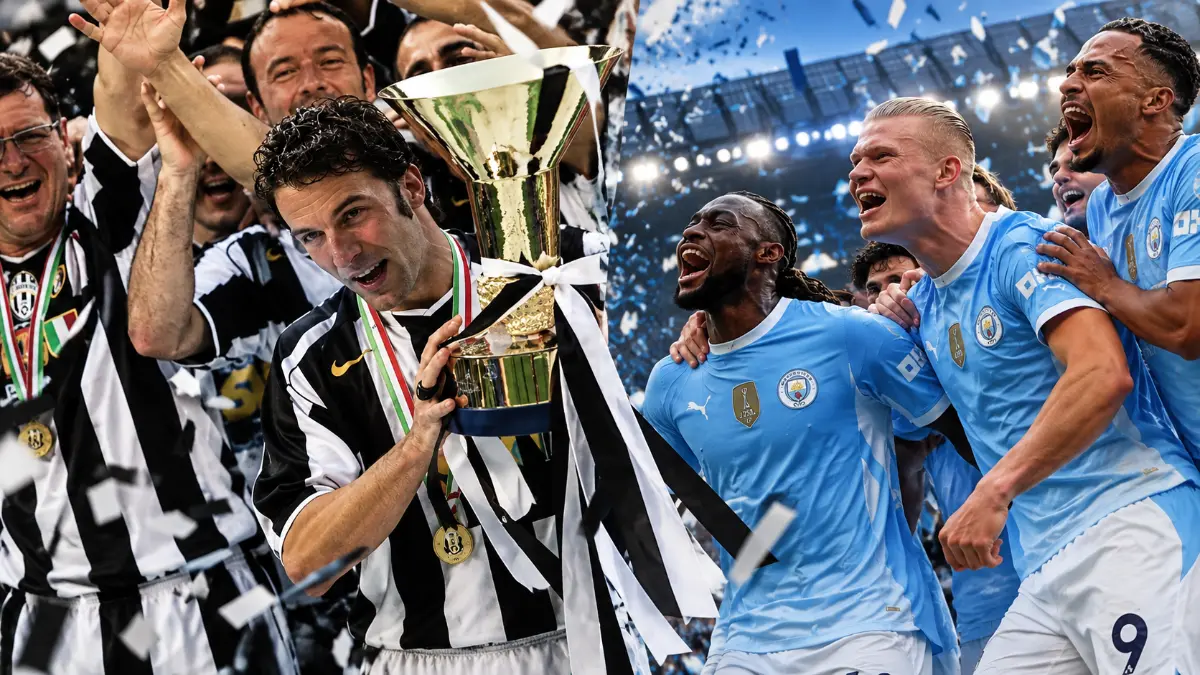
From Juventus and Milan to Rangers: a history of high-profile sanctions, corruption scandals, and financial crises that have seen European clubs lose their place in the elite. Now, Manchester City find themselves under threat.
Manchester City are awaiting a verdict in their case concerning multiple breaches of Premier League financial rules. An independent commission has found the club guilty of a significant number of the charges related to nine seasons, from 2009/10 to 2017/18. These violations include the provision of misleading financial information, issues with disclosing details about commercial agreements, and a failure to cooperate with the investigation.
Despite this, City are appealing the commission's findings and continue to deny the allegations. The final punishment has yet to be decided, but potential sanctions under league rules could include fines, point deductions, and other sporting penalties.
If faced with the harshest penalties, Manchester City could join a notorious list of famous European clubs that have lost their place in the top tier not due to results on the pitch, but because of financial troubles, corruption scandals, and disciplinary issues.
Hertha - 1965
One of the first major scandals in the history of the young Bundesliga revolved around Berlin's Hertha.
After finishing the 1964/65 season in 14th place and avoiding relegation, an investigation revealed illegal payments to players that circumvented existing financial restrictions.
As a result, the club was expelled from the Bundesliga, despite their on-pitch results. This scandal also exposed a broader problem in German football - teams attempting to bypass established player payment regulations.
Arminia - 1971
In 1971, German football was rocked by a massive match-fixing scandal. An investigation uncovered the involvement of players, officials, and representatives from several clubs in manipulations of match outcomes.
Arminia Bielefeld was among those penalised, losing their place in the Bundesliga, while the scandal led to bans and significant reforms in how match-fixing was tackled.
Milan and Lazio - 1980
Italy witnessed the shocking Totonero scandal in the 1980s, involving illegal betting and match-fixing, which resulted in the relegation of several well-known teams.
Both Milan and Lazio were found guilty and demoted from Serie A to Serie B. This proved particularly painful for Milan, who had only recently won the European Cup.
Though both clubs returned to the top tier the following year, the scandal demonstrated that even the most prestigious Italian clubs are not immune to serious consequences.
Bordeaux, Brest, and Nice - 1991
The French football landscape was rocked in 1991 with administrative relegations due to financial troubles.
Bordeaux finished ninth, Brest tenth, and Nice fourteenth, but all three clubs were relegated despite solid sporting results due to financial violations and debts.
Bordeaux's case was particularly striking. Once three-time champions in the 1980s, their financial position had deteriorated dramatically by the next decade.
Nice also faced significant debt issues, with reports suggesting they owed as much as 57.6 million francs.
These decisions became part of a wider reform of French professional football aimed at tightening financial controls on clubs.
Marseille - 1994
Marseille's downfall came shortly after their greatest achievement: the 1993 UEFA Champions League triumph.
The joy was dampened by the VA-OM scandal involving bribing Valenciennes players before a match. The investigation stripped Marseille of the French championship title and excluded them from European competitions.
Despite finishing second in the 1993/94 season, the club was relegated to the second division, illustrating how off-field scandals can overshadow on-field achievements.
Lausanne, Lugano, and Sion - 2002
In 2002, three Swiss clubs were denied licenses to compete for the next season due to financial troubles.
Lausanne, Lugano, and Sion lost their places in the top division despite results that should have allowed them to continue playing at the elite level.
Lugano's case was particularly notable, finishing third and qualifying for the UEFA Cup, yet suffered severe financial difficulties after the death of their president and a reported debt of €12.2 million.
Tyrol - 2002
Austrian club Tyrol found themselves in an unusual predicament.
After winning the Austrian championship in the 2001/02 season, they were unable to secure a license for the following season due to a reported debt of around €16 million.
Despite their legendary status, having been crowned champions, Tyrol was relegated all the way to the third division and eventually ceased to exist.
Torino and Genoa - 2005
In the summer of 2005, two historic Italian clubs faced dire financial consequences after earning promotion to Serie A.
Torino's financial troubles meant they could not meet the requirements for top-flight participation, despite having won the Serie B playoff. Meanwhile, Genoa was embroiled in a match-fixing scandal which saw them demoted instead of promoted.
Both clubs had high hopes of returning to the top tier, but financial mismanagement and corruption saw them relegated instead.
Servette - 2005
The financial collapse of Swiss club Servette came while they were still in the top division, ranked eighth in a ten-team league.
Debts of approximately €6.4 million forced the club into bankruptcy, marking their first relegation from the top tier in over a century of history.
Juventus - 2006
One of the most notable disciplinary incidents in modern European football was the Calciopoli scandal.
This investigation into club representatives' collusion with officials resulted in Juventus receiving the harshest punishment among those involved, losing their titles and being relegated to Serie B.
Although their initial penalty included a 30-point deduction, this was reduced to nine on appeal. Nevertheless, they found themselves playing in the second division for the first time in decades.
Boavista - 2008
Portuguese club Boavista was relegated following the Apito Dourado corruption investigation.
The club was found guilty of attempting to influence referees in three matches during the 2003/04 season, resulting in demotion from the Primeira Liga to the lower divisions.
Rangers - 2012
The financial crisis at Rangers led to one of the most significant collapses in British football history.
The club faced serious tax claims from HMRC and subsequently entered administration. After an unsuccessful attempt to negotiate with creditors, the owning company was liquidated.
New owners bought Rangers' assets, but the club failed to secure a place in the Scottish Premier League, starting the 2012/13 season in the fourth tier instead.
Rapid Bucharest - 2013
In 2013, financial problems cost Rapid Bucharest their top-flight spot in Romania.
Despite finishing the season in eighth place, the club couldn't secure a license for the next championship, leading to prolonged legal battles.
This case further illustrates that final league positions don't guarantee continuity in the elite when finance and licensing issues come into play.
Manchester City - 2026?
Now, Manchester City find themselves in the spotlight.
The Premier League has made allegations of numerous violations of financial rules spanning nine seasons. An independent commission has confirmed City’s guilt on a significant part of the charges, which include violations related to financial reporting and commercial agreements.
Evidence points to the alleged inflation of income and understatement of expenses amounting to over £900 million during the review period. The commission also upheld three of the four charges concerning the club’s failure to cooperate with the investigation.
On October 2, 2026, Manchester City officially appealed the commission’s findings, asserting errors in the application of law, principles, and fact assessment while continuing to insist on the groundlessness of the allegations.
A final decision on the appeal and potential sanctions has yet to be reached.
According to Premier League rules, punishment could include financial fines, point deductions, and other sporting measures. The possibility of relegation or exclusion from the league is being discussed, but this outcome is not yet confirmed.
The history of European football has already seen many well-known clubs lose their places in the elite due to events off the pitch. Milan, Marseille, Juventus, and Rangers have all faced crises that have significantly impacted their sporting narratives.
Now, Manchester City’s future hinges on the outcome of their appeal and subsequent decisions from football authorities.