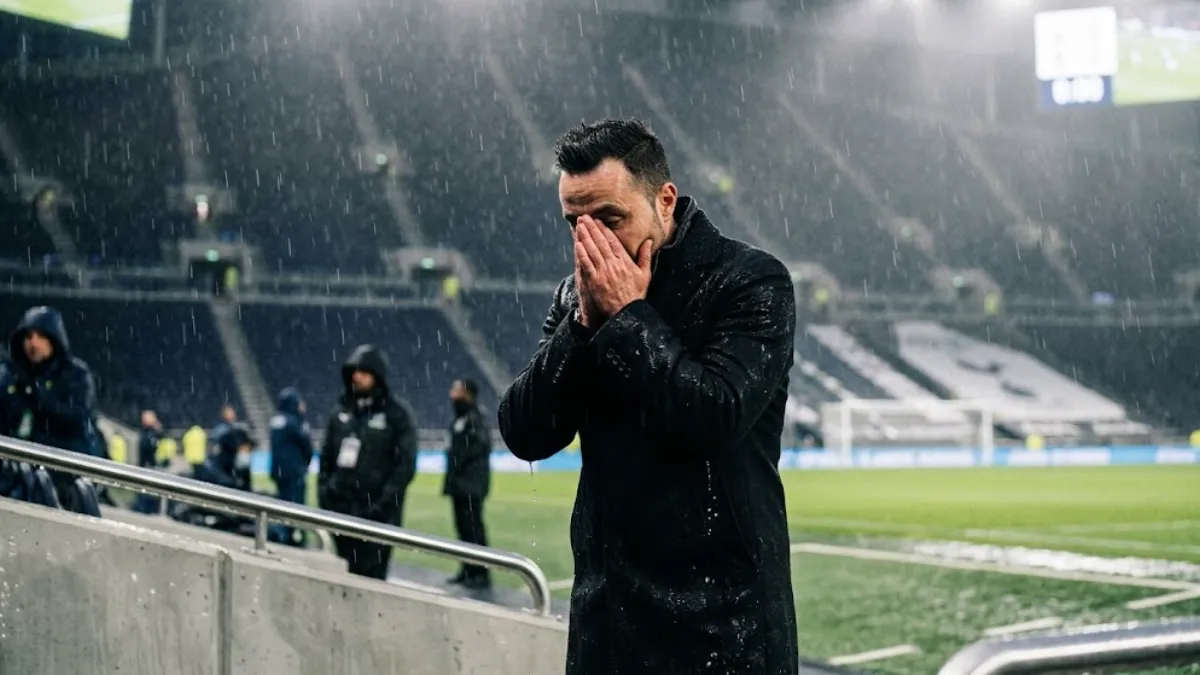
The previous season in the English Premier League will long be remembered for its unprecedented managerial merry-go-round. Notably, Nottingham Forest's controversial owner Evangelos Marinakis axed three managers during a single campaign and even managed to unceremoniously dismiss one just two minutes before a contract compensation clause kicked in. By contrast, Chelsea, who switched only two managers over the course of a year, stood as a beacon of stability.
As the 2026/27 campaign kicks off, the situation has reached an extraordinary level: three clubs from the so-called 'Big Six' have new managers at the helm, while five top-tier teams have appointed their respective gaffers just this calendar year. Roberto De Zerbi, who took charge of Tottenham in March, paradoxically ranks 11th in terms of managerial tenure among all 20 league managers, while Michael Carrick at Manchester United occupies a top-half position on that list. Only five Premier League clubs have maintained their managers for the past two years.
Using the latest odds from Oddschecker, analyst Dave Tickner from Football365 has compiled a comprehensive ranking of the vulnerability of all 20 managers in the league — from those with seemingly unshakeable positions to the main contenders for immediate dismissal.
Out of danger: architects of stability
19–20. Mikel Arteta (Arsenal)
In the strange aftermath of Pep Guardiola's departure, Arteta has emerged as the longest-serving manager in the league. His position is rock solid following a resounding title win. Despite a setback against Brighton, the Gunners remain the prime title contenders and are steadily pushing for Champions League glory. The only risk for Arteta lies just outside the technical area on the touchline.
19–20. Fabian Hurtseler (Brighton)
Incredibly, the 33-year-old is among the league's top three managers, beginning his third consecutive season with the same club. Hurtseler has made an explosive start, beating Unai Emery's Aston Villa and Arteta's Arsenal. Brighton sit third in the table, and his job isn't under threat. However, the Seagulls' hierarchy should brace for the growing interest from top clubs, including Tottenham.
18. Kit Andrews (Brentford)
Andrews slid into the role left by Thomas Frank remarkably smoothly. With no European distractions, bees display their traditional pragmatic football, securing important points. As long as Brentford keeps performing well, Andrews' job remains safe unless Spurs or Chelsea make a move to poach him after spoiling their strong starts.
Strong mid-table and the paradox of Mareska
14–17. Xabi Alonso (Chelsea)
The most intriguing appointment of the summer. The legendary midfielder is still a bit of an enigma: a spectacular season with Bayer contrasts with his struggles at Real Madrid. Expectations for his tenure at Stamford Bridge were either to be leading the pack by January or facing a November sacking after a winless streak. The reality is a mixed bag: two wins, a respectable loss to Arsenal, and then dropped points against bold Hull and a thrashing from Brentford. Alonso's position is stable, but there are already signs of an autumn crisis.
14–17. Daniel Farke (Leeds United)
The German has shed the tag of a Championship-only manager by building a robust team. The danger for Farke lies elsewhere: if Leeds continue to punch above their weight and seriously challenge for European spots, the ambitious hierarchy might consider bringing in a more high-profile manager for grander tasks.
14–17. Sergey Yakirovich (Hull City)
Following a sensational win over Manchester United in the opening round, Hull managed another mature victory against Coventry. Draws against Aston Villa and Chelsea proved that the newcomer’s confident journey in the Premier League isn't just a fluke, and the coaching staff is feeling very comfortable.
14–17. Enzo Maresca (Manchester City)
The Italian finds himself in a unique position. His work on the pitch has been impressive: a tactical win in the Manchester derby against United with ten men and a standout success against Sunderland showed his coaching prowess. However, the club's guilty verdict on 114 charges means Maresca's future depends solely on the severity of the league's sanctions. While sacking isn't on the cards, if the team is forcibly relegated, he might choose to leave voluntarily.
Zone of concern: searching for balance and second season syndrome
12–13. Andoni Iraola (Liverpool)
The Basque manager arrived at Anfield with an 18-match unbeaten streak from Bournemouth, extending it to 23 games. However, Iraola's trademark series is laden with draws; three stalemates in the first five outings (including two home losses) in the league are felt much more intensely than they would have been at a provincial club.
12–13. Marco Rose (Bournemouth)
The German joined the English top flight with a solid reputation and was granted a free pass. Even a winless start won't weigh heavily on the hierarchy; they remember how tough a start was for Iraola, so Rose will have plenty of time for transition.
11. David Moyes (Everton)
The Scot returned to the Toffees a year and a half ago, creating the feeling as though he never really left. Despite fan discontent over a passive summer transfer campaign, Moyes' side remains unbeaten, salvaging points in dying moments and staying close to the top four.
9–10. Unai Emery (Aston Villa)
A dismal start without scoring until the fourth match and defeat to Nottingham had fans anxious. However, the traditional therapeutic trip to Tottenham, where they scored three goals and took three points, restored confidence amongst the Birmingham side.
9–10. Matthias Jaissle (Newcastle United)
The young manager was predicted to depart before his first whistle. Nevertheless, a battling draw with Liverpool, thrashing a confused Tottenham, and a victory over a stubborn Hull have granted him a solid cushion.
8. Regis Le Bri (Sunderland)
The Frenchman worked wonders last season, leading the team to the Europa League, but the second season syndrome is already knocking. An unexpected defeat to Ipswich exposed a major concern: the Europa League schedule may become an unbearable burden for a modest squad.
7. Oliver Glasner (Nottingham Forest)
Glasner's appointment was considered an incredible coup for Marinakis, but the impulsive Greek owner rarely shows patience. Losses to struggling sides (Tottenham and Coventry) have tarnished the shine of a prior victory against Aston Villa.
Under scrutiny: favourites for the chop
5–6. Gary O'Neil (Ipswich Town)
O'Neil succeeded the departed Kieran McKenna amidst considerable transfer reinforcements. A couple of wins and a respectable showing against Liverpool and Everton keep him afloat, but the pressure for results is at its peak.
5–6. Frank Lampard (Coventry City)
Lampard pulled off a sporting miracle, returning the club to the elite ranks. After a nightmare start of four consecutive defeats without scoring, a win over Nottingham saved him from the axe until the international break, but he can no longer afford any missteps.
4. Pierre Sagh (Crystal Palace)
The specialist, who shockingly led Lancers to second place and a cup triumph in France, now faces harsh realities of English football. Failures against Everton and Manchester City have generated waves of concern regarding his experimental tactics, with tabloids already counting down to the Frenchman's sacking.
3. Alvaro Arbeloa (Fulham)
The appointment of the Spaniard as a replacement for Marco Silva seemed a risky move, and concerns have proven valid. A dropped victory in the derby with Palace revealed chaos in defence, and the Cottagers remain among the three teams in the league yet to register a win this season, with panic rising in the hierarchy with every passing match.
2. Michael Carrick (Manchester United)
The spring euphoria from a light schedule featuring one match per week has evaporated. Returning to a dense fixture list turned into a disaster: a cup exit to Brighton after leading 2-0 and impotence in the Manchester derby against a City side reduced to ten men. A poor draw with Fulham has only fortified sceptics' views that Carrick isn't cut out to manage a top club over the long haul.
1. Roberto De Zerbi (Tottenham)
The top candidate for dismissal. Despite significant summer spending, the team's performance has been dismal. Spurs are showing an alarming mental fragility: any conceded counter-attack completely paralyses the players. The Italian has ceased defending his players, instead publicly criticising the squad after every defeat. If De Zerbi loses to Carrick's Manchester United in their upcoming clash post-international break, this managerial 'derby of dismissals' could very well spell the end of his stint in London.