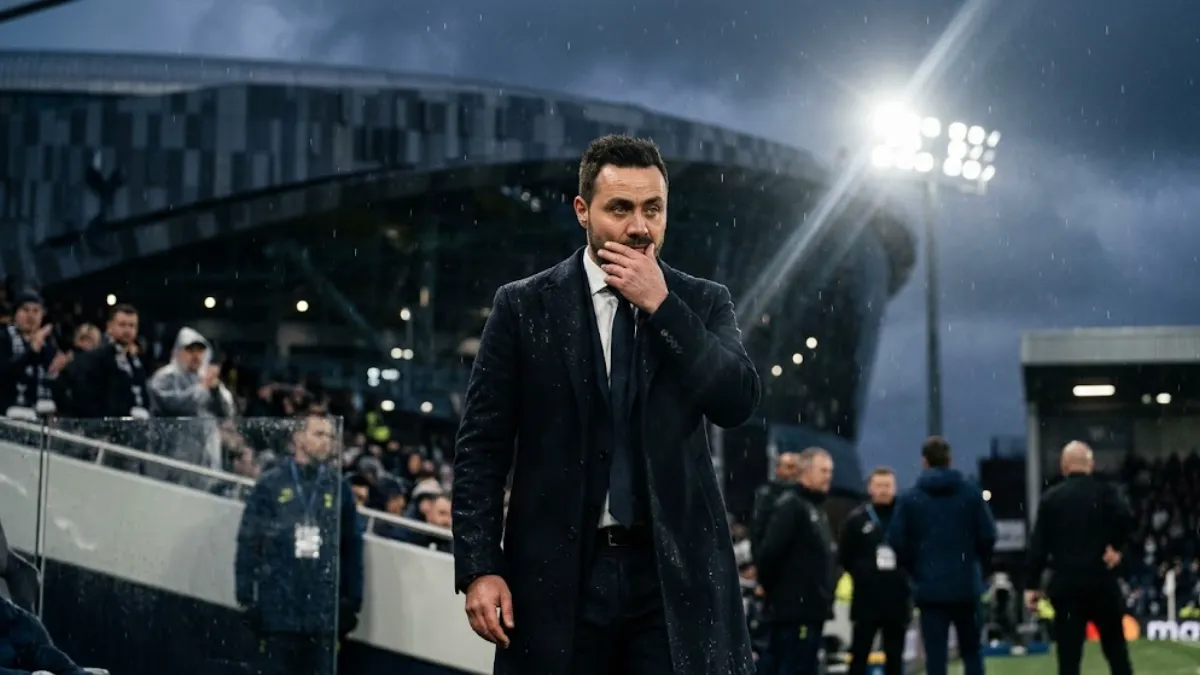
Tottenham's record summer overhaul, costing over £200 million, was intended to end two years of turmoil and ongoing relegation fears. Yet, after five rounds under Roberto De Zerbi's full stewardship, Spurs find themselves propping up the Premier League table in 20th place. With just two points to their name—alongside two goals scored and eight conceded—it marks the worst start in the club's top-flight history.
De Zerbi took the reins back in March 2026, successfully guiding the team to safety with a crucial victory over Everton (1-0) in the final match of the season. The pressing question now is whether his intricate possession-based style, which thrived at Sassuolo and Brighton, is a good fit for this squad, or if the coaching staff simply hasn't had the time to implement it effectively yet.
Why De Zerbi's football is so demanding on players
The Italian's style has never relied on spontaneous improvisation. Instead, it focuses on meticulously drawing the opponent's press using the goalkeeper and centre-backs, executing quick vertical combinations through the pitch, and making well-timed runs from wide attackers as the first wave of pressure is breached. When executed correctly, this approach turns even modest squads into effective goal-scoring machines, a fact Brighton demonstrated repeatedly.
However, the system falters if three components fail to sync:
- Repetitive drills that are second nature;
- Flawless timing between the passer and the player making the run;
- Absolute confidence in retaining possession under intense pressure without hurriedly giving the ball away.
Attempts to break out from the back against pressing teams in the Premier League become disastrous with the slightest technical errors from the goalkeeper and central defenders. At Brighton, these algorithms were honed over months to ensure that passes to the flanks were executed smoothly before defenders could readjust. In today's Tottenham, that level of automation is sorely missing.
A front line that has forgotten how to score
The current run of results for Spurs is alarming: a thumping defeat to Brentford (0-3) in the opening match, a home loss to Newcastle (0-2), goalless draws with Nottingham Forest and Everton, followed by a disappointing home spell against Aston Villa (2-3), where they only managed consolation goals from Conor Gallagher and Jan Paul van Hecke after trailing 3-0. This has led to an eyebrow-raising goal drought lasting 445 minutes.
The clash against Newcastle starkly illustrated that the issue runs deeper than mere finishing woes. Spurs managed 17 shots on goal and regularly threatened, only to concede twice after the hour mark, ultimately surrendering. After the final whistle, De Zerbi acknowledged that the first goal they conceded shattered the players' confidence. For a manager whose game model relies entirely on bravery in possession, this is a profoundly concerning signal.
While newcomers have brought individual flair to the team, cohesion remains elusive. Sandro Tonali, acquired for a hefty fee, has yet to impose his trademark passing range on opponents. Savinho and Omar Marmush were brought in to enhance width and vertical threat, but Tottenham's wing play has produced volume without genuine danger—17 fruitless attempts against Newcastle and another dry run against Everton. Combinations appear raw: moves stall at crucial passes, possession reverts to the flanks, and opponents rarely face swift incursions into the box.
A defence trapped by its own tenets
De Zerbi's tactical philosophy inherently involves significant defensive risks. The premise suggests that superiority in controlling and progressing the ball should sufficiently offset the chances arising from quick turnovers. However, this model requires the goalkeeper and centre-back duo to perform nearly flawlessly. In North London, that precision is nowhere to be found. Keeper Antonin Kinski has faced scrutiny for his drop in form compared to the previous season, and questions abound over the new central defence partnership.
Selling Luka Vushkovich to fund the acquisition of Van Hecke amid persistent defensive lapses looks questionable in hindsight. Eight goals conceded in five matches speak volumes: three from Brentford, two conceded in the second half against Newcastle, and another three conceded within the first hour against Aston Villa. This is a foundational crisis for the project—the risks embedded within the structure are fully realised, yet there is no compensatory control over possession.
The club cup run paints a contrasting picture, yet doesn’t alter the overarching narrative. A rout against Charlton Athletic (5-1) in the League Cup with five different goalscorers showcased squad depth; however, the subsequent exit at the hands of Liverpool (1-3) at Anfield confirmed that their struggles against top competition remain unresolved.
Arguments for patience and tactical takeaways
Despite the wave of criticism, De Zerbi's supporters are urging the hierarchy to exhibit patience. Former player under the Brighton boss, Adam Webster, reminded Sky Sports viewers that the Italian's intensive demands require several months of training before the system can function seamlessly. Alan Shearer highlighted the example of Aston Villa, who also failed to win any of their first five matches last season but went on to secure European qualification. Reports from within the Spurs camp suggest the club isn’t planning to sack the manager during the international break, but rather intends to strengthen the support structure around him by inviting an experienced top manager.
The current failure doesn’t signify the collapse of De Zerbi's philosophy itself. The issue is tactical: the frameworks for possession, pressing triggers, and attacking combinations are not yet ingrained in the players to mitigate the risks, while the squad, having endured frequent coaching changes, can’t instantly regain psychological confidence.
Upcoming is a challenging away fixture at Old Trafford against Manchester United on October 10. The international break denies the coaching staff a chance to train the full squad extensively. However, the potential return of Dejan Kulusevski from a serious knee injury could offer a much-needed spark in the final third, given his capacity to find space between lines. The club is also reportedly interested in Freiburg striker Igor Matanovich for the January transfer window, recognising the need for a prominent attacking spearhead. But the key question remains: can a squad built for £200 million master complicated team automatisms in just a matter of weeks, when, as the manager admits, such nuances cannot simply be bought?