In British football circles, it's become fashionable to criticise international football, yet this often obscures the influence of the modern Premier League—a financial spectacle and soulless grinder that distorts the essence of the sport for commercial gain.
According to Andrew Dyumin from BritBall.Net, the Premier League requires a complete overhaul, a reset back to square one. He argues that Manchester City deserves more than just relegation; the entire model of state-backed ownership should be scrapped, and the game must start anew. Winning through bottomless financial resources undermines achievements: winning a hundred metres on a motorcycle can never be a triumph of sport.
Purity of international football versus market cynicism
Against a backdrop of exorbitant money, international football remains the last bastion of competitive fairness. Here, success can't simply be bought with outrageous sums of money, nor can the balance of power be rewritten through financial manipulations, unlike at club level.
In the national team tournaments, everyone is limited by their own resources and must extract maximum value from what they possess. However, the Football Association has succumbed to a culture of reckless consumption. Instead of carefully building a system with a unified playing philosophy and developing homegrown talent, officials have opted to purchase a successful coach from abroad for a hefty sum.
Historically, it's clear: no foreign coach, except for Germany's Otto Rehhagel with Greece, has ever won the World Cup or the European Championship. No major football nation has triumphed with a foreign manager at the helm. English elitism stubbornly ignores these precedents, believing the usual rules don't apply to them. This belief that failures can be washed away with money has left England as the only major footballing nation without a trophy for 60 years.
The scarcity of strong domestic coaches has arisen from the habit of buying ready-made solutions. Had the FA faced the crisis in coaching head-on, the DNA of national football could have transformed. Instead, it merely repeats the same mistakes.
Chronic weaknesses and Anthony Gordon's diagnosis
The chronic issues plaguing England have remained unchanged for six decades: an inability to control the ball in midfield, a passive ceding of initiative to opponents, and a timid retreat to their own goal that leads to defensive collapse. This was once illustrated by Glenn Hoddle's characteristic gesture demanding more 'energy', as if running about could compensate for a lack of thought.
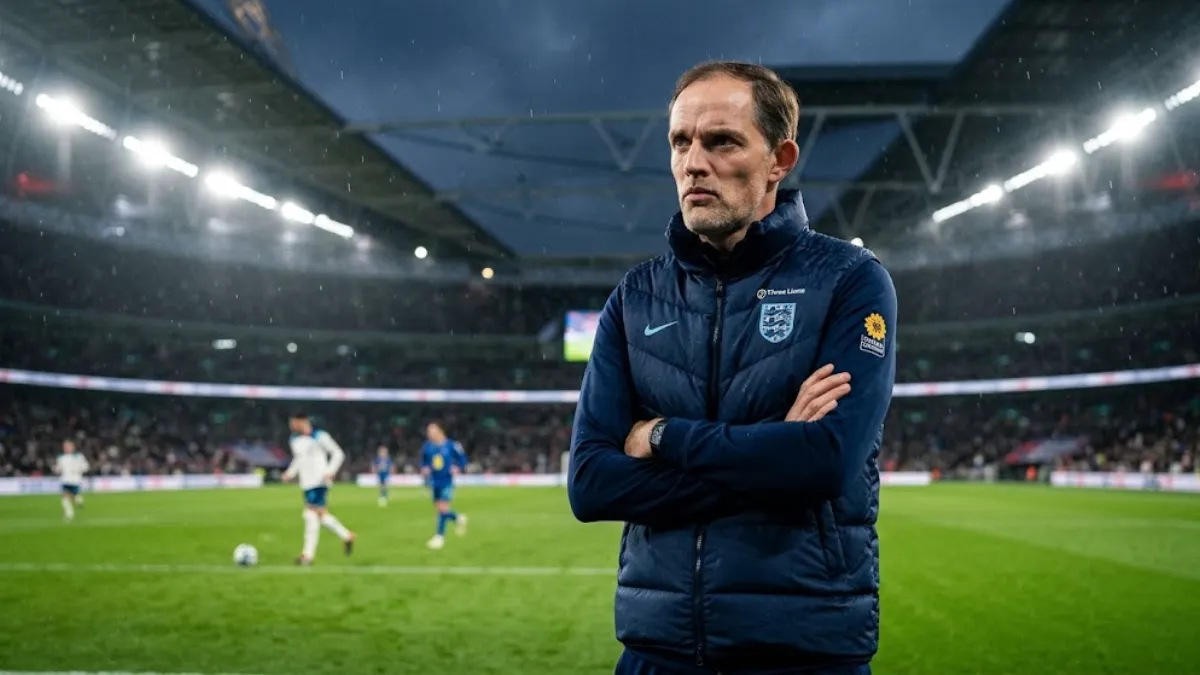
Many hoped Thomas Tuchel could instil a winner's mentality in the English squad, but the systemic flaws run too deep. In international football, it’s nations against nations, which extends to both players and coaching staff. Hiring a German coach contradicts the very philosophy of international sport—just as naturalising a German goalkeeper for reliability at the back would be unthinkable.
A stark and honest recognition came from winger Anthony Gordon, who stated:
As a nation, we don’t have the ball control like the Spaniards; we can’t control games like they do. It just isn’t in our nature.
Gordon proposed an alternative: to stop the fruitless attempts to copy foreign styles and instead embrace their traditional strengths—athleticism, directness, and swift counter-attacks. However, even leaning on these qualities loses meaning when players consistently give away possession under the slightest pressure, despite an exceptionally talented attacking group.
Tuchel's helplessness against the English mentality
Tuchel, with his meticulous German approach, seems taken aback by the regular lapses in concentration, careless giveaways, and lack of composure among English players in stressful situations.
Matches against Argentina and the recent game against Spain have made this painfully clear: in moments that demanded calculated thinking and tempo control, England’s players unreservedly surrendered possession, inviting opponents back into the game.
Gareth Southgate understood this mentality intuitively because he grew up within this system. He knew how English players mask panic with mindless running and simplistic backtracking.
A German manager cannot fully grasp the intricacies of the English mentality, just as an outsider would never perceive the subtle nuances of British dialects. Attempting to restructure this mindset from the outside resembles trying to force a left-handed person to write with their right hand.
As the next qualifying cycle approaches, there are no signs of imminent change. England can confidently beat lesser teams but repeatedly falter against elite opponents. The root of the issues lies not in footballing prowess but in deep-seated psychological barriers. Dreams of resolving internal problems with money and star managers are destined for failure, but the hierarchy will continue to spend and blindly hope for a miracle.
