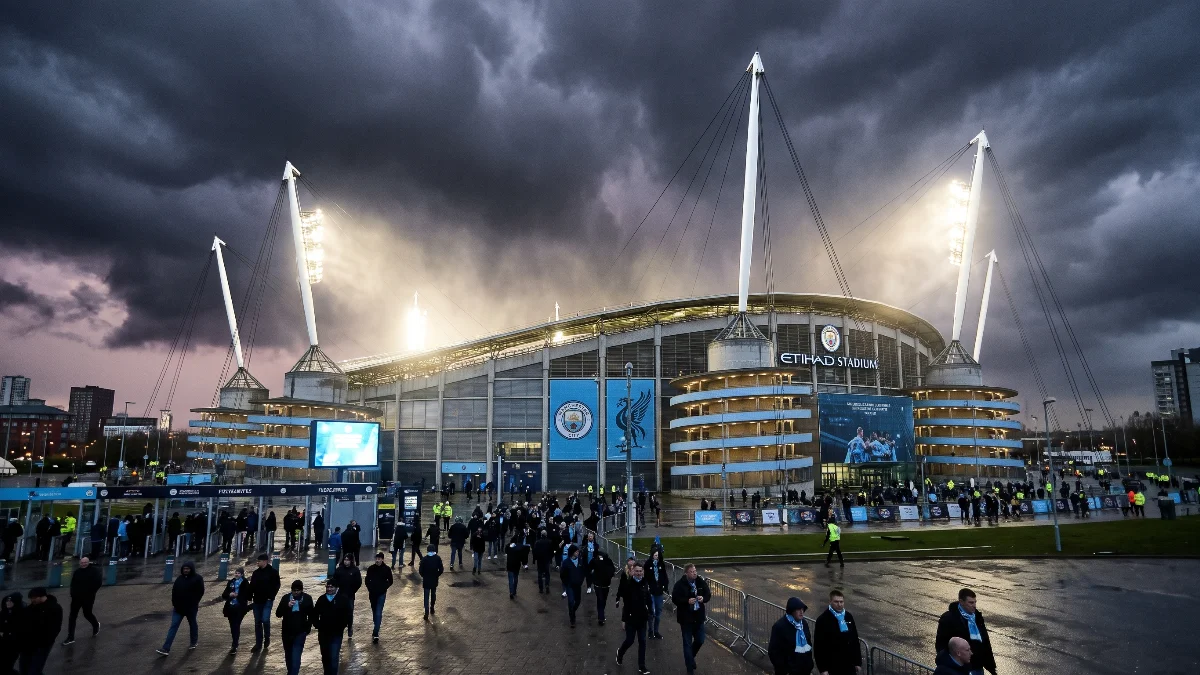
Manchester City could face one of the most serious crises in the club's modern history. Proceedings over alleged financial breaches remain a source of huge uncertainty, with potential consequences for the club's leadership, results and leading players. Dutch sports lawyer Berry van Drunen has described the situation as a potential existential threat to the English club.
In an interview with Flashscore, Van Drunen examined the legal risks, possible Premier League sanctions and the prospects for players if City receive a severe punishment. He believes the case is considerably more complex than it may first appear and that final conclusions should be drawn only after a full examination of the evidence and both sides' positions.
114 charges could put club's future at risk
The Premier League has brought 114 charges against Manchester City relating to alleged breaches of financial rules. They concern the period from 2009 to 2018, as well as allegations about the club's co-operation with the investigation.
The scale of the allegations is a cause for serious concern, but Van Drunen urged against rushing to conclusions. He stressed that the number of charges alone does not establish guilt.
The lawyer recalled the previous proceedings between Manchester City and UEFA. The Court of Arbitration for Sport (CAS) found that some allegations against the club had not been proven, while others were dismissed because they were time-barred.
Van Drunen believes the current case must therefore be considered separately, with careful examination of the Premier League's evidence.
He did not rule out extremely severe consequences for City if the breaches are proven.
Lawyer questions independence of proceedings
Van Drunen also focused on the procedure for hearing the case. In his view, genuine independence for the commissions dealing with the charges is essential to a fair decision.
He highlighted a potential conflict of interest if representatives of a football organisation's legal bodies take part in appointing commission members and then interact with them during the consideration of particular cases.
He stressed that simply declaring judicial and disciplinary bodies independent is not enough: the impartiality of proceedings must also be apparent to an outside observer.
Van Drunen also cited Everton's case. Following an appeal, the number of breaches that led to sanctions against the club was reduced. In his view, such cases demonstrate the importance of carefully examining initial charges and preventing excessive severity from regulators.
Manchester City risk losing leading players
One issue raised in the interview was how players might respond to a severe punishment for the club.
If the Premier League decide to relegate Manchester City by one, two or even three divisions, some players may want to leave. Van Drunen believes leading players are likely to have relevant mechanisms in their contracts.
He said players' contracts often contain clauses allowing them to terminate their agreements or leave for a predetermined fee if their team are relegated from the top flight.
Van Drunen suggested that players at a club of Manchester City's level could well have such terms.
If there are no such clauses, the situation becomes considerably more complicated. Van Drunen said players could, in certain circumstances, try to use legal mechanisms relating to unforeseen changes in the terms of an agreement. However, he stressed that such a question must be considered in light of the law in the relevant country.
He highlighted the case of players who joined City after the proceedings became public. In his view, their representatives should have included protective provisions in their contracts in advance in case of serious sanctions.
Relegation or even expulsion from the Premier League is possible
Discussing potential punishments, Van Drunen did not rule out the most severe scenarios.
If the charges are proven, he considered relegation from the Premier League or even expulsion from the competition the most likely consequences. He noted, however, that he could not give a definitive legal assessment without a detailed examination of the English league's regulations.
He also said the allegations against Manchester City appeared more serious in scale than the breaches for which Everton and Nottingham Forest had previously been punished.
If the club are found guilty, he said, it would therefore be difficult to expect a lighter punishment than that handed to other clubs who breached financial rules.
Consequences could affect other English clubs
Any punishment for Manchester City could create further legal issues for other Premier League clubs.
If City's results are revised and some titles are stripped, clubs who finished below them in the table could seek compensation for lost income.
This would be particularly relevant to teams who missed out on European competition because of City's results.
Van Drunen doubts, however, that such legal action would always be economically worthwhile. Even if a club won, legal costs could be so high that the practical benefit of victory would be minimal.
He also highlighted Manchester City's own financial position. If the charges are proven and the owners potentially leave English football, the club could find themselves in an extremely difficult situation.
An expensive stadium, high player wages and sponsorship agreements could become a serious financial burden if the existing economic model stops working.
Final decision could take years
Van Drunen does not expect a swift conclusion. In his assessment, a final outcome could still be a long way off because the parties could continue their legal battles at different levels.
He stressed that a fair decision must take account of the interests of all parties involved: Manchester City, the Premier League and the commissions handling the investigation.
In his view, the central principle is that financial rules must be applied equally to all clubs and that any sanctions must be based on proven facts and proper legal procedures.
The Manchester City case could therefore prove a turning point for English football. At stake is not only the reputation of one of Europe's strongest clubs, but also confidence in the Premier League's system of financial regulation.
If the charges are proven, the consequences could be devastating for City's sporting project. If the club successfully defend their position, serious questions could instead arise about the system for investigating and enforcing financial rules.
The coming years could therefore be decisive for Manchester City's future, and the consequences of the case could change English football far more than it currently appears.