Only a few months ago, Sunderland were considered one of the biggest surprise packages in English football. Regis Le Bris' side finished seventh in the Premier League and qualified for Europe for the first time in 53 years, but have unexpectedly found themselves among the strugglers in the new season. After ten games, the Black Cats have just eight points and sit 19th in the Premier League.
This tactical analysis looks at the reasons for their sharp decline. The problem goes beyond poor results: Sunderland have become less effective at using the strengths that brought them success last season.
How Regis Le Bris' Sunderland played
Last season, Sunderland did not seek to control possession at all costs. They could press opponents aggressively, then drop back and defend in a compact block.
Long passes and battles for second balls played an important part. When goalkeeper Robin Roefs sent the ball forward, his team-mates immediately pushed up, reducing the distances between the lines.
Even if the striker lost the aerial duel, his team-mates were close enough to collect the loose ball or challenge for it immediately.
That organisation allowed Sunderland to move quickly from defence to attack while also protecting themselves against a loss of possession.
Their man-oriented press was particularly effective. Players would press at the same time, forcing opponents into mistakes as they tried to play out from the back.
The system has begun to fail this season
Opponents have begun creating far more dangerous chances.
The most worrying changes can be seen in the defensive statistics.
Last season, Sunderland faced a high number of shots: only two Premier League teams allowed more. Yet only three clubs conceded fewer goals.
The explanation is straightforward: Sunderland allowed opponents to shoot, but mainly from difficult positions. Their defenders closed off dangerous areas and prevented attackers from shooting freely at close range.
This season, that has changed. Opponents are taking roughly as many shots against Sunderland as before, but are now doing so from good positions far more often. As a result, the team are conceding more goals even though the number of shots has barely changed.
That has also been reflected in Robin Roefs' statistics. The goalkeeper saved almost 72% of shots last season, but that figure fell to 50% at the start of the current campaign.

It would be wrong, however, to put everything down to the goalkeeper: the quality of chances created by opponents has increased noticeably.
More possession has unexpectedly harmed Sunderland
Another problem is linked to the changing nature of their matches.
According to Squawka's figures after the first six games, Sunderland's average possession rose from 44.8% last season to 50.8% this term.
For many teams, such an increase would look like a positive development. But Le Bris' football was built largely on quick transitions and exploiting open space.
Opponents have developed a better understanding of the Black Cats' style, leaving less space for counter-attacks and more often forcing them to build attacks against an organised defence.
As a result, Sunderland are spending more time on the ball but do not always know how to make use of that advantage.
Shots from counter-attacks have fallen from 0.63 to 0.5 per match. In their first six games, they did not score a single goal from a quick counter-attack.
The attacking statistics do not look hopeless, though. At the start of November, Sunderland ranked tenth in the league for expected goals but had scored six fewer than the xG model suggested.
The team have therefore become both less effective defensively and less efficient at taking their own chances.
The press has become a source of danger

Last season, collective pressure on opponents was one of Sunderland's defining features.
But in matches against Coventry City and Dinamo Zagreb, their man-oriented press created problems for Le Bris' own players.
When opponents managed to get past the first line of pressure, too much space was left behind Sunderland's players.
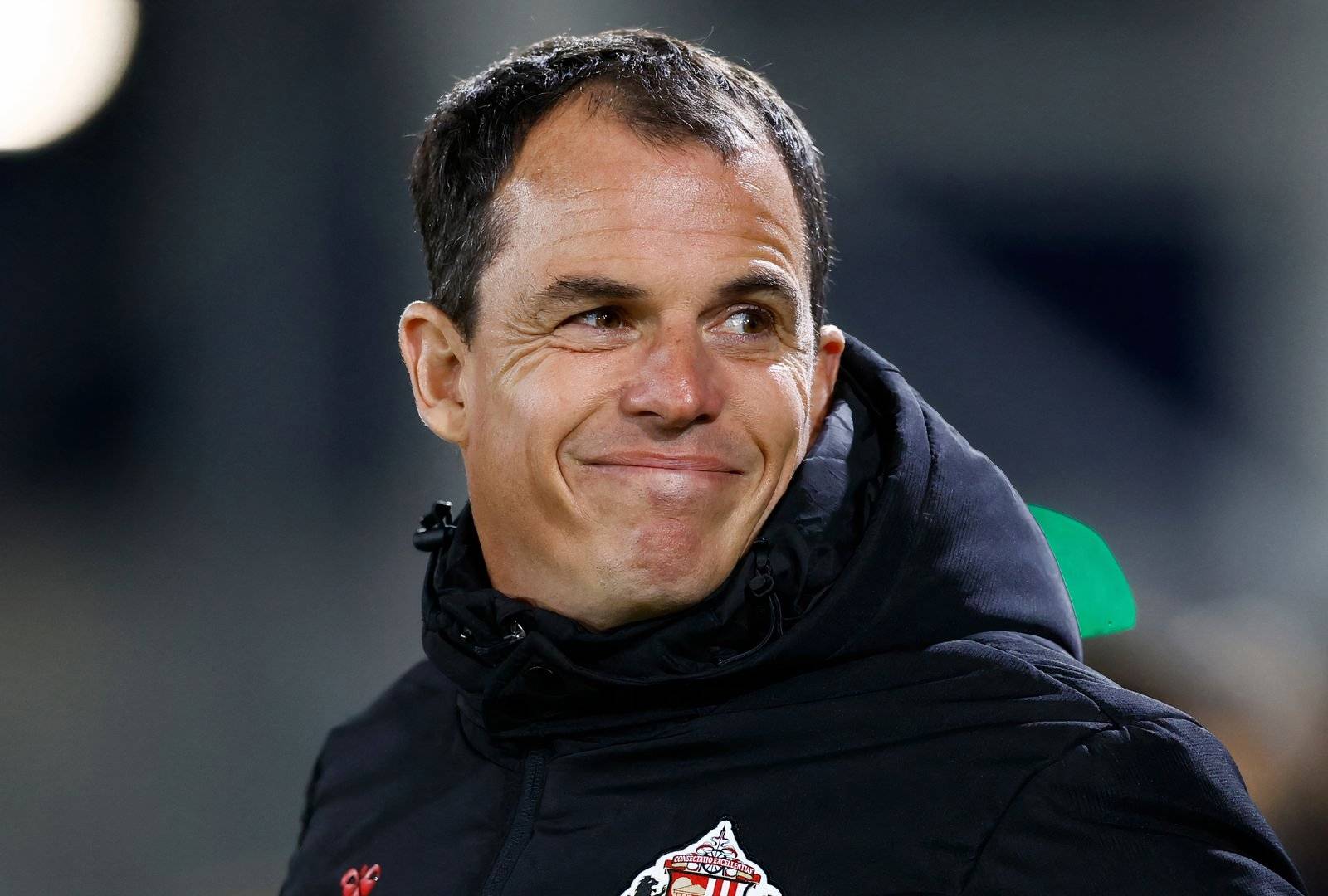
The French coach acknowledged the need for changes but stressed that he would not abandon the principles that had previously brought results.
Le Bris discussed the team's positioning, build-up play and pressing structure with his players and staff. In his view, an abrupt departure from their usual style could make the situation worse.
Injuries and the Europa League have added to the problems

The tactical difficulties have coincided with a demanding fixture schedule.
Since returning to European competition, Sunderland have begun playing twice a week. There is less time for training and recovery, while the squad does not always have the depth for full rotation.
The defence has been particularly affected.
Dan Ballard, Nordi Mukiele and Thomas Meunier have missed important matches through injury. By the start of November, Le Bris had been forced to use seven different centre-back combinations.

The constant changes have made it harder for players to develop an understanding, a particular problem for a team who depend on coordinated defensive work.
Attempts to strengthen certain positions in the summer also fell short. Sunderland did not sign the right winger they needed, limiting the coach's options when selecting attacking combinations.
The midfielders are under additional strain. When the press fails, Granit Xhaka and his team-mates are forced to cover too much ground, while Brian Brobbey is often left isolated up front.
Chelsea win pointed to a possible way forward
Despite the difficult start to the season, Sunderland's hierarchy have maintained their faith in Le Bris.
On 8 November, the team finally ended a prolonged winless run in the league by beating Chelsea 1-0.
Enzo Le Fee's penalty proved decisive after Levi Colwill fouled Brian Brobbey. The penalty was rather questionable, but that is now in the past.
In that match, Sunderland again showed the qualities that had helped them succeed a year earlier: intensity in duels, organised defending and an active display from their striker.
The returning Mukiele and Meunier gave the team greater stability, while Brobbey regularly caused problems for Chelsea's centre-backs.
The win lifted the Black Cats from bottom place to 19th, with eight points.
One good result does not mean the crisis is over. But the performance against Chelsea showed that Le Bris may still be able to restore his team's former effectiveness without a radical tactical overhaul.