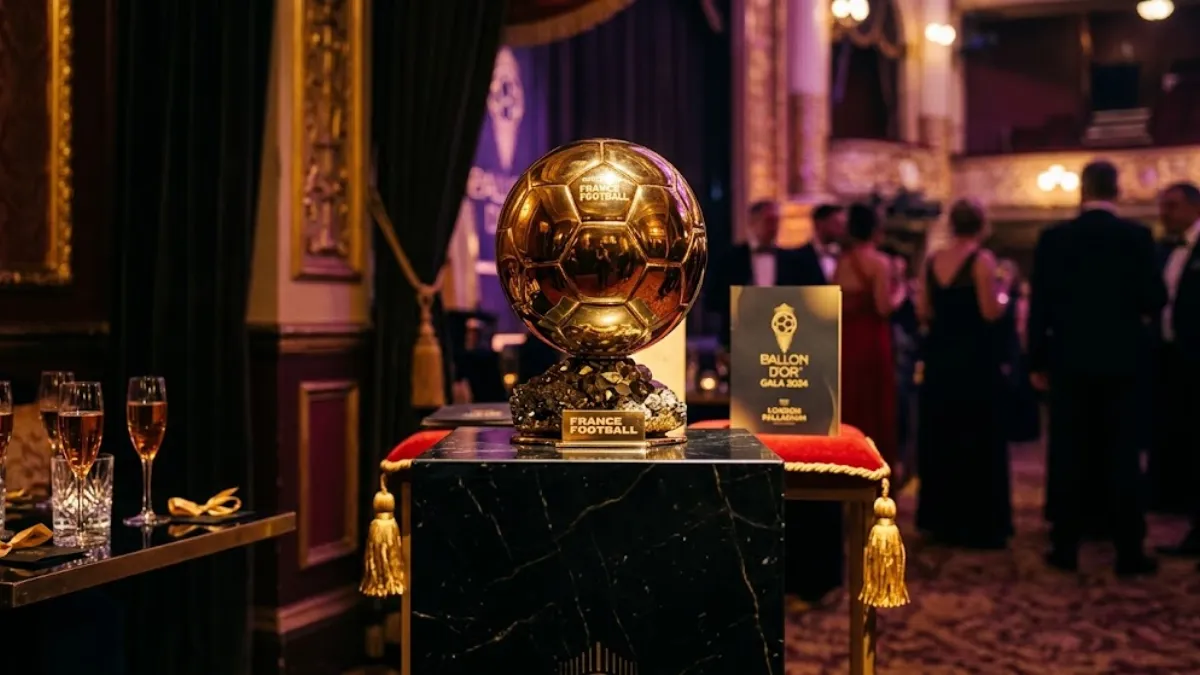
The Ballon d'Or has firmly established itself as the Holy Grail of world football, elevating its winners to the pinnacle of sporting hierarchy.
Despite its immense prestige, the ceremony is not governed by FIFA, which has its own independent award, The BEST. From 2010 to 2015, both awards were combined, but this collaboration ceased in the long run. Today, the gala is organised by France Football magazine and the L'Équipe publishing group in official partnership with UEFA.
Sponsorship support and the evolution of the award
Originally, the Ballon d'Or was conceived by the France Football editorial team solely as a tool to promote the magazine's sales and reputation. For decades, the trophy was awarded exclusively to European footballers based on votes from continental journalists.
It wasn't until 1995 that the rules were expanded to include players from around the world, and since 2007, captains and head coaches of national teams have also had a say in the voting. The early ceremonies had an intimate character, with the first winner, Stanley Matthews, picking up his award at a modest gathering in 1956, while Sir Bobby Charlton learned of his victory via a radio news snippet in 1967.
The television era kicked off in 2000, and by 2010, the award had morphed into a global spectacle. In 2026, the event is set to become a fully self-sufficient commercial brand:
- Global main partner: Qatar Airways became the presenting sponsor in 2025.
- Official partners for the 2026 event: sports equipment maker Adidas, Swiss watchmaker Vanguart, trading card manufacturer Topps, and tyre company Hankook Tire.
France Football's revenue: tickets priced at £3000 and sponsorship deals
The organisers are not obliged to publicly disclose the financials of the award as it is a one-off closed event without public shareholders.
However, market experts estimate that France Football's revenue from the 2024 gala reached around 15 million euros. In recent years, the average earnings for the organisers have fluctuated between 10 to 16 million euros, largely driven by sponsorship and TV rights.
Additional profits come from VIP fan access:
- The ticket price for the 2026 ceremony was set at £3,000 and sold out within a matter of hours.
- The package includes seats in the stalls of the historic London Palladium theatre, access to the red carpet, and opportunities for memorable photo sessions with sports stars.
Cost of the trophies and venue rental
The trophy's outer layer is covered with one kilogram of 18-carat gold, but its base is made from a resinous brass and pyrite.
The cost of producing one men's or women's prize is estimated at around €3,000. The organisers also present 10 commemorative awards in related categories.
Major expenses are incurred for security, managing hundreds of media representatives, and venue rental:
- The historic Chatelet theatre in Paris, which hosted the ceremony since 2019, accommodated up to 1,000 guests and cost about €25,000 for the evening (excluding complex arrangements for the extensive red carpet).
- In 2026, the organising committee is moving the landmark 70th awards ceremony to London’s iconic London Palladium in Soho, which can host over 2,200 audiences and has a rental fee of around £24,000, not leading to an increase in basic venue costs.
Financial benefits for winners: multimillion deals
The organisers do not pay direct monetary awards to the winners, but holding the trophy opens doors to record commercial deals.
- Ousmane Dembele: After triumphing at the 2026 Ballon d'Or, the Frenchman turned down collaboration with betting companies in favour of global agreements with Italian fashion house Zegna and fragrance brand Henry Jacques, while keeping his contract with Adidas. His advertising income for 2025 is estimated at €8.7 million, and agents, buoyed by his status as the world's best player, rejected a €30 million extension with PSG, demanding a twofold salary increase.
- Aitana Bonmati: The three-time holder of the women's award from 2023 to 2025 switched from Nike to Adidas, securing the largest contract in women's football history, which included funding for her hometown club Ribes. Bonmati has also signed agreements with Gatorade, Bimbo, Alpro and Topps, and in September 2024 became the highest-paid player at Barcelona with an annual salary of €1 million.
- Luka Modric: Victory in 2018 earned the Croatian a one-off bonus from Nike of €800,000, the release of the named golden Mercurial 'Golden Touch' boots, contracts with watch manufacturer Hublot and Panini, and an automatic extension of his contract with Real Madrid.
- Rodri: The Spaniard, after winning in 2024, was gifted an exclusive line of Phantom Luna 2 boots from Nike.
Comparison with the Oscar and FIFA The BEST
The FIFA The BEST trophy is made from platinum and carbon without using any precious gold, with the federation claiming its cost is 'priceless.'
When comparing the Ballon d'Or ceremony to the Oscars, the European football evening still falls significantly short in monetization compared to the American film show:
- The Oscar statuette costs about €350 to produce.
- The ABC network pays the American Film Academy around €87 million per year for broadcasting rights.
- The cost of a 30-second commercial during the Oscar broadcast reaches €2 million, while just the red carpet generates about €8 million.
The financial figures of the Ballon d'Or highlight its enormous potential for further commercial scaling on the global stage.
