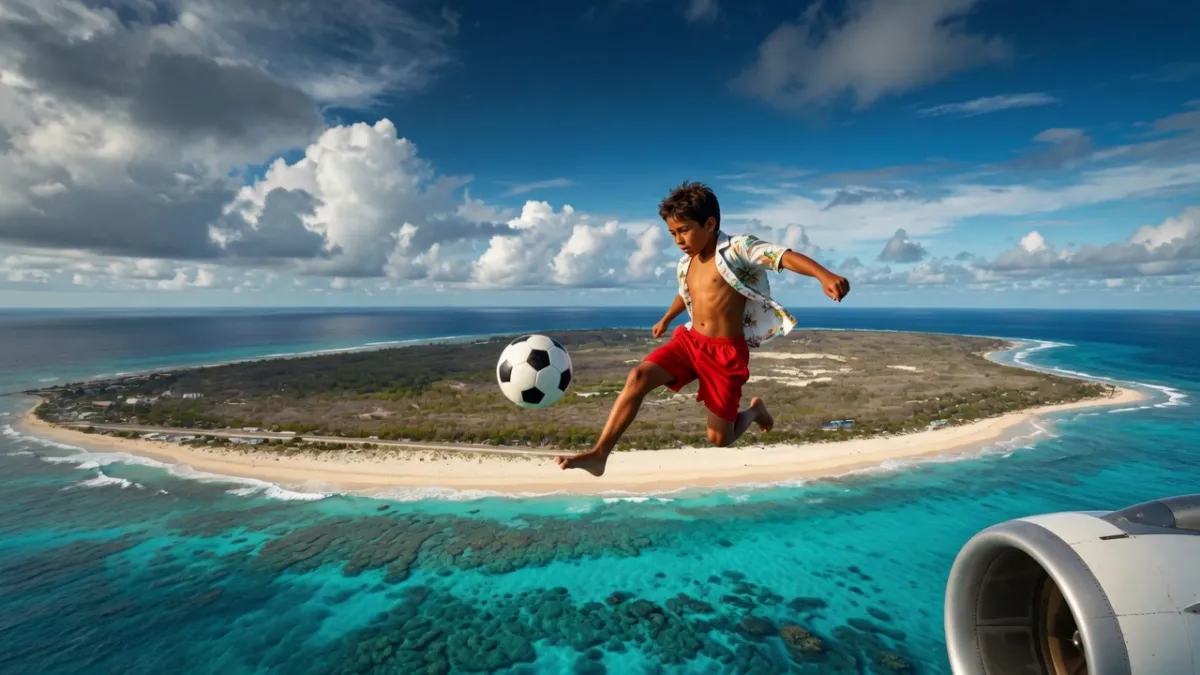
BBC Sport, in a piece by Nathan Edwards, explores Nauru – a tiny island nation in the Pacific Ocean that remains the last country in the world without its own adult national football team.
Despite the excitement surrounding world championships and the popularity of Cristiano Ronaldo and Lionel Messi shirts among local children, football is virtually non-existent in Nauru. Any attempts to play on the island have traditionally been met with irony, as 30% of the population is passionate about Australian Rules football, as well as track and field events.
A difficult legacy and social issues of the island
Nauru is an island of just 21 square kilometres with a population of around 12,000. In the second half of the 20th century, the state was considered one of the richest in the world per capita due to phosphorite mining. However, resource depletion has turned the central part of the island into an uninhabitable "lunar landscape".
Today, the country faces serious social challenges:
- Dependence on imports: Over 90% of food is imported from abroad.
- Health issues: Nauru has one of the highest rates of illness – 69% of the population suffers from obesity, and around 40% of adults live with type 2 diabetes.
- Infrastructure deficits: The only available pitch on the island is a hard surface made of sand and phosphate dust.
Building an ecosystem: Charlie Pomroy's strategy
British expert Charlie Pomroy, who has taken on the role of technical director of the Nauru Football Federation, along with a team of eight volunteers, is changing the approach to sports development. Unlike previous short-term initiatives (including a failed friendly match led by ex-Premier League forward Dave Kitson), the focus is on long-term development:
Let’s create a culture of football and sport on this island, helping it to grow. Let’s build an ecosystem, not just organise one-off games.
My personal dream is for the first ever international match for Nauru to be played by 18-year-olds who have gone through our training system.
Key steps of the development programme:
- One Child One Ball campaign: To provide every child on the island aged 4 to 14 (around 2,000 children) with their own football. Balls are transported in batches of 200 by plane in cooperation with schools and churches.
- Training personnel: Launching coaching and playing courses during the pre-season camp in December.
- Infrastructure: Utilising private land by volunteers (notably Tyrone Dey) and creating indoor futsal pitches.
- Preparation for the 2028 Micronesian Games: The tournament will be the main multi-sport event where Nauru hopes to make its debut with a full national team.
BBC Sport journalist Nathan Edwards emphasises that the main goal of the project is not just to create a football team, but to help change the image of the country and instil a healthy lifestyle in the island's young residents.
