Arsenal secured their first victory at Anfield over Liverpool in 14 years, maintaining a slender advantage after Kai Havertz's early goal. Despite dominating possession, the hosts failed to register a single shot on target.
We highlight three key factors that allowed the London side to neutralise their expensive opponents' attack.
After conceding the goal, Liverpool enjoyed prolonged spells of possession, but Arsenal effectively closed down space, won battles in the box, and controlled the tempo of the match.
1. Liverpool became fixated on crossing
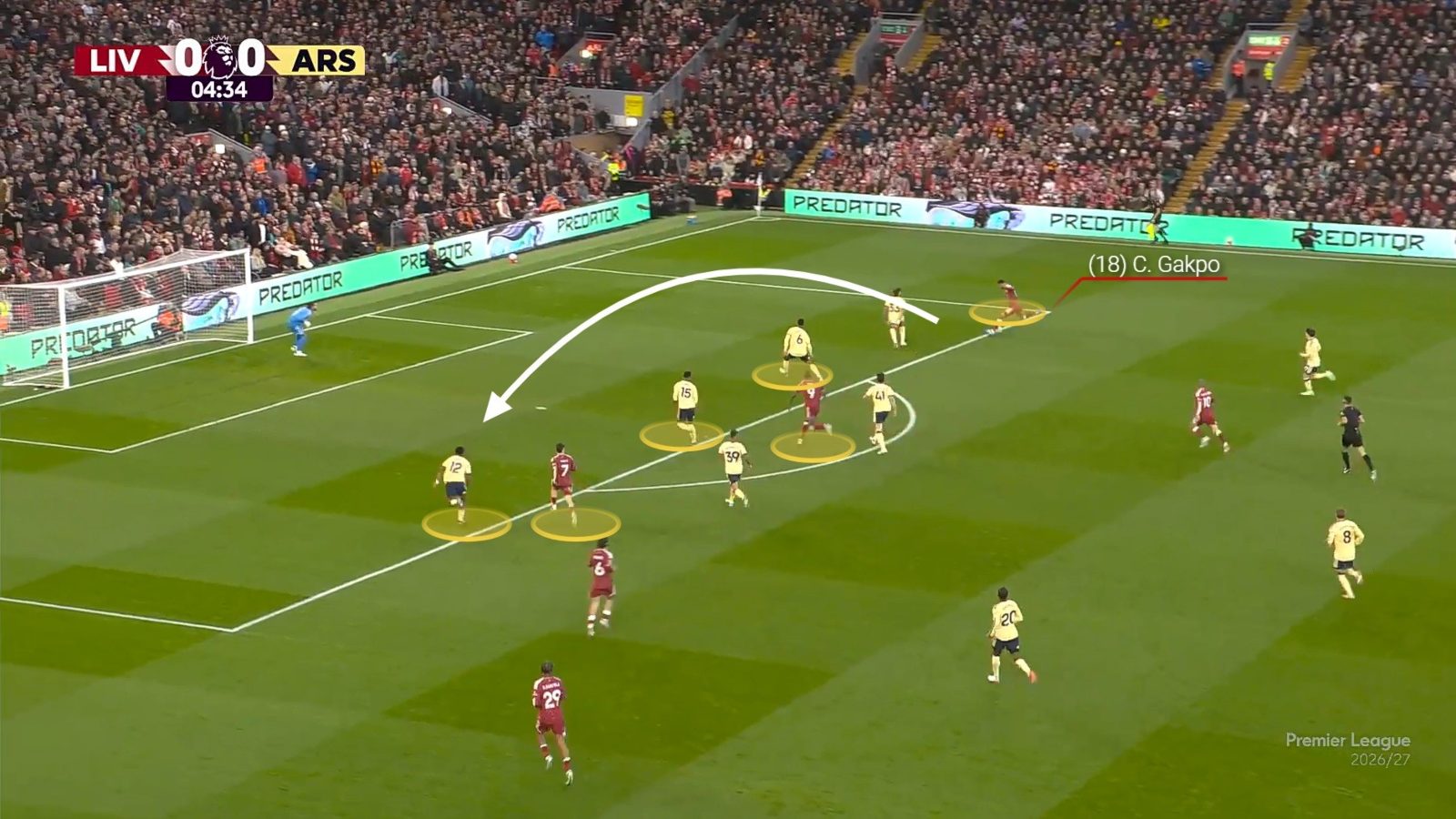
In the first half alone, the Merseysiders delivered 18 crosses, yet nearly all were ineffective.
The only truly dangerous moment came from a Milos Kerkenez delivery to Alexis Mac Allister, who headed from close range.
The main issue arose from the actions of the wide forwards. Cody Gakpo and Bradley Barcola often found space on the flanks, but failed to provide a quality delivery into the box.
In one instance, Barcola managed to find Alexander Isak, but the Swede unexpectedly let the ball slide, relying on a teammate.
Arsenal did not allow their opponents to create numerical superiority on the flanks. Defenders were constantly supported by midfielders and even forwards, which forced Liverpool to repeatedly send the ball into a crowded penalty area.
2. Substitutions changed the flow of the match
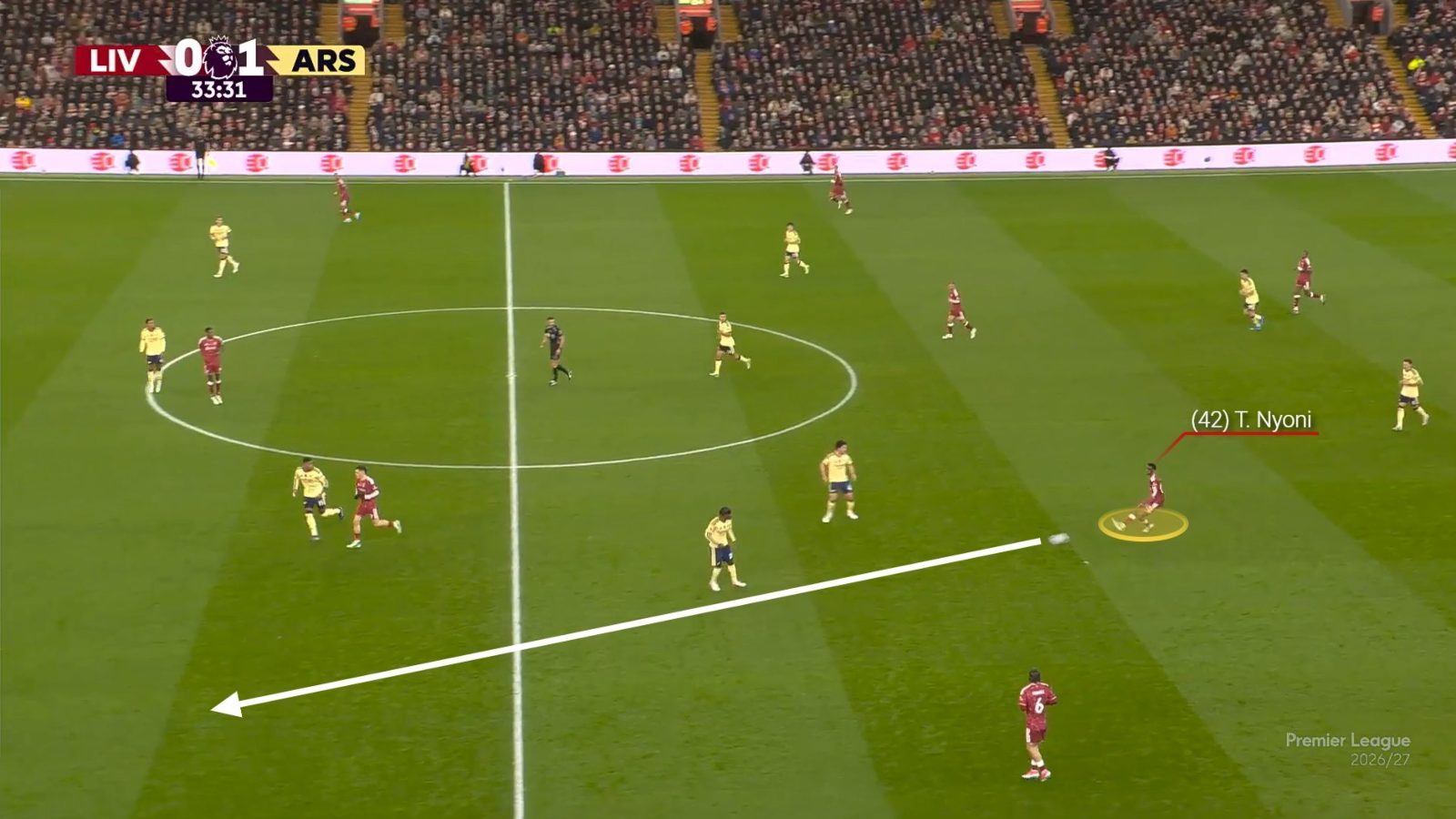
In the first half, Trey Nyoni helped Liverpool transition quickly from defence to midfield. Alongside Mac Allister, he found open spaces and timely switched the ball to the flanks.
However, after Nyoni was replaced by Dominik Szoboszlai, the hosts lost their previous organisation. Instead of playing through combinations, the team increasingly resorted to long balls forward.
For Arsenal, the substitutions had the opposite effect. The introduction of Myles Lewis-Skelly allowed the Londoners to better retain possession and disrupt their opponents' rhythm.
After about an hour, Arteta's team began to earn more fouls, delaying the restart and maintaining possession. This frustrated Liverpool players, who became increasingly nervous with each passing minute.
3. Arsenal's defence worked as a cohesive unit
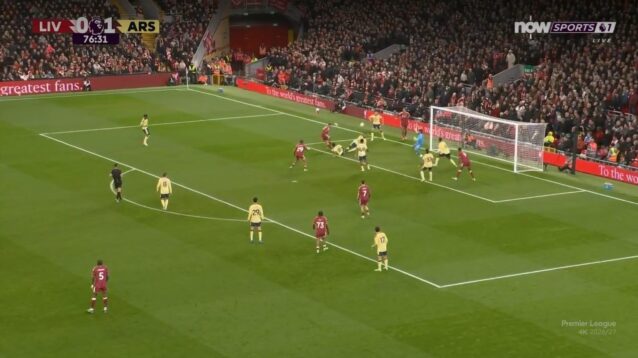
The main advantage for the London side lay in each player's willingness to contribute defensively, regardless of their position.
Liverpool attempted to crowd the box with three forwards, relying on crosses and second balls. However, even after winning aerial duels through Virgil van Dijk or Ronald Araujo, the ball often fell to Arsenal players.
Andoni Iraola sought to change the situation by introducing Rio Ngumoha to add pace and width to the attack.
Yet this move also failed. Arsenal's forwards dropped back, assisting the defenders in neutralising the young winger and cutting off his passing options.
As a result, the hosts regularly found themselves near the opponent's box but struggled to create any meaningful scoring opportunities.
A win that could shape the title race
Liverpool are gradually improving under Iraola's leadership; however, defeats to Manchester City and Arsenal at home exposed a significant issue: the expensive attacking line does not effectively utilise territorial advantage against strong opponents.
Arsenal, in contrast, demonstrated the ability to win without constant possession and a large number of chances.
Arteta's team scored an early goal, thereafter effectively denying their opponents the chance to equalise. According to reports, it is precisely such victories that define true champions.
The success at Anfield could prove to be one of the defining results of the season and help Arsenal extend their lead over competitors in the Premier League title race.